
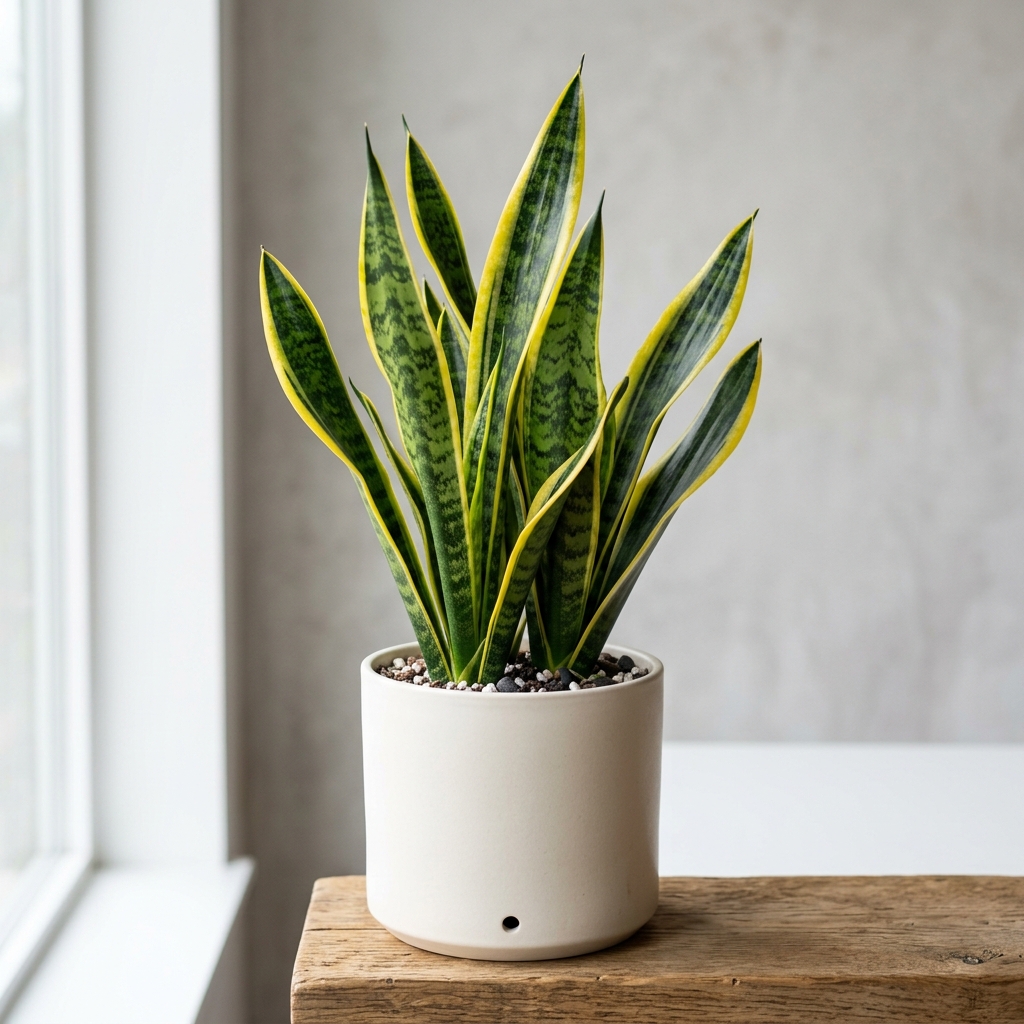
Standard Snake Plant
Sansevieria trifasciata • Family: Asparagaceae
Also known as: Snake Plant
Dracaena trifasciata is a species of flowering plant in the family Asparagaceae, native to tropical West Africa from Nigeria east to the Congo. It is most commonly known as the snake plant, Saint George's sword, mother-in-law's tongue, and viper's bowstring hemp, among other names. Until 2017, it was known under the synonym Sansevieria trifasciata. This plant is often kept as a houseplant due to its non-demanding maintenance; they can survive with very little water and sun. Standard is used here as a catalog label only. The care guide below describes the real species Snake Plant (Sansevieria trifasciata) and does not claim a verified botanical variety unless one is separately documented.
🌍 Regional Caution Check
Some plants can be invasive or regulated outside their ideal context. Select a country for any notes included in this guide:
This guide is informational only. Invasive-plant rules and import restrictions can vary by state, county, or municipality. Verify locally before planting, importing, or selling regulated species.
Quick Facts
- Origin
- West Africa
- Native Region
- West Africa
- USDA Hardiness Zones
- 9, 10, 11
- Average Lifespan
- 15+ years
- Indoor Air Note
- Helpful greenery, not a ventilation replacement
- Toxic to Pets
- Yes (Toxic)
Browse by Category
Complete Care Guide
Water Requirement
Low. Adjust watering for season, pot size, heat, and soil drainage rather than using a fixed calendar only.
Watering Frequency
Every 2-3 weeks
Sunlight Exposure
Low to bright indirect
Temperature Range
15°C - 27°C
Humidity Preferences
30-50%
Soil Selection
Gritty, fast-draining cactus and succulent mix.
Soil pH Range
6.0 - 7.0 (Slightly acidic to neutral)
Fertilizer Type
Balanced water-soluble organic fertilizer.
Fertilizer Schedule
Apply once a month during spring and summer months.
Potting Size
6-10 inches, matching root volume.
Repotting Method
Repot every 2 years in spring for root health.
Pruning & Shaping
Trim faded lower leaves and dry stems to maintain health.
Propagation Method
Dividing root clumps or stem cuttings rooted in water.
Growth Timeline & Sizing
Germination Stage
7-14 days to sprout foliage.
Vegetative Growth Stage
Establish roots first, then support leaf growth, flowering, fruiting, or dormancy according to the species and season.
Safety & Toxicity Index
🐾 Pet Safety
Dog Safe: No
Cat Safe: No
👶 Human Toxicity
Low to moderate toxicity if ingested. Oxalates or saponins cause drooling and irritation.
🩹 Safe Handling
Safe to handle normally. Wash hands after clipping stems.
Environmental Benefits
🌿 Ecological Roles
- Air Purifying: No
- Pollinator Friendly: No
- Bee Friendly: No
- Butterfly Friendly: No
- Bird Friendly: No
Carbon Absorption
Small plants store modest carbon in leaves, stems, and roots.
Oxygen Production
Produces oxygen through normal photosynthesis; houseplants should not be treated as a replacement for ventilation.
Common Mistakes
- Following a fixed watering schedule without checking soil moisture.
- Ignoring light requirements.
- Using containers without drainage or unsuitable heavy soil.
Interesting Facts
- Snake Plant belongs to the Asparagaceae family.
- Standard is used here as a catalog label only. The care guide below describes the real species Snake Plant (Sansevieria trifasciata) and does not claim a verified botanical variety unless one is separately documented.
Traditional & Culinary Uses
Ornamental or practical garden use depending on species.
Common Health Problems
Water stress or root problems
Symptoms: Yellowing, wilting, leaf drop, mushy roots, or stalled growth.
Treatment: Check drainage and root health, remove damaged material, and adjust watering to the actual soil moisture.
Prevention: Use suitable soil, drainage holes for containers, and water according to plant need rather than habit.
Common pests
Symptoms: Sticky residue, distorted growth, webbing, spots, or visible insects on stems and leaf undersides.
Treatment: Isolate affected plants, rinse foliage, prune severe damage, and use an appropriate labeled treatment.
Prevention: Inspect plants regularly, avoid overcrowding, and maintain airflow.
Frequently Asked Questions about Standard Snake Plant
What is the botanical profile of Standard Snake Plant?
Standard Snake Plant (Sansevieria trifasciata) belongs to the family Asparagaceae and is native to West Africa. Growing it successfully requires mimicking these native parameters inside your home garden.
Is Standard Snake Plant toxic to dogs or cats?
Regarding pet toxicity, Standard Snake Plant is toxic to dogs and cats if ingested. Keep it out of reach of curious pets if you grow the toxic variety.
What are the medicinal or traditional uses of Standard Snake Plant?
Traditional uses for Standard Snake Plant include: ornamental landscape display, interior air enrichment, and biophilic design benefits.
What is the USDA hardiness zone rating for Standard Snake Plant?
Standard Snake Plant is hardy across USDA hardiness zones: 9, 10, 11. In colder climates, it must be overwintered indoors before freezing temperatures arrive.
Is Standard Snake Plant a beginner friendly choice?
With a difficulty rating of Easy, this plant is excellent for beginners and handles minor watering mistakes.
Does Standard Snake Plant help purify indoor air?
Standard Snake Plant provides aesthetic green benefits and produces fresh oxygen during daylight hours. However, do not treat house plants as a complete replacement for proper home air ventilation.
Is Standard Snake Plant a verified botanical variety or catalog label?
The prefix "Standard" is used here as a catalog label to distinguish varieties. The care guide applies directly to the parent species Snake Plant (Sansevieria trifasciata).
What is the average lifespan of Standard Snake Plant?
The average lifespan of Standard Snake Plant is 15+ years. With proper root maintenance, regular soil replacement, and pruning, it can live and thrive for many years.
How do I prevent overwatering Standard Snake Plant?
Prevent overwatering by letting the soil dry out to the levels required by its Low. Adjust watering for season, pot size, heat, and soil drainage rather than using a fixed calendar only. water profile. Ensure your container has drainage holes and dump any standing saucer water.
Is it safe to place Standard Snake Plant in a bedroom?
Yes, keeping Standard Snake Plant in your bedroom is safe and adds calming green aesthetics. Ensure it receives enough indirect light matching its requirement of Low to bright indirect.
Is Standard Snake Plant suitable for growing indoors?
Yes, Standard Snake Plant is highly suitable for growing indoors. As an indoor plant, it benefits from protection from direct wind and extreme temperature drops. Be sure to place it near a bright window to match its sunlight needs.
Can I grow Standard Snake Plant outdoors in my garden?
Yes, you can grow Standard Snake Plant outdoors during warm seasons, but you must bring it indoors if hardiness zones fall below its safety limit. Outdoor growth offers natural rain and better airflow, which promotes faster foliage development.
What plant category or collection does Standard Snake Plant fit into?
Standard Snake Plant belongs to the category of indoor-plants, succulents, low-maintenance-plants. Knowing this helps you group it with other plants of identical water, humidity, and fertilizer requirements, making home garden maintenance much easier.
What is the potting soil mix for Standard Snake Plant?
The potting soil for Standard Snake Plant is a mix described as Gritty, fast-draining cactus and succulent mix.. It should maintain a soil pH level around 6.0 - 7.0 (Slightly acidic to neutral) to support root respiration and nutrient uptake without moisture stagnation.
How often should I water Standard Snake Plant?
The watering frequency for Standard Snake Plant is: Every 2-3 weeks. Since its water need is classified as Low. Adjust watering for season, pot size, heat, and soil drainage rather than using a fixed calendar only., wait until the top potting soil dries before watering again.
What are the sunlight requirements for Standard Snake Plant?
Standard Snake Plant requires Low to bright indirect to grow successfully. Indoors, position it close to a window facing east or south, or use grow lights to provide sufficient light spectrum without scorching the leaves.
What temperature range does Standard Snake Plant prefer?
This species thrives in a temperature comfort range of 15°C - 27°C. Keep it away from cold drafty windows or heating vents, and maintain relative humidity levels near 30-50% to prevent dry leaf edges.
How and when should I fertilize Standard Snake Plant?
Feed your Standard Snake Plant with Balanced water-soluble organic fertilizer. according to the schedule: Apply once a month during spring and summer months.. Always dilute the fertilizer to half-strength to avoid leaf tip burn.
How do I propagate Standard Snake Plant?
You can successfully propagate Standard Snake Plant via the Dividing root clumps or stem cuttings rooted in water. method. Use sterilized cutting tools, fresh damp potting mix, and optionally root hormone to stimulate root development.
How and when should I prune Standard Snake Plant?
Pruning should be done according to this guideline: Trim faded lower leaves and dry stems to maintain health.. Prune during the active growth phase to shape the plant and stimulate new foliage.
How do I repot Standard Snake Plant?
Repotting advice for this species is: Repot every 2 years in spring for root health.. Choose a pot that is 6-10 inches, matching root volume. with proper bottom drainage holes, and replenish the surrounding soil mix completely.
What pot size and type is best for Standard Snake Plant?
Choose a pot size described as 6-10 inches, matching root volume.. Terracotta or porous clay pots are recommended for species requiring dry soil cycles, while plastic or glazed pots work well for moisture-loving plants.
How do I know what size pot to grow my plant in?
To know what size pot to grow your plant in, choose a container that is approximately 2 to 3 inches larger in diameter than the current root system. For Standard Snake Plant, a pot size of 6-10 inches, matching root volume. is recommended to provide sufficient room for soil volume and growth without waterlogging.
What are the companion plants for Standard Snake Plant?
Ideal companions that share identical soil, light, and water parameters include: money-plant, snake-plant, spider-plant.
Why are the leaves on my Standard Snake Plant turning yellow?
Yellow leaves on Standard Snake Plant are typically a sign of moisture stress (usually overwatering) or nutrient deficiencies. Ensure the pot has drainage holes, and let the soil dry to the required levels before watering again.
Why are the leaves on my Standard Snake Plant turning brown?
Brown leaves or dry, crispy leaf margins on Standard Snake Plant indicate low environmental humidity, underwatering, or too much direct solar radiation. Mist your plant regularly or place it near a humidifier to resolve this.
What are the common pests affecting Standard Snake Plant?
Common pests that target this species include spider mites, aphids, mealybugs, thrips, and scale. Treat infestations immediately by isolating the plant and applying neem oil or insecticidal soap.
What are the symptoms and treatments for water stress or root issues in Standard Snake Plant?
Root rot symptoms include wilting foliage, mushy dark stems, and a foul smell from the soil. Stop watering, prune away rotting roots, repot in fresh sterile soil, and adjust your watering to match its profile.
How do I prevent fungal diseases on Standard Snake Plant?
Prevent fungus, powdery mildew, or leaf spots by ensuring excellent air circulation around the stems, watering only the soil instead of wetting the leaves, and using a well-draining soil mix.
How long does it take for Standard Snake Plant to mature?
It takes approximately 1-2 years to reach full size. for Standard Snake Plant to reach its mature size under standard cultivation. Regular feeding and optimal light will help it reach maturity faster.
What is the growth rate of Standard Snake Plant?
The growth rate of Standard Snake Plant is classified as Fast. It actively develops during its active growth stage before slowing down during winter dormancy.
What is the average mature size of Standard Snake Plant?
At maturity, Standard Snake Plant reaches an average height of 1-3 feet and an average spread width of 1-2 feet, depending on container size or outdoor spacing.
What is the flowering time for Standard Snake Plant?
The flowering time for Standard Snake Plant is typically during late spring or summer months. Adequate phosphorus and high light intensity are key triggers for bloom production.
Does Standard Snake Plant produce edible fruit?
Standard Snake Plant is primarily grown for its ornamental foliage or medicinal value and does not produce typical edible fruit.
When is the harvest time for Standard Snake Plant?
The harvest time is not applicable for this ornamental. If harvesting edible or medicinal parts, make sure to collect material during early morning hours when oils are concentrated.