

Indoor Plants
Houseplants that thrive inside rooms, apartments, and offices. Highly adaptable to artificial light and container bound growth.
Expert Care Tip
For Indoor Plants:
Ensure leaves are wiped free of dust monthly so they can synthesize light. Keep away from direct vents and drafty doors.
Tip: Ensure leaves are wiped free of dust monthly so they can synthesize light. Keep away from direct vents and drafty doors.
No plants found
Try adjusting your search terms or view another category.

Alpine Aloe Vera
Aloe barbadensis
Aloe vera is a succulent plant species of the genus Aloe. It is widely distributed, and is considered an invasive species in many world regions. Alpine is used here as a catalog label only. The care guide below describes the real species Aloe Vera (Aloe barbadensis) and does not claim a verified botanical variety unless one is separately documented.

Alpine Boston Fern
Nephrolepis exaltata
Nephrolepis exaltata, known as the sword fern or Boston fern, is a species of fern in the family Nephrolepidaceae. It is native to the Americas. This evergreen plant can reach as high as 40–90 centimetres (16–35 in), and in extreme cases up to 1.5 metres. It is also known as the Boston sword fern, wild Boston fern, Boston blue bell fern, tuber ladder fern, or fishbone fern. Alpine is used here as a catalog label only. The care guide below describes the real species Boston Fern (Nephrolepis exaltata) and does not claim a verified botanical variety unless one is separately documented.
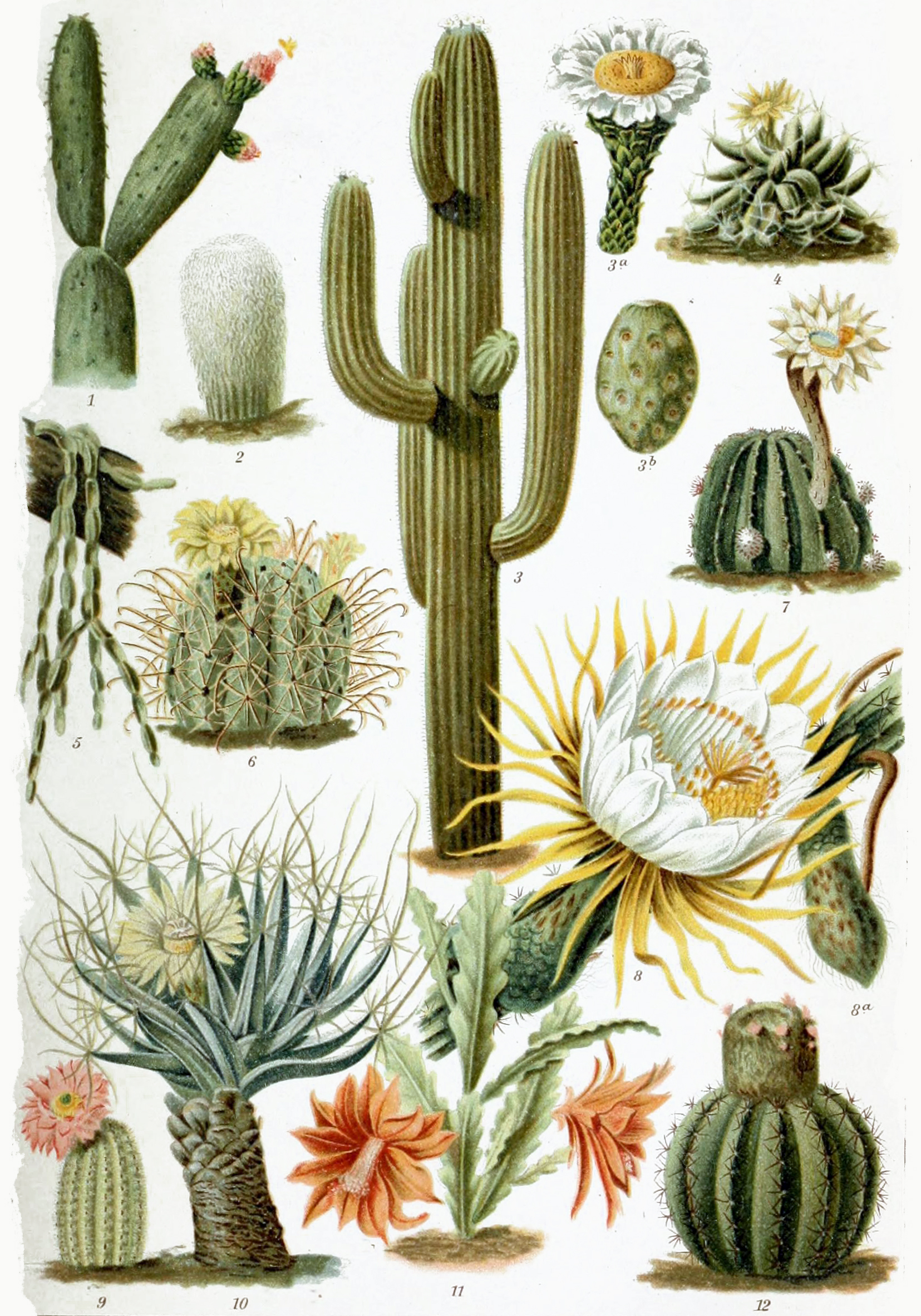
Alpine Cactus
Cereus hildmannianus
A cactus is a member of the plant family Cactaceae, a family of the order Caryophyllales comprising about 127 genera with some 1,750 known species. The word cactus derives, through Latin, from the Ancient Greek word κάκτος (káktos), a name originally used by Theophrastus for a spiny plant whose identity is now not certain. Cacti occur in a wide range of shapes and sizes. They are native to the Americas, ranging from Patagonia in the south to parts of western Canada in the north, with the exception of Rhipsalis baccifera, which is also found in Africa and Sri Lanka. Cacti are adapted to live in very dry environments, including the Atacama Desert, one of the driest places on Earth. Because of this, cacti show many adaptations to conserve water. For example, almost all cacti are succulents, meaning they have thickened, fleshy parts adapted to store water. Unlike many other succulents, the stem is the only part of most cacti where this vital process takes place. Most species of cacti have lost true leaves, retaining only spines, which are highly modified leaves. As well as defending against herbivores, spines help prevent water loss by reducing air flow close to the cactus and providing some shade. In the absence of true leaves, cacti's enlarged stems carry out photosynthesis. Alpine is used here as a catalog label only. The care guide below describes the real species Cactus (Cereus hildmannianus) and does not claim a verified botanical variety unless one is separately documented.

Alpine Calathea
Goeppertia picturata
Goeppertia picturata is a species of plant now classified as belonging to the genus Goeppertia in the family Marantaceae. It is native to northwest Brazil. and has been introduced to Colombia, Peru, the Leeward Islands, and the Windward Islands. Alpine is used here as a catalog label only. The care guide below describes the real species Calathea (Goeppertia picturata) and does not claim a verified botanical variety unless one is separately documented.

Alpine Cast Iron Plant
Aspidistra elatior
Aspidistra elatior, the cast-iron-plant or bar-room plant, also known in Japanese as haran or baran (葉蘭) is a species of flowering plant in the family Asparagaceae, native to Japan and Taiwan. Tolerant of neglect, it is widely cultivated as a houseplant, but can also be grown outside in shade where temperatures remain above −15 °C (5 °F). It is used as training material for the seika form of ikebana. Alpine is used here as a catalog label only. The care guide below describes the real species Cast Iron Plant (Aspidistra elatior) and does not claim a verified botanical variety unless one is separately documented.

Alpine Chinese Evergreen
Aglaonema commutatum
Aglaonema commutatum, the poison dart plant, is a species of flowering plant in the Chinese evergreen genus Aglaonema, family Araceae. It is native to the Philippines and northeastern Sulawesi, and has been introduced to other tropical locales, including Cuba, Puerto Rico, Trinidad and Tobago, Comoros, the Chagos Archipelago, India, Bangladesh, and the Cook Islands. Its hybrid cultivar 'Silver Queen' has gained the Royal Horticultural Society's Award of Garden Merit as a houseplant. Alpine is used here as a catalog label only. The care guide below describes the real species Chinese Evergreen (Aglaonema commutatum) and does not claim a verified botanical variety unless one is separately documented.

Alpine Chinese Money Plant
Pilea peperomioides
Pilea peperomioides, the Chinese money plant, UFO plant, pancake plant, lefse plant or missionary plant, is a species of flowering plant in the nettle family Urticaceae, native to Yunnan and Sichuan provinces in southern China. Alpine is used here as a catalog label only. The care guide below describes the real species Chinese Money Plant (Pilea peperomioides) and does not claim a verified botanical variety unless one is separately documented.

Alpine Croton
Codiaeum variegatum
Codiaeum variegatum, commonly known as croton or variegated croton amongst many other names, is a species of plant in the Euphorbiaceae family. Initially described by Carl Linnaeus in 1753, its native range is from Java east to Fiji, and from the Philippines south to Queensland, Australia. It is widely cultivated and has been introduced to many other countries. Alpine is used here as a catalog label only. The care guide below describes the real species Croton (Codiaeum variegatum) and does not claim a verified botanical variety unless one is separately documented.

Alpine English Ivy
Hedera helix
Hedera helix, simply ivy, or common ivy, English ivy, European ivy, King's choice ivy, is a species of flowering plant in the family Araliaceae. It is native to most of Europe and parts of western Asia. Ivy is a clinging evergreen vine that grows on tree trunks, walls, and fences in gardens, waste spaces, and wild habitats. Ivy is popular as an ornamental plant, but escaped plants have become naturalised outside its native range. Ivy has considerable cultural significance and symbolism. Alpine is used here as a catalog label only. The care guide below describes the real species English Ivy (Hedera helix) and does not claim a verified botanical variety unless one is separately documented.
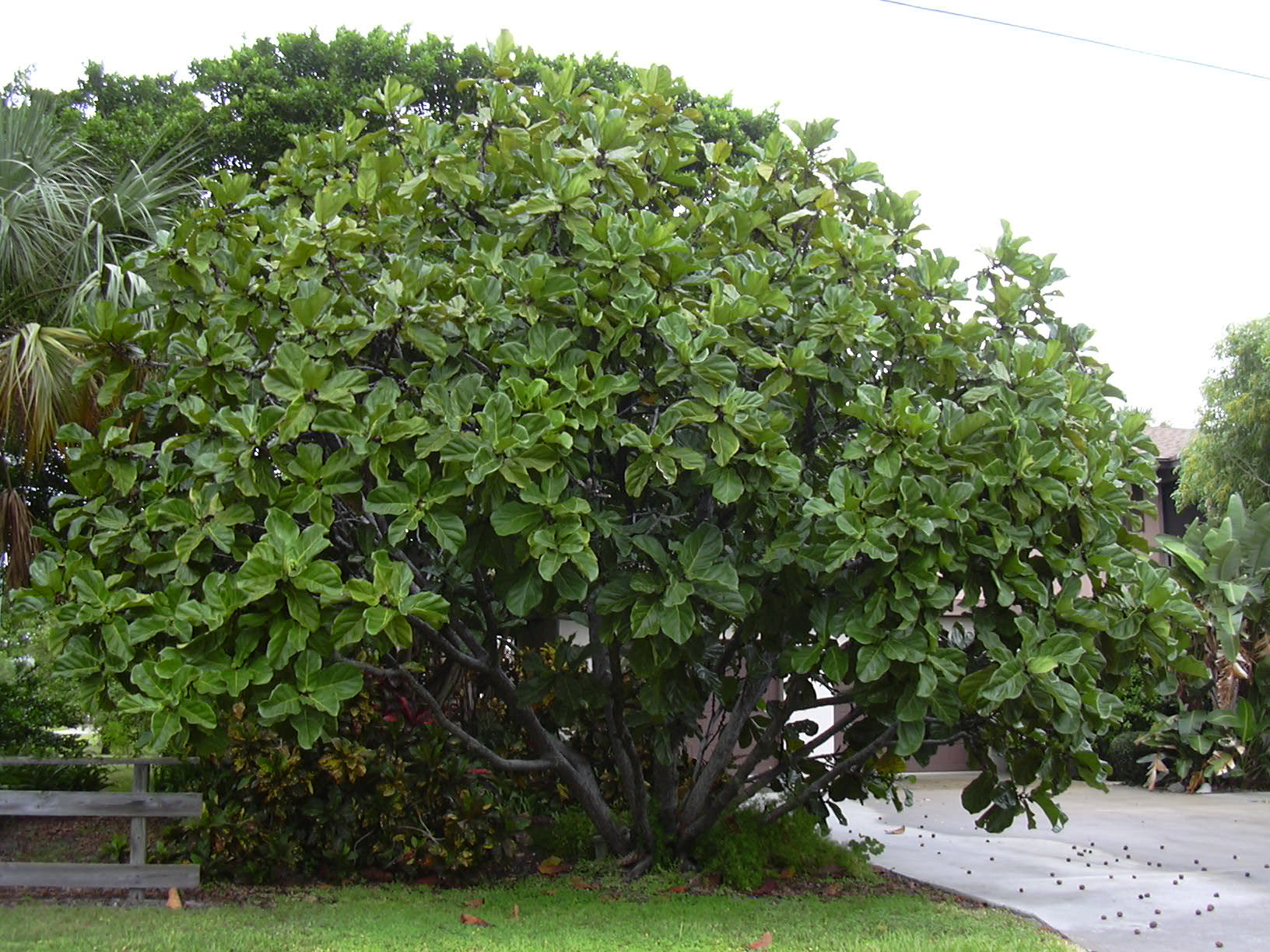
Alpine Fiddle Leaf Fig
Ficus lyrata
Ficus lyrata, commonly known as the fiddle-leaf fig, banjo fig, fiddle-leaved fig tree, lyre leaf fig tree, or lyre-leaved fig tree, is a species of plant in the mulberry and fig family Moraceae. It is native to western Africa, but is cultivated around the world as an ornamental plant. It has received the Royal Horticultural Society's Award of Garden Merit. Alpine is used here as a catalog label only. The care guide below describes the real species Fiddle Leaf Fig (Ficus lyrata) and does not claim a verified botanical variety unless one is separately documented.

Alpine Jade Plant
Crassula ovata
Crassula ovata, commonly known as jade plant, lucky plant, money plant or money tree, is a succulent plant with small pink or white flowers that is native to the KwaZulu-Natal and Eastern Cape provinces of South Africa, and Mozambique; it is common as a houseplant worldwide. Much of its popularity stems from the low levels of care needed; the jade plant requires little water and can survive in most indoor conditions. It is sometimes referred to as the money tree; however, Pachira aquatica also has this nickname. Alpine is used here as a catalog label only. The care guide below describes the real species Jade Plant (Crassula ovata) and does not claim a verified botanical variety unless one is separately documented.
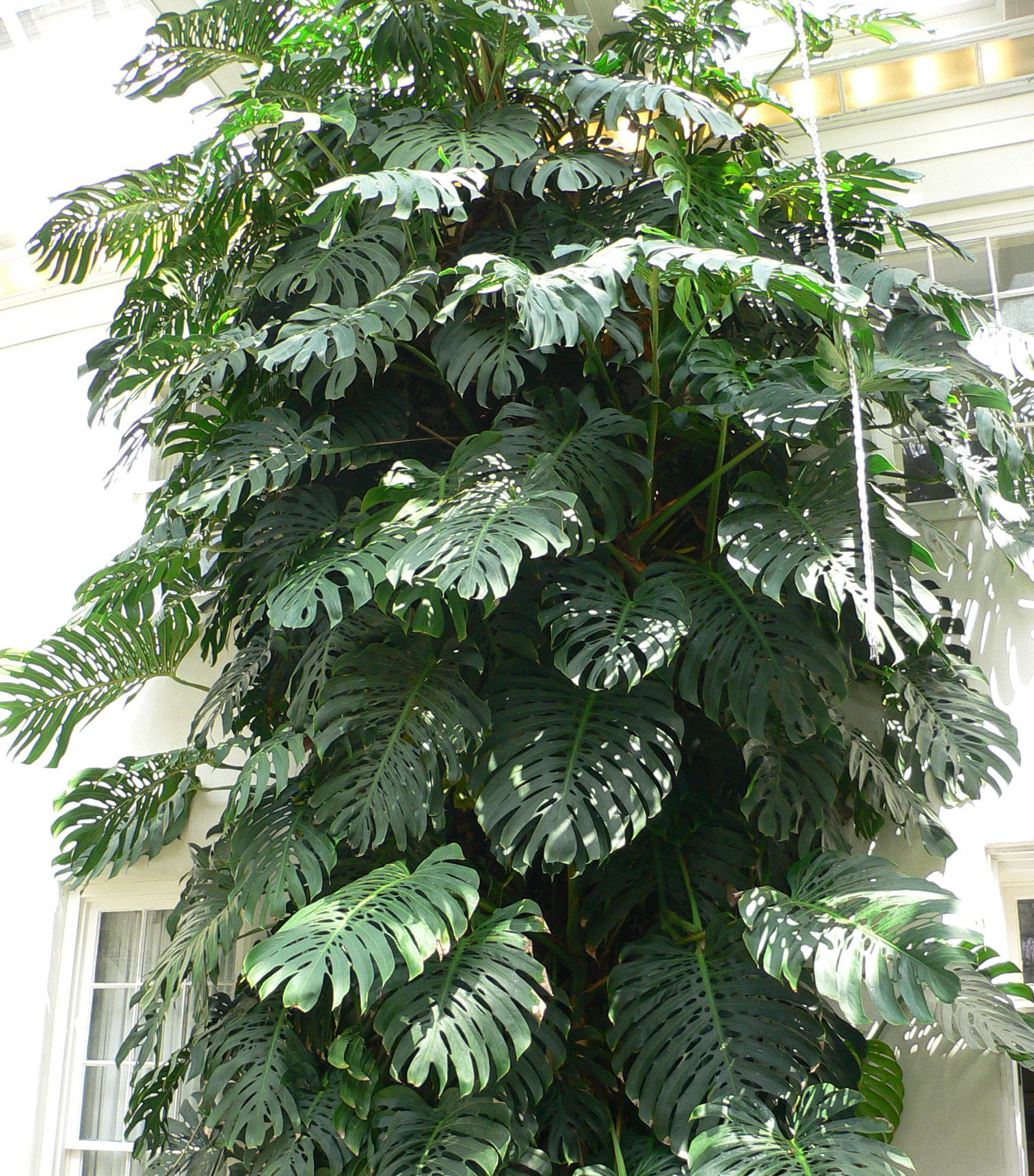
Alpine Monstera
Monstera deliciosa
Monstera deliciosa, the Swiss cheese plant or split-leaf philodendron, is a species of flowering plant. The common name "Swiss cheese plant" is also used for the related species from the same genus, Monstera adansonii. The common name "split-leaf philodendron" is also used for the species Philodendron bipinnatifidum. Alpine is used here as a catalog label only. The care guide below describes the real species Monstera (Monstera deliciosa) and does not claim a verified botanical variety unless one is separately documented.

Alpine Nerve Plant
Fittonia albivenis
Fittonia albivenis is a species of flowering plant in the family Acanthaceae, native to the rainforests of Colombia, Peru, Bolivia, Ecuador and northern Brazil. An evergreen perennial, it is notable for its dark green foliage with strongly contrasting white or red veins. It is commonly called nerve plant or mosaic plant. In temperate regions where the temperature falls below 10 °C (50 °F) it must be grown as a houseplant. Alpine is used here as a catalog label only. The care guide below describes the real species Nerve Plant (Fittonia albivenis) and does not claim a verified botanical variety unless one is separately documented.

Alpine Orchid
Phalaenopsis
Orchids are plants that belong to the family Orchidaceae, a diverse and widespread group of flowering plants with blooms that are often colourful and fragrant. Orchids are cosmopolitan plants, living in diverse habitats on every continent except Antarctica. The world's richest diversity of orchid genera and species is in the tropics. Many species are epiphytes, living on trees. The flowers and their pollination mechanisms are highly specialized, attracting insect pollinators by colour, pattern, scent, pheromones, and sometimes by mimicking female insects. Orchids have very small seeds, relying on fungal partners for germination. Some orchids have no leaves, either photosynthesizing with their roots or relying entirely on fungal partners for food. Alpine is used here as a catalog label only. The care guide below describes the real species Orchid (Phalaenopsis) and does not claim a verified botanical variety unless one is separately documented.

Alpine Peace Lily
Spathiphyllum wallisii
Spathiphyllum is a genus of about 60 species of monocotyledonous flowering plants in the family Araceae, native to tropical regions of the Americas and southeastern Asia. Certain species of Spathiphyllum are commonly known as spath or peace lilies. Alpine is used here as a catalog label only. The care guide below describes the real species Peace Lily (Spathiphyllum wallisii) and does not claim a verified botanical variety unless one is separately documented.
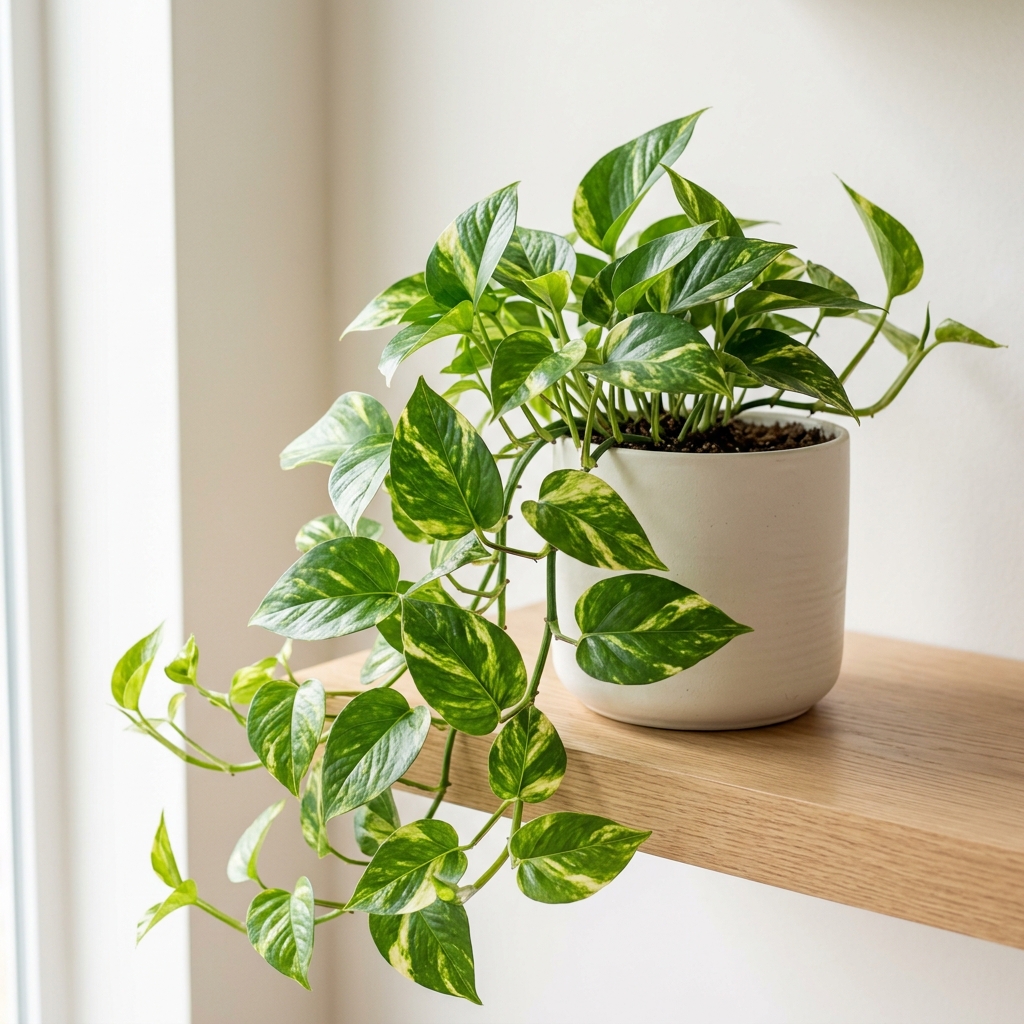
Alpine Pothos
Epipremnum aureum
Epipremnum aureum is a species in the arum family Araceae, native to Mo'orea in the Society Islands of French Polynesia. The species is a popular houseplant in temperate regions, but has also become naturalised in tropical and sub-tropical forests worldwide, including northern South Africa, Australia, Southeast Asia, Indian subcontinent, the Pacific Islands and the West Indies, where it has caused severe ecological damage in some cases. Alpine is used here as a catalog label only. The care guide below describes the real species Pothos (Epipremnum aureum) and does not claim a verified botanical variety unless one is separately documented.

Alpine Prayer Plant
Maranta leuconeura
Maranta leuconeura, widely known as the prayer plant due to its daily sunlight-dependent movements, is a species of flowering plant in the family Marantaceae native to the Brazilian tropical forests. It is a variable, rhizomatous perennial, growing to 30 cm (12 in) tall and broad, with crowded clumps of evergreen, strikingly-marked oval leaves, each up to 12 cm (5 in) long. The plant spreads itself horizontally, carpeting an entire small area of forest floor, sending roots into the substrate at each leaf node. Alpine is used here as a catalog label only. The care guide below describes the real species Prayer Plant (Maranta leuconeura) and does not claim a verified botanical variety unless one is separately documented.

Alpine Rubber Plant
Ficus elastica
Ficus elastica, the rubber fig, rubber bush, rubber tree, rubber plant, or Indian rubber bush, Indian rubber tree, or rambung is a species of flowering plant in the family Moraceae, native to eastern parts of South and Southeast Asia. Its common names reflect its historical use as a source of rubber within its native range, but it is not used in the modern commercial-scale production of natural rubber. Alpine is used here as a catalog label only. The care guide below describes the real species Rubber Plant (Ficus elastica) and does not claim a verified botanical variety unless one is separately documented.
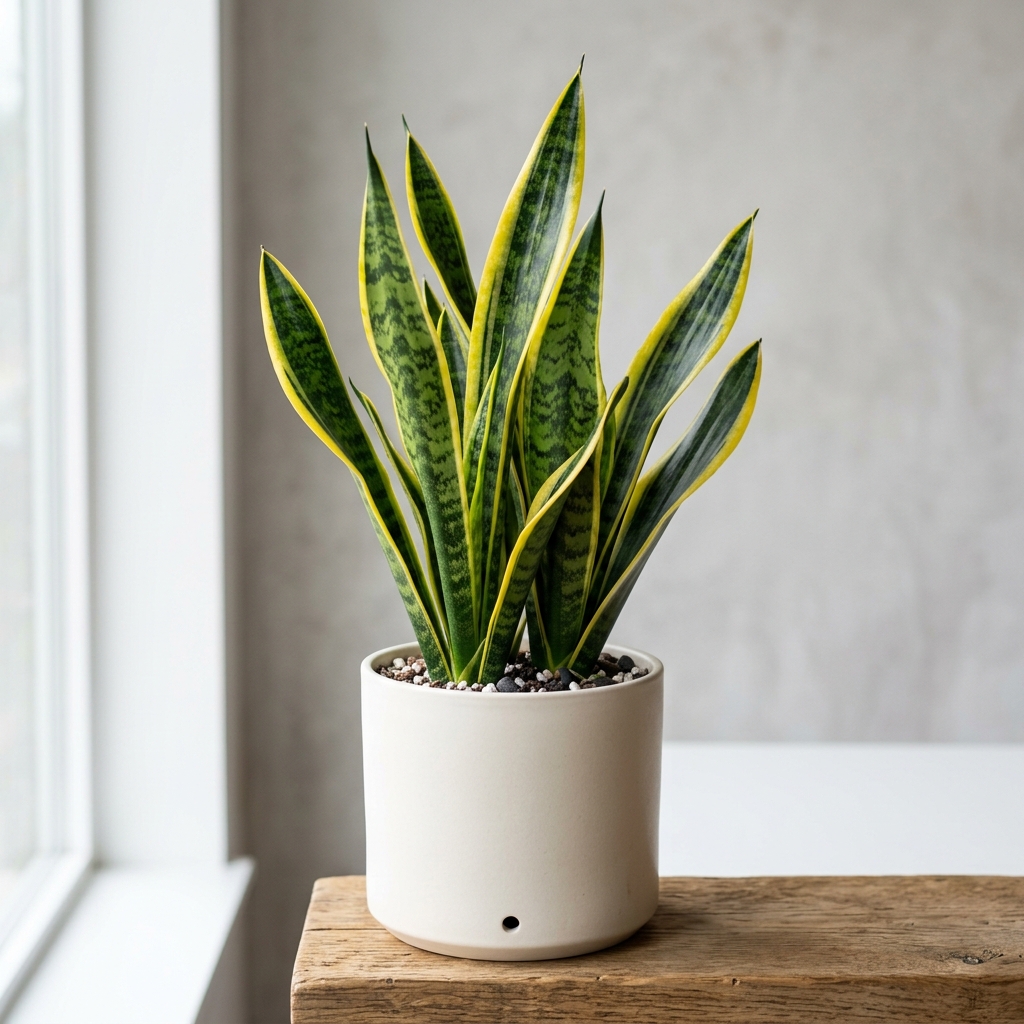
Alpine Snake Plant
Sansevieria trifasciata
Dracaena trifasciata is a species of flowering plant in the family Asparagaceae, native to tropical West Africa from Nigeria east to the Congo. It is most commonly known as the snake plant, Saint George's sword, mother-in-law's tongue, and viper's bowstring hemp, among other names. Until 2017, it was known under the synonym Sansevieria trifasciata. This plant is often kept as a houseplant due to its non-demanding maintenance; they can survive with very little water and sun. Alpine is used here as a catalog label only. The care guide below describes the real species Snake Plant (Sansevieria trifasciata) and does not claim a verified botanical variety unless one is separately documented.

Alpine Spider Plant
Chlorophytum comosum
Chlorophytum comosum, usually called spider plant or common spider plant due to its spider-like look, also known as spider ivy, airplane plant, ribbon plant, and hen and chicks, is a species of evergreen perennial flowering plant of the family Asparagaceae. It is native to tropical and Southern Africa but has become naturalized in other parts of the world, including Western Australia and Bangladesh. Chlorophytum comosum is easy to grow as a houseplant because of its resilience, but it can be sensitive to the fluoride in tap water, which commonly gives it "burnt tips". Variegated forms are the most popular. Alpine is used here as a catalog label only. The care guide below describes the real species Spider Plant (Chlorophytum comosum) and does not claim a verified botanical variety unless one is separately documented.

Alpine Zebra Plant
Aphelandra squarrosa
Aphelandra squarrosa is a plant species in the family Acanthaceae, which is native to Atlantic Forest vegetation of Brazil. This plant is often used as a house plant. This plant is cited in Flora Brasiliensis by Carl Friedrich Philipp von Martius. Alpine is used here as a catalog label only. The care guide below describes the real species Zebra Plant (Aphelandra squarrosa) and does not claim a verified botanical variety unless one is separately documented.

Alpine ZZ Plant
Zamioculcas zamiifolia
Zamioculcas is a genus of flowering plants in the family Araceae, containing the single species Zamioculcas zamiifolia. It is a tropical herbaceous perennial plant, and is native to eastern Africa, including Kenya, KwaZulu-Natal, Malawi, Mozambique, Tanzania, and Zimbabwe. Its common names include Zanzibar gem, Zuzu plant, emerald palm, ZZ plant, aroid palm and eternity plant. It is commonly grown as a houseplant, mainly because it has attractive glossy foliage and is easy to care for. Zamioculcas zamiifolia is winter-hardy in USDA Zones 9 and 10. Alpine is used here as a catalog label only. The care guide below describes the real species ZZ Plant (Zamioculcas zamiifolia) and does not claim a verified botanical variety unless one is separately documented.
Dwarf Aloe Vera
Aloe barbadensis
Aloe vera is a succulent plant species of the genus Aloe. It is widely distributed, and is considered an invasive species in many world regions. Dwarf is used here as a catalog label only. The care guide below describes the real species Aloe Vera (Aloe barbadensis) and does not claim a verified botanical variety unless one is separately documented.
Dwarf Boston Fern
Nephrolepis exaltata
Nephrolepis exaltata, known as the sword fern or Boston fern, is a species of fern in the family Nephrolepidaceae. It is native to the Americas. This evergreen plant can reach as high as 40–90 centimetres (16–35 in), and in extreme cases up to 1.5 metres. It is also known as the Boston sword fern, wild Boston fern, Boston blue bell fern, tuber ladder fern, or fishbone fern. Dwarf is used here as a catalog label only. The care guide below describes the real species Boston Fern (Nephrolepis exaltata) and does not claim a verified botanical variety unless one is separately documented.
Dwarf Cactus
Cereus hildmannianus
A cactus is a member of the plant family Cactaceae, a family of the order Caryophyllales comprising about 127 genera with some 1,750 known species. The word cactus derives, through Latin, from the Ancient Greek word κάκτος (káktos), a name originally used by Theophrastus for a spiny plant whose identity is now not certain. Cacti occur in a wide range of shapes and sizes. They are native to the Americas, ranging from Patagonia in the south to parts of western Canada in the north, with the exception of Rhipsalis baccifera, which is also found in Africa and Sri Lanka. Cacti are adapted to live in very dry environments, including the Atacama Desert, one of the driest places on Earth. Because of this, cacti show many adaptations to conserve water. For example, almost all cacti are succulents, meaning they have thickened, fleshy parts adapted to store water. Unlike many other succulents, the stem is the only part of most cacti where this vital process takes place. Most species of cacti have lost true leaves, retaining only spines, which are highly modified leaves. As well as defending against herbivores, spines help prevent water loss by reducing air flow close to the cactus and providing some shade. In the absence of true leaves, cacti's enlarged stems carry out photosynthesis. Dwarf is used here as a catalog label only. The care guide below describes the real species Cactus (Cereus hildmannianus) and does not claim a verified botanical variety unless one is separately documented.
Dwarf Calathea
Goeppertia picturata
Goeppertia picturata is a species of plant now classified as belonging to the genus Goeppertia in the family Marantaceae. It is native to northwest Brazil. and has been introduced to Colombia, Peru, the Leeward Islands, and the Windward Islands. Dwarf is used here as a catalog label only. The care guide below describes the real species Calathea (Goeppertia picturata) and does not claim a verified botanical variety unless one is separately documented.
Dwarf Cast Iron Plant
Aspidistra elatior
Aspidistra elatior, the cast-iron-plant or bar-room plant, also known in Japanese as haran or baran (葉蘭) is a species of flowering plant in the family Asparagaceae, native to Japan and Taiwan. Tolerant of neglect, it is widely cultivated as a houseplant, but can also be grown outside in shade where temperatures remain above −15 °C (5 °F). It is used as training material for the seika form of ikebana. Dwarf is used here as a catalog label only. The care guide below describes the real species Cast Iron Plant (Aspidistra elatior) and does not claim a verified botanical variety unless one is separately documented.
Dwarf Chinese Evergreen
Aglaonema commutatum
Aglaonema commutatum, the poison dart plant, is a species of flowering plant in the Chinese evergreen genus Aglaonema, family Araceae. It is native to the Philippines and northeastern Sulawesi, and has been introduced to other tropical locales, including Cuba, Puerto Rico, Trinidad and Tobago, Comoros, the Chagos Archipelago, India, Bangladesh, and the Cook Islands. Its hybrid cultivar 'Silver Queen' has gained the Royal Horticultural Society's Award of Garden Merit as a houseplant. Dwarf is used here as a catalog label only. The care guide below describes the real species Chinese Evergreen (Aglaonema commutatum) and does not claim a verified botanical variety unless one is separately documented.
Dwarf Chinese Money Plant
Pilea peperomioides
Pilea peperomioides, the Chinese money plant, UFO plant, pancake plant, lefse plant or missionary plant, is a species of flowering plant in the nettle family Urticaceae, native to Yunnan and Sichuan provinces in southern China. Dwarf is used here as a catalog label only. The care guide below describes the real species Chinese Money Plant (Pilea peperomioides) and does not claim a verified botanical variety unless one is separately documented.
Dwarf Croton
Codiaeum variegatum
Codiaeum variegatum, commonly known as croton or variegated croton amongst many other names, is a species of plant in the Euphorbiaceae family. Initially described by Carl Linnaeus in 1753, its native range is from Java east to Fiji, and from the Philippines south to Queensland, Australia. It is widely cultivated and has been introduced to many other countries. Dwarf is used here as a catalog label only. The care guide below describes the real species Croton (Codiaeum variegatum) and does not claim a verified botanical variety unless one is separately documented.
Dwarf English Ivy
Hedera helix
Hedera helix, simply ivy, or common ivy, English ivy, European ivy, King's choice ivy, is a species of flowering plant in the family Araliaceae. It is native to most of Europe and parts of western Asia. Ivy is a clinging evergreen vine that grows on tree trunks, walls, and fences in gardens, waste spaces, and wild habitats. Ivy is popular as an ornamental plant, but escaped plants have become naturalised outside its native range. Ivy has considerable cultural significance and symbolism. Dwarf is used here as a catalog label only. The care guide below describes the real species English Ivy (Hedera helix) and does not claim a verified botanical variety unless one is separately documented.
Dwarf Fiddle Leaf Fig
Ficus lyrata
Ficus lyrata, commonly known as the fiddle-leaf fig, banjo fig, fiddle-leaved fig tree, lyre leaf fig tree, or lyre-leaved fig tree, is a species of plant in the mulberry and fig family Moraceae. It is native to western Africa, but is cultivated around the world as an ornamental plant. It has received the Royal Horticultural Society's Award of Garden Merit. Dwarf is used here as a catalog label only. The care guide below describes the real species Fiddle Leaf Fig (Ficus lyrata) and does not claim a verified botanical variety unless one is separately documented.
Dwarf Jade Plant
Crassula ovata
Crassula ovata, commonly known as jade plant, lucky plant, money plant or money tree, is a succulent plant with small pink or white flowers that is native to the KwaZulu-Natal and Eastern Cape provinces of South Africa, and Mozambique; it is common as a houseplant worldwide. Much of its popularity stems from the low levels of care needed; the jade plant requires little water and can survive in most indoor conditions. It is sometimes referred to as the money tree; however, Pachira aquatica also has this nickname. Dwarf is used here as a catalog label only. The care guide below describes the real species Jade Plant (Crassula ovata) and does not claim a verified botanical variety unless one is separately documented.
Dwarf Monstera
Monstera deliciosa
Monstera deliciosa, the Swiss cheese plant or split-leaf philodendron, is a species of flowering plant. The common name "Swiss cheese plant" is also used for the related species from the same genus, Monstera adansonii. The common name "split-leaf philodendron" is also used for the species Philodendron bipinnatifidum. Dwarf is used here as a catalog label only. The care guide below describes the real species Monstera (Monstera deliciosa) and does not claim a verified botanical variety unless one is separately documented.
Dwarf Nerve Plant
Fittonia albivenis
Fittonia albivenis is a species of flowering plant in the family Acanthaceae, native to the rainforests of Colombia, Peru, Bolivia, Ecuador and northern Brazil. An evergreen perennial, it is notable for its dark green foliage with strongly contrasting white or red veins. It is commonly called nerve plant or mosaic plant. In temperate regions where the temperature falls below 10 °C (50 °F) it must be grown as a houseplant. Dwarf is used here as a catalog label only. The care guide below describes the real species Nerve Plant (Fittonia albivenis) and does not claim a verified botanical variety unless one is separately documented.
Dwarf Orchid
Phalaenopsis
Orchids are plants that belong to the family Orchidaceae, a diverse and widespread group of flowering plants with blooms that are often colourful and fragrant. Orchids are cosmopolitan plants, living in diverse habitats on every continent except Antarctica. The world's richest diversity of orchid genera and species is in the tropics. Many species are epiphytes, living on trees. The flowers and their pollination mechanisms are highly specialized, attracting insect pollinators by colour, pattern, scent, pheromones, and sometimes by mimicking female insects. Orchids have very small seeds, relying on fungal partners for germination. Some orchids have no leaves, either photosynthesizing with their roots or relying entirely on fungal partners for food. Dwarf is used here as a catalog label only. The care guide below describes the real species Orchid (Phalaenopsis) and does not claim a verified botanical variety unless one is separately documented.
Dwarf Peace Lily
Spathiphyllum wallisii
Spathiphyllum is a genus of about 60 species of monocotyledonous flowering plants in the family Araceae, native to tropical regions of the Americas and southeastern Asia. Certain species of Spathiphyllum are commonly known as spath or peace lilies. Dwarf is used here as a catalog label only. The care guide below describes the real species Peace Lily (Spathiphyllum wallisii) and does not claim a verified botanical variety unless one is separately documented.
Dwarf Pothos
Epipremnum aureum
Epipremnum aureum is a species in the arum family Araceae, native to Mo'orea in the Society Islands of French Polynesia. The species is a popular houseplant in temperate regions, but has also become naturalised in tropical and sub-tropical forests worldwide, including northern South Africa, Australia, Southeast Asia, Indian subcontinent, the Pacific Islands and the West Indies, where it has caused severe ecological damage in some cases. Dwarf is used here as a catalog label only. The care guide below describes the real species Pothos (Epipremnum aureum) and does not claim a verified botanical variety unless one is separately documented.
Dwarf Prayer Plant
Maranta leuconeura
Maranta leuconeura, widely known as the prayer plant due to its daily sunlight-dependent movements, is a species of flowering plant in the family Marantaceae native to the Brazilian tropical forests. It is a variable, rhizomatous perennial, growing to 30 cm (12 in) tall and broad, with crowded clumps of evergreen, strikingly-marked oval leaves, each up to 12 cm (5 in) long. The plant spreads itself horizontally, carpeting an entire small area of forest floor, sending roots into the substrate at each leaf node. Dwarf is used here as a catalog label only. The care guide below describes the real species Prayer Plant (Maranta leuconeura) and does not claim a verified botanical variety unless one is separately documented.
Dwarf Rubber Plant
Ficus elastica
Ficus elastica, the rubber fig, rubber bush, rubber tree, rubber plant, or Indian rubber bush, Indian rubber tree, or rambung is a species of flowering plant in the family Moraceae, native to eastern parts of South and Southeast Asia. Its common names reflect its historical use as a source of rubber within its native range, but it is not used in the modern commercial-scale production of natural rubber. Dwarf is used here as a catalog label only. The care guide below describes the real species Rubber Plant (Ficus elastica) and does not claim a verified botanical variety unless one is separately documented.
Dwarf Snake Plant
Sansevieria trifasciata
Dracaena trifasciata is a species of flowering plant in the family Asparagaceae, native to tropical West Africa from Nigeria east to the Congo. It is most commonly known as the snake plant, Saint George's sword, mother-in-law's tongue, and viper's bowstring hemp, among other names. Until 2017, it was known under the synonym Sansevieria trifasciata. This plant is often kept as a houseplant due to its non-demanding maintenance; they can survive with very little water and sun. Dwarf is used here as a catalog label only. The care guide below describes the real species Snake Plant (Sansevieria trifasciata) and does not claim a verified botanical variety unless one is separately documented.
Dwarf Spider Plant
Chlorophytum comosum
Chlorophytum comosum, usually called spider plant or common spider plant due to its spider-like look, also known as spider ivy, airplane plant, ribbon plant, and hen and chicks, is a species of evergreen perennial flowering plant of the family Asparagaceae. It is native to tropical and Southern Africa but has become naturalized in other parts of the world, including Western Australia and Bangladesh. Chlorophytum comosum is easy to grow as a houseplant because of its resilience, but it can be sensitive to the fluoride in tap water, which commonly gives it "burnt tips". Variegated forms are the most popular. Dwarf is used here as a catalog label only. The care guide below describes the real species Spider Plant (Chlorophytum comosum) and does not claim a verified botanical variety unless one is separately documented.
Dwarf Zebra Plant
Aphelandra squarrosa
Aphelandra squarrosa is a plant species in the family Acanthaceae, which is native to Atlantic Forest vegetation of Brazil. This plant is often used as a house plant. This plant is cited in Flora Brasiliensis by Carl Friedrich Philipp von Martius. Dwarf is used here as a catalog label only. The care guide below describes the real species Zebra Plant (Aphelandra squarrosa) and does not claim a verified botanical variety unless one is separately documented.
Dwarf ZZ Plant
Zamioculcas zamiifolia
Zamioculcas is a genus of flowering plants in the family Araceae, containing the single species Zamioculcas zamiifolia. It is a tropical herbaceous perennial plant, and is native to eastern Africa, including Kenya, KwaZulu-Natal, Malawi, Mozambique, Tanzania, and Zimbabwe. Its common names include Zanzibar gem, Zuzu plant, emerald palm, ZZ plant, aroid palm and eternity plant. It is commonly grown as a houseplant, mainly because it has attractive glossy foliage and is easy to care for. Zamioculcas zamiifolia is winter-hardy in USDA Zones 9 and 10. Dwarf is used here as a catalog label only. The care guide below describes the real species ZZ Plant (Zamioculcas zamiifolia) and does not claim a verified botanical variety unless one is separately documented.
Emerald Aloe Vera
Aloe barbadensis
Aloe vera is a succulent plant species of the genus Aloe. It is widely distributed, and is considered an invasive species in many world regions. Emerald is used here as a catalog label only. The care guide below describes the real species Aloe Vera (Aloe barbadensis) and does not claim a verified botanical variety unless one is separately documented.
Emerald Boston Fern
Nephrolepis exaltata
Nephrolepis exaltata, known as the sword fern or Boston fern, is a species of fern in the family Nephrolepidaceae. It is native to the Americas. This evergreen plant can reach as high as 40–90 centimetres (16–35 in), and in extreme cases up to 1.5 metres. It is also known as the Boston sword fern, wild Boston fern, Boston blue bell fern, tuber ladder fern, or fishbone fern. Emerald is used here as a catalog label only. The care guide below describes the real species Boston Fern (Nephrolepis exaltata) and does not claim a verified botanical variety unless one is separately documented.
Emerald Cactus
Cereus hildmannianus
A cactus is a member of the plant family Cactaceae, a family of the order Caryophyllales comprising about 127 genera with some 1,750 known species. The word cactus derives, through Latin, from the Ancient Greek word κάκτος (káktos), a name originally used by Theophrastus for a spiny plant whose identity is now not certain. Cacti occur in a wide range of shapes and sizes. They are native to the Americas, ranging from Patagonia in the south to parts of western Canada in the north, with the exception of Rhipsalis baccifera, which is also found in Africa and Sri Lanka. Cacti are adapted to live in very dry environments, including the Atacama Desert, one of the driest places on Earth. Because of this, cacti show many adaptations to conserve water. For example, almost all cacti are succulents, meaning they have thickened, fleshy parts adapted to store water. Unlike many other succulents, the stem is the only part of most cacti where this vital process takes place. Most species of cacti have lost true leaves, retaining only spines, which are highly modified leaves. As well as defending against herbivores, spines help prevent water loss by reducing air flow close to the cactus and providing some shade. In the absence of true leaves, cacti's enlarged stems carry out photosynthesis. Emerald is used here as a catalog label only. The care guide below describes the real species Cactus (Cereus hildmannianus) and does not claim a verified botanical variety unless one is separately documented.
Emerald Calathea
Goeppertia picturata
Goeppertia picturata is a species of plant now classified as belonging to the genus Goeppertia in the family Marantaceae. It is native to northwest Brazil. and has been introduced to Colombia, Peru, the Leeward Islands, and the Windward Islands. Emerald is used here as a catalog label only. The care guide below describes the real species Calathea (Goeppertia picturata) and does not claim a verified botanical variety unless one is separately documented.
Emerald Cast Iron Plant
Aspidistra elatior
Aspidistra elatior, the cast-iron-plant or bar-room plant, also known in Japanese as haran or baran (葉蘭) is a species of flowering plant in the family Asparagaceae, native to Japan and Taiwan. Tolerant of neglect, it is widely cultivated as a houseplant, but can also be grown outside in shade where temperatures remain above −15 °C (5 °F). It is used as training material for the seika form of ikebana. Emerald is used here as a catalog label only. The care guide below describes the real species Cast Iron Plant (Aspidistra elatior) and does not claim a verified botanical variety unless one is separately documented.
Emerald Chinese Evergreen
Aglaonema commutatum
Aglaonema commutatum, the poison dart plant, is a species of flowering plant in the Chinese evergreen genus Aglaonema, family Araceae. It is native to the Philippines and northeastern Sulawesi, and has been introduced to other tropical locales, including Cuba, Puerto Rico, Trinidad and Tobago, Comoros, the Chagos Archipelago, India, Bangladesh, and the Cook Islands. Its hybrid cultivar 'Silver Queen' has gained the Royal Horticultural Society's Award of Garden Merit as a houseplant. Emerald is used here as a catalog label only. The care guide below describes the real species Chinese Evergreen (Aglaonema commutatum) and does not claim a verified botanical variety unless one is separately documented.
Emerald Chinese Money Plant
Pilea peperomioides
Pilea peperomioides, the Chinese money plant, UFO plant, pancake plant, lefse plant or missionary plant, is a species of flowering plant in the nettle family Urticaceae, native to Yunnan and Sichuan provinces in southern China. Emerald is used here as a catalog label only. The care guide below describes the real species Chinese Money Plant (Pilea peperomioides) and does not claim a verified botanical variety unless one is separately documented.
Emerald Croton
Codiaeum variegatum
Codiaeum variegatum, commonly known as croton or variegated croton amongst many other names, is a species of plant in the Euphorbiaceae family. Initially described by Carl Linnaeus in 1753, its native range is from Java east to Fiji, and from the Philippines south to Queensland, Australia. It is widely cultivated and has been introduced to many other countries. Emerald is used here as a catalog label only. The care guide below describes the real species Croton (Codiaeum variegatum) and does not claim a verified botanical variety unless one is separately documented.
Emerald English Ivy
Hedera helix
Hedera helix, simply ivy, or common ivy, English ivy, European ivy, King's choice ivy, is a species of flowering plant in the family Araliaceae. It is native to most of Europe and parts of western Asia. Ivy is a clinging evergreen vine that grows on tree trunks, walls, and fences in gardens, waste spaces, and wild habitats. Ivy is popular as an ornamental plant, but escaped plants have become naturalised outside its native range. Ivy has considerable cultural significance and symbolism. Emerald is used here as a catalog label only. The care guide below describes the real species English Ivy (Hedera helix) and does not claim a verified botanical variety unless one is separately documented.
Emerald Fiddle Leaf Fig
Ficus lyrata
Ficus lyrata, commonly known as the fiddle-leaf fig, banjo fig, fiddle-leaved fig tree, lyre leaf fig tree, or lyre-leaved fig tree, is a species of plant in the mulberry and fig family Moraceae. It is native to western Africa, but is cultivated around the world as an ornamental plant. It has received the Royal Horticultural Society's Award of Garden Merit. Emerald is used here as a catalog label only. The care guide below describes the real species Fiddle Leaf Fig (Ficus lyrata) and does not claim a verified botanical variety unless one is separately documented.
Emerald Jade Plant
Crassula ovata
Crassula ovata, commonly known as jade plant, lucky plant, money plant or money tree, is a succulent plant with small pink or white flowers that is native to the KwaZulu-Natal and Eastern Cape provinces of South Africa, and Mozambique; it is common as a houseplant worldwide. Much of its popularity stems from the low levels of care needed; the jade plant requires little water and can survive in most indoor conditions. It is sometimes referred to as the money tree; however, Pachira aquatica also has this nickname. Emerald is used here as a catalog label only. The care guide below describes the real species Jade Plant (Crassula ovata) and does not claim a verified botanical variety unless one is separately documented.
Emerald Monstera
Monstera deliciosa
Monstera deliciosa, the Swiss cheese plant or split-leaf philodendron, is a species of flowering plant. The common name "Swiss cheese plant" is also used for the related species from the same genus, Monstera adansonii. The common name "split-leaf philodendron" is also used for the species Philodendron bipinnatifidum. Emerald is used here as a catalog label only. The care guide below describes the real species Monstera (Monstera deliciosa) and does not claim a verified botanical variety unless one is separately documented.
Emerald Nerve Plant
Fittonia albivenis
Fittonia albivenis is a species of flowering plant in the family Acanthaceae, native to the rainforests of Colombia, Peru, Bolivia, Ecuador and northern Brazil. An evergreen perennial, it is notable for its dark green foliage with strongly contrasting white or red veins. It is commonly called nerve plant or mosaic plant. In temperate regions where the temperature falls below 10 °C (50 °F) it must be grown as a houseplant. Emerald is used here as a catalog label only. The care guide below describes the real species Nerve Plant (Fittonia albivenis) and does not claim a verified botanical variety unless one is separately documented.
Emerald Orchid
Phalaenopsis
Orchids are plants that belong to the family Orchidaceae, a diverse and widespread group of flowering plants with blooms that are often colourful and fragrant. Orchids are cosmopolitan plants, living in diverse habitats on every continent except Antarctica. The world's richest diversity of orchid genera and species is in the tropics. Many species are epiphytes, living on trees. The flowers and their pollination mechanisms are highly specialized, attracting insect pollinators by colour, pattern, scent, pheromones, and sometimes by mimicking female insects. Orchids have very small seeds, relying on fungal partners for germination. Some orchids have no leaves, either photosynthesizing with their roots or relying entirely on fungal partners for food. Emerald is used here as a catalog label only. The care guide below describes the real species Orchid (Phalaenopsis) and does not claim a verified botanical variety unless one is separately documented.
Emerald Peace Lily
Spathiphyllum wallisii
Spathiphyllum is a genus of about 60 species of monocotyledonous flowering plants in the family Araceae, native to tropical regions of the Americas and southeastern Asia. Certain species of Spathiphyllum are commonly known as spath or peace lilies. Emerald is used here as a catalog label only. The care guide below describes the real species Peace Lily (Spathiphyllum wallisii) and does not claim a verified botanical variety unless one is separately documented.
Emerald Pothos
Epipremnum aureum
Epipremnum aureum is a species in the arum family Araceae, native to Mo'orea in the Society Islands of French Polynesia. The species is a popular houseplant in temperate regions, but has also become naturalised in tropical and sub-tropical forests worldwide, including northern South Africa, Australia, Southeast Asia, Indian subcontinent, the Pacific Islands and the West Indies, where it has caused severe ecological damage in some cases. Emerald is used here as a catalog label only. The care guide below describes the real species Pothos (Epipremnum aureum) and does not claim a verified botanical variety unless one is separately documented.
Emerald Prayer Plant
Maranta leuconeura
Maranta leuconeura, widely known as the prayer plant due to its daily sunlight-dependent movements, is a species of flowering plant in the family Marantaceae native to the Brazilian tropical forests. It is a variable, rhizomatous perennial, growing to 30 cm (12 in) tall and broad, with crowded clumps of evergreen, strikingly-marked oval leaves, each up to 12 cm (5 in) long. The plant spreads itself horizontally, carpeting an entire small area of forest floor, sending roots into the substrate at each leaf node. Emerald is used here as a catalog label only. The care guide below describes the real species Prayer Plant (Maranta leuconeura) and does not claim a verified botanical variety unless one is separately documented.
Emerald Rubber Plant
Ficus elastica
Ficus elastica, the rubber fig, rubber bush, rubber tree, rubber plant, or Indian rubber bush, Indian rubber tree, or rambung is a species of flowering plant in the family Moraceae, native to eastern parts of South and Southeast Asia. Its common names reflect its historical use as a source of rubber within its native range, but it is not used in the modern commercial-scale production of natural rubber. Emerald is used here as a catalog label only. The care guide below describes the real species Rubber Plant (Ficus elastica) and does not claim a verified botanical variety unless one is separately documented.
Emerald Snake Plant
Sansevieria trifasciata
Dracaena trifasciata is a species of flowering plant in the family Asparagaceae, native to tropical West Africa from Nigeria east to the Congo. It is most commonly known as the snake plant, Saint George's sword, mother-in-law's tongue, and viper's bowstring hemp, among other names. Until 2017, it was known under the synonym Sansevieria trifasciata. This plant is often kept as a houseplant due to its non-demanding maintenance; they can survive with very little water and sun. Emerald is used here as a catalog label only. The care guide below describes the real species Snake Plant (Sansevieria trifasciata) and does not claim a verified botanical variety unless one is separately documented.
Emerald Spider Plant
Chlorophytum comosum
Chlorophytum comosum, usually called spider plant or common spider plant due to its spider-like look, also known as spider ivy, airplane plant, ribbon plant, and hen and chicks, is a species of evergreen perennial flowering plant of the family Asparagaceae. It is native to tropical and Southern Africa but has become naturalized in other parts of the world, including Western Australia and Bangladesh. Chlorophytum comosum is easy to grow as a houseplant because of its resilience, but it can be sensitive to the fluoride in tap water, which commonly gives it "burnt tips". Variegated forms are the most popular. Emerald is used here as a catalog label only. The care guide below describes the real species Spider Plant (Chlorophytum comosum) and does not claim a verified botanical variety unless one is separately documented.
Emerald Zebra Plant
Aphelandra squarrosa
Aphelandra squarrosa is a plant species in the family Acanthaceae, which is native to Atlantic Forest vegetation of Brazil. This plant is often used as a house plant. This plant is cited in Flora Brasiliensis by Carl Friedrich Philipp von Martius. Emerald is used here as a catalog label only. The care guide below describes the real species Zebra Plant (Aphelandra squarrosa) and does not claim a verified botanical variety unless one is separately documented.
Emerald ZZ Plant
Zamioculcas zamiifolia
Zamioculcas is a genus of flowering plants in the family Araceae, containing the single species Zamioculcas zamiifolia. It is a tropical herbaceous perennial plant, and is native to eastern Africa, including Kenya, KwaZulu-Natal, Malawi, Mozambique, Tanzania, and Zimbabwe. Its common names include Zanzibar gem, Zuzu plant, emerald palm, ZZ plant, aroid palm and eternity plant. It is commonly grown as a houseplant, mainly because it has attractive glossy foliage and is easy to care for. Zamioculcas zamiifolia is winter-hardy in USDA Zones 9 and 10. Emerald is used here as a catalog label only. The care guide below describes the real species ZZ Plant (Zamioculcas zamiifolia) and does not claim a verified botanical variety unless one is separately documented.
Giant Aloe Vera
Aloe barbadensis
Aloe vera is a succulent plant species of the genus Aloe. It is widely distributed, and is considered an invasive species in many world regions. Giant is used here as a catalog label only. The care guide below describes the real species Aloe Vera (Aloe barbadensis) and does not claim a verified botanical variety unless one is separately documented.
Giant Boston Fern
Nephrolepis exaltata
Nephrolepis exaltata, known as the sword fern or Boston fern, is a species of fern in the family Nephrolepidaceae. It is native to the Americas. This evergreen plant can reach as high as 40–90 centimetres (16–35 in), and in extreme cases up to 1.5 metres. It is also known as the Boston sword fern, wild Boston fern, Boston blue bell fern, tuber ladder fern, or fishbone fern. Giant is used here as a catalog label only. The care guide below describes the real species Boston Fern (Nephrolepis exaltata) and does not claim a verified botanical variety unless one is separately documented.
Giant Cactus
Cereus hildmannianus
A cactus is a member of the plant family Cactaceae, a family of the order Caryophyllales comprising about 127 genera with some 1,750 known species. The word cactus derives, through Latin, from the Ancient Greek word κάκτος (káktos), a name originally used by Theophrastus for a spiny plant whose identity is now not certain. Cacti occur in a wide range of shapes and sizes. They are native to the Americas, ranging from Patagonia in the south to parts of western Canada in the north, with the exception of Rhipsalis baccifera, which is also found in Africa and Sri Lanka. Cacti are adapted to live in very dry environments, including the Atacama Desert, one of the driest places on Earth. Because of this, cacti show many adaptations to conserve water. For example, almost all cacti are succulents, meaning they have thickened, fleshy parts adapted to store water. Unlike many other succulents, the stem is the only part of most cacti where this vital process takes place. Most species of cacti have lost true leaves, retaining only spines, which are highly modified leaves. As well as defending against herbivores, spines help prevent water loss by reducing air flow close to the cactus and providing some shade. In the absence of true leaves, cacti's enlarged stems carry out photosynthesis. Giant is used here as a catalog label only. The care guide below describes the real species Cactus (Cereus hildmannianus) and does not claim a verified botanical variety unless one is separately documented.
Giant Calathea
Goeppertia picturata
Goeppertia picturata is a species of plant now classified as belonging to the genus Goeppertia in the family Marantaceae. It is native to northwest Brazil. and has been introduced to Colombia, Peru, the Leeward Islands, and the Windward Islands. Giant is used here as a catalog label only. The care guide below describes the real species Calathea (Goeppertia picturata) and does not claim a verified botanical variety unless one is separately documented.
Giant Cast Iron Plant
Aspidistra elatior
Aspidistra elatior, the cast-iron-plant or bar-room plant, also known in Japanese as haran or baran (葉蘭) is a species of flowering plant in the family Asparagaceae, native to Japan and Taiwan. Tolerant of neglect, it is widely cultivated as a houseplant, but can also be grown outside in shade where temperatures remain above −15 °C (5 °F). It is used as training material for the seika form of ikebana. Giant is used here as a catalog label only. The care guide below describes the real species Cast Iron Plant (Aspidistra elatior) and does not claim a verified botanical variety unless one is separately documented.
Giant Chinese Evergreen
Aglaonema commutatum
Aglaonema commutatum, the poison dart plant, is a species of flowering plant in the Chinese evergreen genus Aglaonema, family Araceae. It is native to the Philippines and northeastern Sulawesi, and has been introduced to other tropical locales, including Cuba, Puerto Rico, Trinidad and Tobago, Comoros, the Chagos Archipelago, India, Bangladesh, and the Cook Islands. Its hybrid cultivar 'Silver Queen' has gained the Royal Horticultural Society's Award of Garden Merit as a houseplant. Giant is used here as a catalog label only. The care guide below describes the real species Chinese Evergreen (Aglaonema commutatum) and does not claim a verified botanical variety unless one is separately documented.
Giant Chinese Money Plant
Pilea peperomioides
Pilea peperomioides, the Chinese money plant, UFO plant, pancake plant, lefse plant or missionary plant, is a species of flowering plant in the nettle family Urticaceae, native to Yunnan and Sichuan provinces in southern China. Giant is used here as a catalog label only. The care guide below describes the real species Chinese Money Plant (Pilea peperomioides) and does not claim a verified botanical variety unless one is separately documented.
Giant Croton
Codiaeum variegatum
Codiaeum variegatum, commonly known as croton or variegated croton amongst many other names, is a species of plant in the Euphorbiaceae family. Initially described by Carl Linnaeus in 1753, its native range is from Java east to Fiji, and from the Philippines south to Queensland, Australia. It is widely cultivated and has been introduced to many other countries. Giant is used here as a catalog label only. The care guide below describes the real species Croton (Codiaeum variegatum) and does not claim a verified botanical variety unless one is separately documented.
Giant English Ivy
Hedera helix
Hedera helix, simply ivy, or common ivy, English ivy, European ivy, King's choice ivy, is a species of flowering plant in the family Araliaceae. It is native to most of Europe and parts of western Asia. Ivy is a clinging evergreen vine that grows on tree trunks, walls, and fences in gardens, waste spaces, and wild habitats. Ivy is popular as an ornamental plant, but escaped plants have become naturalised outside its native range. Ivy has considerable cultural significance and symbolism. Giant is used here as a catalog label only. The care guide below describes the real species English Ivy (Hedera helix) and does not claim a verified botanical variety unless one is separately documented.
Giant Fiddle Leaf Fig
Ficus lyrata
Ficus lyrata, commonly known as the fiddle-leaf fig, banjo fig, fiddle-leaved fig tree, lyre leaf fig tree, or lyre-leaved fig tree, is a species of plant in the mulberry and fig family Moraceae. It is native to western Africa, but is cultivated around the world as an ornamental plant. It has received the Royal Horticultural Society's Award of Garden Merit. Giant is used here as a catalog label only. The care guide below describes the real species Fiddle Leaf Fig (Ficus lyrata) and does not claim a verified botanical variety unless one is separately documented.
Giant Jade Plant
Crassula ovata
Crassula ovata, commonly known as jade plant, lucky plant, money plant or money tree, is a succulent plant with small pink or white flowers that is native to the KwaZulu-Natal and Eastern Cape provinces of South Africa, and Mozambique; it is common as a houseplant worldwide. Much of its popularity stems from the low levels of care needed; the jade plant requires little water and can survive in most indoor conditions. It is sometimes referred to as the money tree; however, Pachira aquatica also has this nickname. Giant is used here as a catalog label only. The care guide below describes the real species Jade Plant (Crassula ovata) and does not claim a verified botanical variety unless one is separately documented.
Giant Monstera
Monstera deliciosa
Monstera deliciosa, the Swiss cheese plant or split-leaf philodendron, is a species of flowering plant. The common name "Swiss cheese plant" is also used for the related species from the same genus, Monstera adansonii. The common name "split-leaf philodendron" is also used for the species Philodendron bipinnatifidum. Giant is used here as a catalog label only. The care guide below describes the real species Monstera (Monstera deliciosa) and does not claim a verified botanical variety unless one is separately documented.
Giant Nerve Plant
Fittonia albivenis
Fittonia albivenis is a species of flowering plant in the family Acanthaceae, native to the rainforests of Colombia, Peru, Bolivia, Ecuador and northern Brazil. An evergreen perennial, it is notable for its dark green foliage with strongly contrasting white or red veins. It is commonly called nerve plant or mosaic plant. In temperate regions where the temperature falls below 10 °C (50 °F) it must be grown as a houseplant. Giant is used here as a catalog label only. The care guide below describes the real species Nerve Plant (Fittonia albivenis) and does not claim a verified botanical variety unless one is separately documented.
Giant Orchid
Phalaenopsis
Orchids are plants that belong to the family Orchidaceae, a diverse and widespread group of flowering plants with blooms that are often colourful and fragrant. Orchids are cosmopolitan plants, living in diverse habitats on every continent except Antarctica. The world's richest diversity of orchid genera and species is in the tropics. Many species are epiphytes, living on trees. The flowers and their pollination mechanisms are highly specialized, attracting insect pollinators by colour, pattern, scent, pheromones, and sometimes by mimicking female insects. Orchids have very small seeds, relying on fungal partners for germination. Some orchids have no leaves, either photosynthesizing with their roots or relying entirely on fungal partners for food. Giant is used here as a catalog label only. The care guide below describes the real species Orchid (Phalaenopsis) and does not claim a verified botanical variety unless one is separately documented.
Giant Peace Lily
Spathiphyllum wallisii
Spathiphyllum is a genus of about 60 species of monocotyledonous flowering plants in the family Araceae, native to tropical regions of the Americas and southeastern Asia. Certain species of Spathiphyllum are commonly known as spath or peace lilies. Giant is used here as a catalog label only. The care guide below describes the real species Peace Lily (Spathiphyllum wallisii) and does not claim a verified botanical variety unless one is separately documented.
Giant Pothos
Epipremnum aureum
Epipremnum aureum is a species in the arum family Araceae, native to Mo'orea in the Society Islands of French Polynesia. The species is a popular houseplant in temperate regions, but has also become naturalised in tropical and sub-tropical forests worldwide, including northern South Africa, Australia, Southeast Asia, Indian subcontinent, the Pacific Islands and the West Indies, where it has caused severe ecological damage in some cases. Giant is used here as a catalog label only. The care guide below describes the real species Pothos (Epipremnum aureum) and does not claim a verified botanical variety unless one is separately documented.
Giant Prayer Plant
Maranta leuconeura
Maranta leuconeura, widely known as the prayer plant due to its daily sunlight-dependent movements, is a species of flowering plant in the family Marantaceae native to the Brazilian tropical forests. It is a variable, rhizomatous perennial, growing to 30 cm (12 in) tall and broad, with crowded clumps of evergreen, strikingly-marked oval leaves, each up to 12 cm (5 in) long. The plant spreads itself horizontally, carpeting an entire small area of forest floor, sending roots into the substrate at each leaf node. Giant is used here as a catalog label only. The care guide below describes the real species Prayer Plant (Maranta leuconeura) and does not claim a verified botanical variety unless one is separately documented.
Giant Rubber Plant
Ficus elastica
Ficus elastica, the rubber fig, rubber bush, rubber tree, rubber plant, or Indian rubber bush, Indian rubber tree, or rambung is a species of flowering plant in the family Moraceae, native to eastern parts of South and Southeast Asia. Its common names reflect its historical use as a source of rubber within its native range, but it is not used in the modern commercial-scale production of natural rubber. Giant is used here as a catalog label only. The care guide below describes the real species Rubber Plant (Ficus elastica) and does not claim a verified botanical variety unless one is separately documented.
Giant Snake Plant
Sansevieria trifasciata
Dracaena trifasciata is a species of flowering plant in the family Asparagaceae, native to tropical West Africa from Nigeria east to the Congo. It is most commonly known as the snake plant, Saint George's sword, mother-in-law's tongue, and viper's bowstring hemp, among other names. Until 2017, it was known under the synonym Sansevieria trifasciata. This plant is often kept as a houseplant due to its non-demanding maintenance; they can survive with very little water and sun. Giant is used here as a catalog label only. The care guide below describes the real species Snake Plant (Sansevieria trifasciata) and does not claim a verified botanical variety unless one is separately documented.
Giant Spider Plant
Chlorophytum comosum
Chlorophytum comosum, usually called spider plant or common spider plant due to its spider-like look, also known as spider ivy, airplane plant, ribbon plant, and hen and chicks, is a species of evergreen perennial flowering plant of the family Asparagaceae. It is native to tropical and Southern Africa but has become naturalized in other parts of the world, including Western Australia and Bangladesh. Chlorophytum comosum is easy to grow as a houseplant because of its resilience, but it can be sensitive to the fluoride in tap water, which commonly gives it "burnt tips". Variegated forms are the most popular. Giant is used here as a catalog label only. The care guide below describes the real species Spider Plant (Chlorophytum comosum) and does not claim a verified botanical variety unless one is separately documented.
Giant Zebra Plant
Aphelandra squarrosa
Aphelandra squarrosa is a plant species in the family Acanthaceae, which is native to Atlantic Forest vegetation of Brazil. This plant is often used as a house plant. This plant is cited in Flora Brasiliensis by Carl Friedrich Philipp von Martius. Giant is used here as a catalog label only. The care guide below describes the real species Zebra Plant (Aphelandra squarrosa) and does not claim a verified botanical variety unless one is separately documented.
Giant ZZ Plant
Zamioculcas zamiifolia
Zamioculcas is a genus of flowering plants in the family Araceae, containing the single species Zamioculcas zamiifolia. It is a tropical herbaceous perennial plant, and is native to eastern Africa, including Kenya, KwaZulu-Natal, Malawi, Mozambique, Tanzania, and Zimbabwe. Its common names include Zanzibar gem, Zuzu plant, emerald palm, ZZ plant, aroid palm and eternity plant. It is commonly grown as a houseplant, mainly because it has attractive glossy foliage and is easy to care for. Zamioculcas zamiifolia is winter-hardy in USDA Zones 9 and 10. Giant is used here as a catalog label only. The care guide below describes the real species ZZ Plant (Zamioculcas zamiifolia) and does not claim a verified botanical variety unless one is separately documented.
Golden Aloe Vera
Aloe barbadensis
Aloe vera is a succulent plant species of the genus Aloe. It is widely distributed, and is considered an invasive species in many world regions. Golden is used here as a catalog label only. The care guide below describes the real species Aloe Vera (Aloe barbadensis) and does not claim a verified botanical variety unless one is separately documented.
Golden Boston Fern
Nephrolepis exaltata
Nephrolepis exaltata, known as the sword fern or Boston fern, is a species of fern in the family Nephrolepidaceae. It is native to the Americas. This evergreen plant can reach as high as 40–90 centimetres (16–35 in), and in extreme cases up to 1.5 metres. It is also known as the Boston sword fern, wild Boston fern, Boston blue bell fern, tuber ladder fern, or fishbone fern. Golden is used here as a catalog label only. The care guide below describes the real species Boston Fern (Nephrolepis exaltata) and does not claim a verified botanical variety unless one is separately documented.
Golden Cactus
Cereus hildmannianus
A cactus is a member of the plant family Cactaceae, a family of the order Caryophyllales comprising about 127 genera with some 1,750 known species. The word cactus derives, through Latin, from the Ancient Greek word κάκτος (káktos), a name originally used by Theophrastus for a spiny plant whose identity is now not certain. Cacti occur in a wide range of shapes and sizes. They are native to the Americas, ranging from Patagonia in the south to parts of western Canada in the north, with the exception of Rhipsalis baccifera, which is also found in Africa and Sri Lanka. Cacti are adapted to live in very dry environments, including the Atacama Desert, one of the driest places on Earth. Because of this, cacti show many adaptations to conserve water. For example, almost all cacti are succulents, meaning they have thickened, fleshy parts adapted to store water. Unlike many other succulents, the stem is the only part of most cacti where this vital process takes place. Most species of cacti have lost true leaves, retaining only spines, which are highly modified leaves. As well as defending against herbivores, spines help prevent water loss by reducing air flow close to the cactus and providing some shade. In the absence of true leaves, cacti's enlarged stems carry out photosynthesis. Golden is used here as a catalog label only. The care guide below describes the real species Cactus (Cereus hildmannianus) and does not claim a verified botanical variety unless one is separately documented.
Golden Calathea
Goeppertia picturata
Goeppertia picturata is a species of plant now classified as belonging to the genus Goeppertia in the family Marantaceae. It is native to northwest Brazil. and has been introduced to Colombia, Peru, the Leeward Islands, and the Windward Islands. Golden is used here as a catalog label only. The care guide below describes the real species Calathea (Goeppertia picturata) and does not claim a verified botanical variety unless one is separately documented.
Golden Cast Iron Plant
Aspidistra elatior
Aspidistra elatior, the cast-iron-plant or bar-room plant, also known in Japanese as haran or baran (葉蘭) is a species of flowering plant in the family Asparagaceae, native to Japan and Taiwan. Tolerant of neglect, it is widely cultivated as a houseplant, but can also be grown outside in shade where temperatures remain above −15 °C (5 °F). It is used as training material for the seika form of ikebana. Golden is used here as a catalog label only. The care guide below describes the real species Cast Iron Plant (Aspidistra elatior) and does not claim a verified botanical variety unless one is separately documented.
Golden Chinese Evergreen
Aglaonema commutatum
Aglaonema commutatum, the poison dart plant, is a species of flowering plant in the Chinese evergreen genus Aglaonema, family Araceae. It is native to the Philippines and northeastern Sulawesi, and has been introduced to other tropical locales, including Cuba, Puerto Rico, Trinidad and Tobago, Comoros, the Chagos Archipelago, India, Bangladesh, and the Cook Islands. Its hybrid cultivar 'Silver Queen' has gained the Royal Horticultural Society's Award of Garden Merit as a houseplant. Golden is used here as a catalog label only. The care guide below describes the real species Chinese Evergreen (Aglaonema commutatum) and does not claim a verified botanical variety unless one is separately documented.
Golden Chinese Money Plant
Pilea peperomioides
Pilea peperomioides, the Chinese money plant, UFO plant, pancake plant, lefse plant or missionary plant, is a species of flowering plant in the nettle family Urticaceae, native to Yunnan and Sichuan provinces in southern China. Golden is used here as a catalog label only. The care guide below describes the real species Chinese Money Plant (Pilea peperomioides) and does not claim a verified botanical variety unless one is separately documented.
Golden Croton
Codiaeum variegatum
Codiaeum variegatum, commonly known as croton or variegated croton amongst many other names, is a species of plant in the Euphorbiaceae family. Initially described by Carl Linnaeus in 1753, its native range is from Java east to Fiji, and from the Philippines south to Queensland, Australia. It is widely cultivated and has been introduced to many other countries. Golden is used here as a catalog label only. The care guide below describes the real species Croton (Codiaeum variegatum) and does not claim a verified botanical variety unless one is separately documented.
Golden English Ivy
Hedera helix
Hedera helix, simply ivy, or common ivy, English ivy, European ivy, King's choice ivy, is a species of flowering plant in the family Araliaceae. It is native to most of Europe and parts of western Asia. Ivy is a clinging evergreen vine that grows on tree trunks, walls, and fences in gardens, waste spaces, and wild habitats. Ivy is popular as an ornamental plant, but escaped plants have become naturalised outside its native range. Ivy has considerable cultural significance and symbolism. Golden is used here as a catalog label only. The care guide below describes the real species English Ivy (Hedera helix) and does not claim a verified botanical variety unless one is separately documented.
Golden Fiddle Leaf Fig
Ficus lyrata
Ficus lyrata, commonly known as the fiddle-leaf fig, banjo fig, fiddle-leaved fig tree, lyre leaf fig tree, or lyre-leaved fig tree, is a species of plant in the mulberry and fig family Moraceae. It is native to western Africa, but is cultivated around the world as an ornamental plant. It has received the Royal Horticultural Society's Award of Garden Merit. Golden is used here as a catalog label only. The care guide below describes the real species Fiddle Leaf Fig (Ficus lyrata) and does not claim a verified botanical variety unless one is separately documented.
Golden Jade Plant
Crassula ovata
Crassula ovata, commonly known as jade plant, lucky plant, money plant or money tree, is a succulent plant with small pink or white flowers that is native to the KwaZulu-Natal and Eastern Cape provinces of South Africa, and Mozambique; it is common as a houseplant worldwide. Much of its popularity stems from the low levels of care needed; the jade plant requires little water and can survive in most indoor conditions. It is sometimes referred to as the money tree; however, Pachira aquatica also has this nickname. Golden is used here as a catalog label only. The care guide below describes the real species Jade Plant (Crassula ovata) and does not claim a verified botanical variety unless one is separately documented.
Golden Monstera
Monstera deliciosa
Monstera deliciosa, the Swiss cheese plant or split-leaf philodendron, is a species of flowering plant. The common name "Swiss cheese plant" is also used for the related species from the same genus, Monstera adansonii. The common name "split-leaf philodendron" is also used for the species Philodendron bipinnatifidum. Golden is used here as a catalog label only. The care guide below describes the real species Monstera (Monstera deliciosa) and does not claim a verified botanical variety unless one is separately documented.
Golden Nerve Plant
Fittonia albivenis
Fittonia albivenis is a species of flowering plant in the family Acanthaceae, native to the rainforests of Colombia, Peru, Bolivia, Ecuador and northern Brazil. An evergreen perennial, it is notable for its dark green foliage with strongly contrasting white or red veins. It is commonly called nerve plant or mosaic plant. In temperate regions where the temperature falls below 10 °C (50 °F) it must be grown as a houseplant. Golden is used here as a catalog label only. The care guide below describes the real species Nerve Plant (Fittonia albivenis) and does not claim a verified botanical variety unless one is separately documented.
Golden Orchid
Phalaenopsis
Orchids are plants that belong to the family Orchidaceae, a diverse and widespread group of flowering plants with blooms that are often colourful and fragrant. Orchids are cosmopolitan plants, living in diverse habitats on every continent except Antarctica. The world's richest diversity of orchid genera and species is in the tropics. Many species are epiphytes, living on trees. The flowers and their pollination mechanisms are highly specialized, attracting insect pollinators by colour, pattern, scent, pheromones, and sometimes by mimicking female insects. Orchids have very small seeds, relying on fungal partners for germination. Some orchids have no leaves, either photosynthesizing with their roots or relying entirely on fungal partners for food. Golden is used here as a catalog label only. The care guide below describes the real species Orchid (Phalaenopsis) and does not claim a verified botanical variety unless one is separately documented.
Golden Peace Lily
Spathiphyllum wallisii
Spathiphyllum is a genus of about 60 species of monocotyledonous flowering plants in the family Araceae, native to tropical regions of the Americas and southeastern Asia. Certain species of Spathiphyllum are commonly known as spath or peace lilies. Golden is used here as a catalog label only. The care guide below describes the real species Peace Lily (Spathiphyllum wallisii) and does not claim a verified botanical variety unless one is separately documented.
Golden Pothos
Epipremnum aureum
Epipremnum aureum is a species in the arum family Araceae, native to Mo'orea in the Society Islands of French Polynesia. The species is a popular houseplant in temperate regions, but has also become naturalised in tropical and sub-tropical forests worldwide, including northern South Africa, Australia, Southeast Asia, Indian subcontinent, the Pacific Islands and the West Indies, where it has caused severe ecological damage in some cases. Golden is used here as a catalog label only. The care guide below describes the real species Pothos (Epipremnum aureum) and does not claim a verified botanical variety unless one is separately documented.
Golden Prayer Plant
Maranta leuconeura
Maranta leuconeura, widely known as the prayer plant due to its daily sunlight-dependent movements, is a species of flowering plant in the family Marantaceae native to the Brazilian tropical forests. It is a variable, rhizomatous perennial, growing to 30 cm (12 in) tall and broad, with crowded clumps of evergreen, strikingly-marked oval leaves, each up to 12 cm (5 in) long. The plant spreads itself horizontally, carpeting an entire small area of forest floor, sending roots into the substrate at each leaf node. Golden is used here as a catalog label only. The care guide below describes the real species Prayer Plant (Maranta leuconeura) and does not claim a verified botanical variety unless one is separately documented.
Golden Rubber Plant
Ficus elastica
Ficus elastica, the rubber fig, rubber bush, rubber tree, rubber plant, or Indian rubber bush, Indian rubber tree, or rambung is a species of flowering plant in the family Moraceae, native to eastern parts of South and Southeast Asia. Its common names reflect its historical use as a source of rubber within its native range, but it is not used in the modern commercial-scale production of natural rubber. Golden is used here as a catalog label only. The care guide below describes the real species Rubber Plant (Ficus elastica) and does not claim a verified botanical variety unless one is separately documented.
Golden Snake Plant
Sansevieria trifasciata
Dracaena trifasciata is a species of flowering plant in the family Asparagaceae, native to tropical West Africa from Nigeria east to the Congo. It is most commonly known as the snake plant, Saint George's sword, mother-in-law's tongue, and viper's bowstring hemp, among other names. Until 2017, it was known under the synonym Sansevieria trifasciata. This plant is often kept as a houseplant due to its non-demanding maintenance; they can survive with very little water and sun. Golden is used here as a catalog label only. The care guide below describes the real species Snake Plant (Sansevieria trifasciata) and does not claim a verified botanical variety unless one is separately documented.
Golden Spider Plant
Chlorophytum comosum
Chlorophytum comosum, usually called spider plant or common spider plant due to its spider-like look, also known as spider ivy, airplane plant, ribbon plant, and hen and chicks, is a species of evergreen perennial flowering plant of the family Asparagaceae. It is native to tropical and Southern Africa but has become naturalized in other parts of the world, including Western Australia and Bangladesh. Chlorophytum comosum is easy to grow as a houseplant because of its resilience, but it can be sensitive to the fluoride in tap water, which commonly gives it "burnt tips". Variegated forms are the most popular. Golden is used here as a catalog label only. The care guide below describes the real species Spider Plant (Chlorophytum comosum) and does not claim a verified botanical variety unless one is separately documented.
Golden Zebra Plant
Aphelandra squarrosa
Aphelandra squarrosa is a plant species in the family Acanthaceae, which is native to Atlantic Forest vegetation of Brazil. This plant is often used as a house plant. This plant is cited in Flora Brasiliensis by Carl Friedrich Philipp von Martius. Golden is used here as a catalog label only. The care guide below describes the real species Zebra Plant (Aphelandra squarrosa) and does not claim a verified botanical variety unless one is separately documented.
Golden ZZ Plant
Zamioculcas zamiifolia
Zamioculcas is a genus of flowering plants in the family Araceae, containing the single species Zamioculcas zamiifolia. It is a tropical herbaceous perennial plant, and is native to eastern Africa, including Kenya, KwaZulu-Natal, Malawi, Mozambique, Tanzania, and Zimbabwe. Its common names include Zanzibar gem, Zuzu plant, emerald palm, ZZ plant, aroid palm and eternity plant. It is commonly grown as a houseplant, mainly because it has attractive glossy foliage and is easy to care for. Zamioculcas zamiifolia is winter-hardy in USDA Zones 9 and 10. Golden is used here as a catalog label only. The care guide below describes the real species ZZ Plant (Zamioculcas zamiifolia) and does not claim a verified botanical variety unless one is separately documented.
Neon Aloe Vera
Aloe barbadensis
Aloe vera is a succulent plant species of the genus Aloe. It is widely distributed, and is considered an invasive species in many world regions. Neon is used here as a catalog label only. The care guide below describes the real species Aloe Vera (Aloe barbadensis) and does not claim a verified botanical variety unless one is separately documented.
Neon Boston Fern
Nephrolepis exaltata
Nephrolepis exaltata, known as the sword fern or Boston fern, is a species of fern in the family Nephrolepidaceae. It is native to the Americas. This evergreen plant can reach as high as 40–90 centimetres (16–35 in), and in extreme cases up to 1.5 metres. It is also known as the Boston sword fern, wild Boston fern, Boston blue bell fern, tuber ladder fern, or fishbone fern. Neon is used here as a catalog label only. The care guide below describes the real species Boston Fern (Nephrolepis exaltata) and does not claim a verified botanical variety unless one is separately documented.
Neon Cactus
Cereus hildmannianus
A cactus is a member of the plant family Cactaceae, a family of the order Caryophyllales comprising about 127 genera with some 1,750 known species. The word cactus derives, through Latin, from the Ancient Greek word κάκτος (káktos), a name originally used by Theophrastus for a spiny plant whose identity is now not certain. Cacti occur in a wide range of shapes and sizes. They are native to the Americas, ranging from Patagonia in the south to parts of western Canada in the north, with the exception of Rhipsalis baccifera, which is also found in Africa and Sri Lanka. Cacti are adapted to live in very dry environments, including the Atacama Desert, one of the driest places on Earth. Because of this, cacti show many adaptations to conserve water. For example, almost all cacti are succulents, meaning they have thickened, fleshy parts adapted to store water. Unlike many other succulents, the stem is the only part of most cacti where this vital process takes place. Most species of cacti have lost true leaves, retaining only spines, which are highly modified leaves. As well as defending against herbivores, spines help prevent water loss by reducing air flow close to the cactus and providing some shade. In the absence of true leaves, cacti's enlarged stems carry out photosynthesis. Neon is used here as a catalog label only. The care guide below describes the real species Cactus (Cereus hildmannianus) and does not claim a verified botanical variety unless one is separately documented.
Neon Calathea
Goeppertia picturata
Goeppertia picturata is a species of plant now classified as belonging to the genus Goeppertia in the family Marantaceae. It is native to northwest Brazil. and has been introduced to Colombia, Peru, the Leeward Islands, and the Windward Islands. Neon is used here as a catalog label only. The care guide below describes the real species Calathea (Goeppertia picturata) and does not claim a verified botanical variety unless one is separately documented.
Neon Cast Iron Plant
Aspidistra elatior
Aspidistra elatior, the cast-iron-plant or bar-room plant, also known in Japanese as haran or baran (葉蘭) is a species of flowering plant in the family Asparagaceae, native to Japan and Taiwan. Tolerant of neglect, it is widely cultivated as a houseplant, but can also be grown outside in shade where temperatures remain above −15 °C (5 °F). It is used as training material for the seika form of ikebana. Neon is used here as a catalog label only. The care guide below describes the real species Cast Iron Plant (Aspidistra elatior) and does not claim a verified botanical variety unless one is separately documented.
Neon Chinese Evergreen
Aglaonema commutatum
Aglaonema commutatum, the poison dart plant, is a species of flowering plant in the Chinese evergreen genus Aglaonema, family Araceae. It is native to the Philippines and northeastern Sulawesi, and has been introduced to other tropical locales, including Cuba, Puerto Rico, Trinidad and Tobago, Comoros, the Chagos Archipelago, India, Bangladesh, and the Cook Islands. Its hybrid cultivar 'Silver Queen' has gained the Royal Horticultural Society's Award of Garden Merit as a houseplant. Neon is used here as a catalog label only. The care guide below describes the real species Chinese Evergreen (Aglaonema commutatum) and does not claim a verified botanical variety unless one is separately documented.
Neon Chinese Money Plant
Pilea peperomioides
Pilea peperomioides, the Chinese money plant, UFO plant, pancake plant, lefse plant or missionary plant, is a species of flowering plant in the nettle family Urticaceae, native to Yunnan and Sichuan provinces in southern China. Neon is used here as a catalog label only. The care guide below describes the real species Chinese Money Plant (Pilea peperomioides) and does not claim a verified botanical variety unless one is separately documented.
Neon Croton
Codiaeum variegatum
Codiaeum variegatum, commonly known as croton or variegated croton amongst many other names, is a species of plant in the Euphorbiaceae family. Initially described by Carl Linnaeus in 1753, its native range is from Java east to Fiji, and from the Philippines south to Queensland, Australia. It is widely cultivated and has been introduced to many other countries. Neon is used here as a catalog label only. The care guide below describes the real species Croton (Codiaeum variegatum) and does not claim a verified botanical variety unless one is separately documented.
Neon English Ivy
Hedera helix
Hedera helix, simply ivy, or common ivy, English ivy, European ivy, King's choice ivy, is a species of flowering plant in the family Araliaceae. It is native to most of Europe and parts of western Asia. Ivy is a clinging evergreen vine that grows on tree trunks, walls, and fences in gardens, waste spaces, and wild habitats. Ivy is popular as an ornamental plant, but escaped plants have become naturalised outside its native range. Ivy has considerable cultural significance and symbolism. Neon is used here as a catalog label only. The care guide below describes the real species English Ivy (Hedera helix) and does not claim a verified botanical variety unless one is separately documented.
Neon Fiddle Leaf Fig
Ficus lyrata
Ficus lyrata, commonly known as the fiddle-leaf fig, banjo fig, fiddle-leaved fig tree, lyre leaf fig tree, or lyre-leaved fig tree, is a species of plant in the mulberry and fig family Moraceae. It is native to western Africa, but is cultivated around the world as an ornamental plant. It has received the Royal Horticultural Society's Award of Garden Merit. Neon is used here as a catalog label only. The care guide below describes the real species Fiddle Leaf Fig (Ficus lyrata) and does not claim a verified botanical variety unless one is separately documented.
Neon Jade Plant
Crassula ovata
Crassula ovata, commonly known as jade plant, lucky plant, money plant or money tree, is a succulent plant with small pink or white flowers that is native to the KwaZulu-Natal and Eastern Cape provinces of South Africa, and Mozambique; it is common as a houseplant worldwide. Much of its popularity stems from the low levels of care needed; the jade plant requires little water and can survive in most indoor conditions. It is sometimes referred to as the money tree; however, Pachira aquatica also has this nickname. Neon is used here as a catalog label only. The care guide below describes the real species Jade Plant (Crassula ovata) and does not claim a verified botanical variety unless one is separately documented.
Neon Monstera
Monstera deliciosa
Monstera deliciosa, the Swiss cheese plant or split-leaf philodendron, is a species of flowering plant. The common name "Swiss cheese plant" is also used for the related species from the same genus, Monstera adansonii. The common name "split-leaf philodendron" is also used for the species Philodendron bipinnatifidum. Neon is used here as a catalog label only. The care guide below describes the real species Monstera (Monstera deliciosa) and does not claim a verified botanical variety unless one is separately documented.
Neon Nerve Plant
Fittonia albivenis
Fittonia albivenis is a species of flowering plant in the family Acanthaceae, native to the rainforests of Colombia, Peru, Bolivia, Ecuador and northern Brazil. An evergreen perennial, it is notable for its dark green foliage with strongly contrasting white or red veins. It is commonly called nerve plant or mosaic plant. In temperate regions where the temperature falls below 10 °C (50 °F) it must be grown as a houseplant. Neon is used here as a catalog label only. The care guide below describes the real species Nerve Plant (Fittonia albivenis) and does not claim a verified botanical variety unless one is separately documented.
Neon Orchid
Phalaenopsis
Orchids are plants that belong to the family Orchidaceae, a diverse and widespread group of flowering plants with blooms that are often colourful and fragrant. Orchids are cosmopolitan plants, living in diverse habitats on every continent except Antarctica. The world's richest diversity of orchid genera and species is in the tropics. Many species are epiphytes, living on trees. The flowers and their pollination mechanisms are highly specialized, attracting insect pollinators by colour, pattern, scent, pheromones, and sometimes by mimicking female insects. Orchids have very small seeds, relying on fungal partners for germination. Some orchids have no leaves, either photosynthesizing with their roots or relying entirely on fungal partners for food. Neon is used here as a catalog label only. The care guide below describes the real species Orchid (Phalaenopsis) and does not claim a verified botanical variety unless one is separately documented.
Neon Peace Lily
Spathiphyllum wallisii
Spathiphyllum is a genus of about 60 species of monocotyledonous flowering plants in the family Araceae, native to tropical regions of the Americas and southeastern Asia. Certain species of Spathiphyllum are commonly known as spath or peace lilies. Neon is used here as a catalog label only. The care guide below describes the real species Peace Lily (Spathiphyllum wallisii) and does not claim a verified botanical variety unless one is separately documented.
Neon Pothos
Epipremnum aureum
Epipremnum aureum is a species in the arum family Araceae, native to Mo'orea in the Society Islands of French Polynesia. The species is a popular houseplant in temperate regions, but has also become naturalised in tropical and sub-tropical forests worldwide, including northern South Africa, Australia, Southeast Asia, Indian subcontinent, the Pacific Islands and the West Indies, where it has caused severe ecological damage in some cases. Neon is used here as a catalog label only. The care guide below describes the real species Pothos (Epipremnum aureum) and does not claim a verified botanical variety unless one is separately documented.
Neon Prayer Plant
Maranta leuconeura
Maranta leuconeura, widely known as the prayer plant due to its daily sunlight-dependent movements, is a species of flowering plant in the family Marantaceae native to the Brazilian tropical forests. It is a variable, rhizomatous perennial, growing to 30 cm (12 in) tall and broad, with crowded clumps of evergreen, strikingly-marked oval leaves, each up to 12 cm (5 in) long. The plant spreads itself horizontally, carpeting an entire small area of forest floor, sending roots into the substrate at each leaf node. Neon is used here as a catalog label only. The care guide below describes the real species Prayer Plant (Maranta leuconeura) and does not claim a verified botanical variety unless one is separately documented.
Neon Rubber Plant
Ficus elastica
Ficus elastica, the rubber fig, rubber bush, rubber tree, rubber plant, or Indian rubber bush, Indian rubber tree, or rambung is a species of flowering plant in the family Moraceae, native to eastern parts of South and Southeast Asia. Its common names reflect its historical use as a source of rubber within its native range, but it is not used in the modern commercial-scale production of natural rubber. Neon is used here as a catalog label only. The care guide below describes the real species Rubber Plant (Ficus elastica) and does not claim a verified botanical variety unless one is separately documented.
Neon Snake Plant
Sansevieria trifasciata
Dracaena trifasciata is a species of flowering plant in the family Asparagaceae, native to tropical West Africa from Nigeria east to the Congo. It is most commonly known as the snake plant, Saint George's sword, mother-in-law's tongue, and viper's bowstring hemp, among other names. Until 2017, it was known under the synonym Sansevieria trifasciata. This plant is often kept as a houseplant due to its non-demanding maintenance; they can survive with very little water and sun. Neon is used here as a catalog label only. The care guide below describes the real species Snake Plant (Sansevieria trifasciata) and does not claim a verified botanical variety unless one is separately documented.
Neon Spider Plant
Chlorophytum comosum
Chlorophytum comosum, usually called spider plant or common spider plant due to its spider-like look, also known as spider ivy, airplane plant, ribbon plant, and hen and chicks, is a species of evergreen perennial flowering plant of the family Asparagaceae. It is native to tropical and Southern Africa but has become naturalized in other parts of the world, including Western Australia and Bangladesh. Chlorophytum comosum is easy to grow as a houseplant because of its resilience, but it can be sensitive to the fluoride in tap water, which commonly gives it "burnt tips". Variegated forms are the most popular. Neon is used here as a catalog label only. The care guide below describes the real species Spider Plant (Chlorophytum comosum) and does not claim a verified botanical variety unless one is separately documented.
Neon Zebra Plant
Aphelandra squarrosa
Aphelandra squarrosa is a plant species in the family Acanthaceae, which is native to Atlantic Forest vegetation of Brazil. This plant is often used as a house plant. This plant is cited in Flora Brasiliensis by Carl Friedrich Philipp von Martius. Neon is used here as a catalog label only. The care guide below describes the real species Zebra Plant (Aphelandra squarrosa) and does not claim a verified botanical variety unless one is separately documented.
Neon ZZ Plant
Zamioculcas zamiifolia
Zamioculcas is a genus of flowering plants in the family Araceae, containing the single species Zamioculcas zamiifolia. It is a tropical herbaceous perennial plant, and is native to eastern Africa, including Kenya, KwaZulu-Natal, Malawi, Mozambique, Tanzania, and Zimbabwe. Its common names include Zanzibar gem, Zuzu plant, emerald palm, ZZ plant, aroid palm and eternity plant. It is commonly grown as a houseplant, mainly because it has attractive glossy foliage and is easy to care for. Zamioculcas zamiifolia is winter-hardy in USDA Zones 9 and 10. Neon is used here as a catalog label only. The care guide below describes the real species ZZ Plant (Zamioculcas zamiifolia) and does not claim a verified botanical variety unless one is separately documented.
Silver Aloe Vera
Aloe barbadensis
Aloe vera is a succulent plant species of the genus Aloe. It is widely distributed, and is considered an invasive species in many world regions. Silver is used here as a catalog label only. The care guide below describes the real species Aloe Vera (Aloe barbadensis) and does not claim a verified botanical variety unless one is separately documented.
Silver Boston Fern
Nephrolepis exaltata
Nephrolepis exaltata, known as the sword fern or Boston fern, is a species of fern in the family Nephrolepidaceae. It is native to the Americas. This evergreen plant can reach as high as 40–90 centimetres (16–35 in), and in extreme cases up to 1.5 metres. It is also known as the Boston sword fern, wild Boston fern, Boston blue bell fern, tuber ladder fern, or fishbone fern. Silver is used here as a catalog label only. The care guide below describes the real species Boston Fern (Nephrolepis exaltata) and does not claim a verified botanical variety unless one is separately documented.
Silver Cactus
Cereus hildmannianus
A cactus is a member of the plant family Cactaceae, a family of the order Caryophyllales comprising about 127 genera with some 1,750 known species. The word cactus derives, through Latin, from the Ancient Greek word κάκτος (káktos), a name originally used by Theophrastus for a spiny plant whose identity is now not certain. Cacti occur in a wide range of shapes and sizes. They are native to the Americas, ranging from Patagonia in the south to parts of western Canada in the north, with the exception of Rhipsalis baccifera, which is also found in Africa and Sri Lanka. Cacti are adapted to live in very dry environments, including the Atacama Desert, one of the driest places on Earth. Because of this, cacti show many adaptations to conserve water. For example, almost all cacti are succulents, meaning they have thickened, fleshy parts adapted to store water. Unlike many other succulents, the stem is the only part of most cacti where this vital process takes place. Most species of cacti have lost true leaves, retaining only spines, which are highly modified leaves. As well as defending against herbivores, spines help prevent water loss by reducing air flow close to the cactus and providing some shade. In the absence of true leaves, cacti's enlarged stems carry out photosynthesis. Silver is used here as a catalog label only. The care guide below describes the real species Cactus (Cereus hildmannianus) and does not claim a verified botanical variety unless one is separately documented.
Silver Calathea
Goeppertia picturata
Goeppertia picturata is a species of plant now classified as belonging to the genus Goeppertia in the family Marantaceae. It is native to northwest Brazil. and has been introduced to Colombia, Peru, the Leeward Islands, and the Windward Islands. Silver is used here as a catalog label only. The care guide below describes the real species Calathea (Goeppertia picturata) and does not claim a verified botanical variety unless one is separately documented.
Silver Cast Iron Plant
Aspidistra elatior
Aspidistra elatior, the cast-iron-plant or bar-room plant, also known in Japanese as haran or baran (葉蘭) is a species of flowering plant in the family Asparagaceae, native to Japan and Taiwan. Tolerant of neglect, it is widely cultivated as a houseplant, but can also be grown outside in shade where temperatures remain above −15 °C (5 °F). It is used as training material for the seika form of ikebana. Silver is used here as a catalog label only. The care guide below describes the real species Cast Iron Plant (Aspidistra elatior) and does not claim a verified botanical variety unless one is separately documented.
Silver Chinese Evergreen
Aglaonema commutatum
Aglaonema commutatum, the poison dart plant, is a species of flowering plant in the Chinese evergreen genus Aglaonema, family Araceae. It is native to the Philippines and northeastern Sulawesi, and has been introduced to other tropical locales, including Cuba, Puerto Rico, Trinidad and Tobago, Comoros, the Chagos Archipelago, India, Bangladesh, and the Cook Islands. Its hybrid cultivar 'Silver Queen' has gained the Royal Horticultural Society's Award of Garden Merit as a houseplant. Silver is used here as a catalog label only. The care guide below describes the real species Chinese Evergreen (Aglaonema commutatum) and does not claim a verified botanical variety unless one is separately documented.
Silver Chinese Money Plant
Pilea peperomioides
Pilea peperomioides, the Chinese money plant, UFO plant, pancake plant, lefse plant or missionary plant, is a species of flowering plant in the nettle family Urticaceae, native to Yunnan and Sichuan provinces in southern China. Silver is used here as a catalog label only. The care guide below describes the real species Chinese Money Plant (Pilea peperomioides) and does not claim a verified botanical variety unless one is separately documented.
Silver Croton
Codiaeum variegatum
Codiaeum variegatum, commonly known as croton or variegated croton amongst many other names, is a species of plant in the Euphorbiaceae family. Initially described by Carl Linnaeus in 1753, its native range is from Java east to Fiji, and from the Philippines south to Queensland, Australia. It is widely cultivated and has been introduced to many other countries. Silver is used here as a catalog label only. The care guide below describes the real species Croton (Codiaeum variegatum) and does not claim a verified botanical variety unless one is separately documented.
Silver English Ivy
Hedera helix
Hedera helix, simply ivy, or common ivy, English ivy, European ivy, King's choice ivy, is a species of flowering plant in the family Araliaceae. It is native to most of Europe and parts of western Asia. Ivy is a clinging evergreen vine that grows on tree trunks, walls, and fences in gardens, waste spaces, and wild habitats. Ivy is popular as an ornamental plant, but escaped plants have become naturalised outside its native range. Ivy has considerable cultural significance and symbolism. Silver is used here as a catalog label only. The care guide below describes the real species English Ivy (Hedera helix) and does not claim a verified botanical variety unless one is separately documented.
Silver Fiddle Leaf Fig
Ficus lyrata
Ficus lyrata, commonly known as the fiddle-leaf fig, banjo fig, fiddle-leaved fig tree, lyre leaf fig tree, or lyre-leaved fig tree, is a species of plant in the mulberry and fig family Moraceae. It is native to western Africa, but is cultivated around the world as an ornamental plant. It has received the Royal Horticultural Society's Award of Garden Merit. Silver is used here as a catalog label only. The care guide below describes the real species Fiddle Leaf Fig (Ficus lyrata) and does not claim a verified botanical variety unless one is separately documented.
Silver Jade Plant
Crassula ovata
Crassula ovata, commonly known as jade plant, lucky plant, money plant or money tree, is a succulent plant with small pink or white flowers that is native to the KwaZulu-Natal and Eastern Cape provinces of South Africa, and Mozambique; it is common as a houseplant worldwide. Much of its popularity stems from the low levels of care needed; the jade plant requires little water and can survive in most indoor conditions. It is sometimes referred to as the money tree; however, Pachira aquatica also has this nickname. Silver is used here as a catalog label only. The care guide below describes the real species Jade Plant (Crassula ovata) and does not claim a verified botanical variety unless one is separately documented.
Silver Monstera
Monstera deliciosa
Monstera deliciosa, the Swiss cheese plant or split-leaf philodendron, is a species of flowering plant. The common name "Swiss cheese plant" is also used for the related species from the same genus, Monstera adansonii. The common name "split-leaf philodendron" is also used for the species Philodendron bipinnatifidum. Silver is used here as a catalog label only. The care guide below describes the real species Monstera (Monstera deliciosa) and does not claim a verified botanical variety unless one is separately documented.
Silver Nerve Plant
Fittonia albivenis
Fittonia albivenis is a species of flowering plant in the family Acanthaceae, native to the rainforests of Colombia, Peru, Bolivia, Ecuador and northern Brazil. An evergreen perennial, it is notable for its dark green foliage with strongly contrasting white or red veins. It is commonly called nerve plant or mosaic plant. In temperate regions where the temperature falls below 10 °C (50 °F) it must be grown as a houseplant. Silver is used here as a catalog label only. The care guide below describes the real species Nerve Plant (Fittonia albivenis) and does not claim a verified botanical variety unless one is separately documented.
Silver Orchid
Phalaenopsis
Orchids are plants that belong to the family Orchidaceae, a diverse and widespread group of flowering plants with blooms that are often colourful and fragrant. Orchids are cosmopolitan plants, living in diverse habitats on every continent except Antarctica. The world's richest diversity of orchid genera and species is in the tropics. Many species are epiphytes, living on trees. The flowers and their pollination mechanisms are highly specialized, attracting insect pollinators by colour, pattern, scent, pheromones, and sometimes by mimicking female insects. Orchids have very small seeds, relying on fungal partners for germination. Some orchids have no leaves, either photosynthesizing with their roots or relying entirely on fungal partners for food. Silver is used here as a catalog label only. The care guide below describes the real species Orchid (Phalaenopsis) and does not claim a verified botanical variety unless one is separately documented.
Silver Peace Lily
Spathiphyllum wallisii
Spathiphyllum is a genus of about 60 species of monocotyledonous flowering plants in the family Araceae, native to tropical regions of the Americas and southeastern Asia. Certain species of Spathiphyllum are commonly known as spath or peace lilies. Silver is used here as a catalog label only. The care guide below describes the real species Peace Lily (Spathiphyllum wallisii) and does not claim a verified botanical variety unless one is separately documented.
Silver Pothos
Epipremnum aureum
Epipremnum aureum is a species in the arum family Araceae, native to Mo'orea in the Society Islands of French Polynesia. The species is a popular houseplant in temperate regions, but has also become naturalised in tropical and sub-tropical forests worldwide, including northern South Africa, Australia, Southeast Asia, Indian subcontinent, the Pacific Islands and the West Indies, where it has caused severe ecological damage in some cases. Silver is used here as a catalog label only. The care guide below describes the real species Pothos (Epipremnum aureum) and does not claim a verified botanical variety unless one is separately documented.
Silver Prayer Plant
Maranta leuconeura
Maranta leuconeura, widely known as the prayer plant due to its daily sunlight-dependent movements, is a species of flowering plant in the family Marantaceae native to the Brazilian tropical forests. It is a variable, rhizomatous perennial, growing to 30 cm (12 in) tall and broad, with crowded clumps of evergreen, strikingly-marked oval leaves, each up to 12 cm (5 in) long. The plant spreads itself horizontally, carpeting an entire small area of forest floor, sending roots into the substrate at each leaf node. Silver is used here as a catalog label only. The care guide below describes the real species Prayer Plant (Maranta leuconeura) and does not claim a verified botanical variety unless one is separately documented.
Silver Rubber Plant
Ficus elastica
Ficus elastica, the rubber fig, rubber bush, rubber tree, rubber plant, or Indian rubber bush, Indian rubber tree, or rambung is a species of flowering plant in the family Moraceae, native to eastern parts of South and Southeast Asia. Its common names reflect its historical use as a source of rubber within its native range, but it is not used in the modern commercial-scale production of natural rubber. Silver is used here as a catalog label only. The care guide below describes the real species Rubber Plant (Ficus elastica) and does not claim a verified botanical variety unless one is separately documented.
Silver Snake Plant
Sansevieria trifasciata
Dracaena trifasciata is a species of flowering plant in the family Asparagaceae, native to tropical West Africa from Nigeria east to the Congo. It is most commonly known as the snake plant, Saint George's sword, mother-in-law's tongue, and viper's bowstring hemp, among other names. Until 2017, it was known under the synonym Sansevieria trifasciata. This plant is often kept as a houseplant due to its non-demanding maintenance; they can survive with very little water and sun. Silver is used here as a catalog label only. The care guide below describes the real species Snake Plant (Sansevieria trifasciata) and does not claim a verified botanical variety unless one is separately documented.
Silver Spider Plant
Chlorophytum comosum
Chlorophytum comosum, usually called spider plant or common spider plant due to its spider-like look, also known as spider ivy, airplane plant, ribbon plant, and hen and chicks, is a species of evergreen perennial flowering plant of the family Asparagaceae. It is native to tropical and Southern Africa but has become naturalized in other parts of the world, including Western Australia and Bangladesh. Chlorophytum comosum is easy to grow as a houseplant because of its resilience, but it can be sensitive to the fluoride in tap water, which commonly gives it "burnt tips". Variegated forms are the most popular. Silver is used here as a catalog label only. The care guide below describes the real species Spider Plant (Chlorophytum comosum) and does not claim a verified botanical variety unless one is separately documented.
Silver Zebra Plant
Aphelandra squarrosa
Aphelandra squarrosa is a plant species in the family Acanthaceae, which is native to Atlantic Forest vegetation of Brazil. This plant is often used as a house plant. This plant is cited in Flora Brasiliensis by Carl Friedrich Philipp von Martius. Silver is used here as a catalog label only. The care guide below describes the real species Zebra Plant (Aphelandra squarrosa) and does not claim a verified botanical variety unless one is separately documented.
Silver ZZ Plant
Zamioculcas zamiifolia
Zamioculcas is a genus of flowering plants in the family Araceae, containing the single species Zamioculcas zamiifolia. It is a tropical herbaceous perennial plant, and is native to eastern Africa, including Kenya, KwaZulu-Natal, Malawi, Mozambique, Tanzania, and Zimbabwe. Its common names include Zanzibar gem, Zuzu plant, emerald palm, ZZ plant, aroid palm and eternity plant. It is commonly grown as a houseplant, mainly because it has attractive glossy foliage and is easy to care for. Zamioculcas zamiifolia is winter-hardy in USDA Zones 9 and 10. Silver is used here as a catalog label only. The care guide below describes the real species ZZ Plant (Zamioculcas zamiifolia) and does not claim a verified botanical variety unless one is separately documented.
Standard Aloe Vera
Aloe barbadensis
Aloe vera is a succulent plant species of the genus Aloe. It is widely distributed, and is considered an invasive species in many world regions. Standard is used here as a catalog label only. The care guide below describes the real species Aloe Vera (Aloe barbadensis) and does not claim a verified botanical variety unless one is separately documented.
Standard Boston Fern
Nephrolepis exaltata
Nephrolepis exaltata, known as the sword fern or Boston fern, is a species of fern in the family Nephrolepidaceae. It is native to the Americas. This evergreen plant can reach as high as 40–90 centimetres (16–35 in), and in extreme cases up to 1.5 metres. It is also known as the Boston sword fern, wild Boston fern, Boston blue bell fern, tuber ladder fern, or fishbone fern. Standard is used here as a catalog label only. The care guide below describes the real species Boston Fern (Nephrolepis exaltata) and does not claim a verified botanical variety unless one is separately documented.
Standard Cactus
Cereus hildmannianus
A cactus is a member of the plant family Cactaceae, a family of the order Caryophyllales comprising about 127 genera with some 1,750 known species. The word cactus derives, through Latin, from the Ancient Greek word κάκτος (káktos), a name originally used by Theophrastus for a spiny plant whose identity is now not certain. Cacti occur in a wide range of shapes and sizes. They are native to the Americas, ranging from Patagonia in the south to parts of western Canada in the north, with the exception of Rhipsalis baccifera, which is also found in Africa and Sri Lanka. Cacti are adapted to live in very dry environments, including the Atacama Desert, one of the driest places on Earth. Because of this, cacti show many adaptations to conserve water. For example, almost all cacti are succulents, meaning they have thickened, fleshy parts adapted to store water. Unlike many other succulents, the stem is the only part of most cacti where this vital process takes place. Most species of cacti have lost true leaves, retaining only spines, which are highly modified leaves. As well as defending against herbivores, spines help prevent water loss by reducing air flow close to the cactus and providing some shade. In the absence of true leaves, cacti's enlarged stems carry out photosynthesis. Standard is used here as a catalog label only. The care guide below describes the real species Cactus (Cereus hildmannianus) and does not claim a verified botanical variety unless one is separately documented.
Standard Calathea
Goeppertia picturata
Goeppertia picturata is a species of plant now classified as belonging to the genus Goeppertia in the family Marantaceae. It is native to northwest Brazil. and has been introduced to Colombia, Peru, the Leeward Islands, and the Windward Islands. Standard is used here as a catalog label only. The care guide below describes the real species Calathea (Goeppertia picturata) and does not claim a verified botanical variety unless one is separately documented.
Standard Cast Iron Plant
Aspidistra elatior
Aspidistra elatior, the cast-iron-plant or bar-room plant, also known in Japanese as haran or baran (葉蘭) is a species of flowering plant in the family Asparagaceae, native to Japan and Taiwan. Tolerant of neglect, it is widely cultivated as a houseplant, but can also be grown outside in shade where temperatures remain above −15 °C (5 °F). It is used as training material for the seika form of ikebana. Standard is used here as a catalog label only. The care guide below describes the real species Cast Iron Plant (Aspidistra elatior) and does not claim a verified botanical variety unless one is separately documented.
Standard Chinese Evergreen
Aglaonema commutatum
Aglaonema commutatum, the poison dart plant, is a species of flowering plant in the Chinese evergreen genus Aglaonema, family Araceae. It is native to the Philippines and northeastern Sulawesi, and has been introduced to other tropical locales, including Cuba, Puerto Rico, Trinidad and Tobago, Comoros, the Chagos Archipelago, India, Bangladesh, and the Cook Islands. Its hybrid cultivar 'Silver Queen' has gained the Royal Horticultural Society's Award of Garden Merit as a houseplant. Standard is used here as a catalog label only. The care guide below describes the real species Chinese Evergreen (Aglaonema commutatum) and does not claim a verified botanical variety unless one is separately documented.
Standard Chinese Money Plant
Pilea peperomioides
Pilea peperomioides, the Chinese money plant, UFO plant, pancake plant, lefse plant or missionary plant, is a species of flowering plant in the nettle family Urticaceae, native to Yunnan and Sichuan provinces in southern China. Standard is used here as a catalog label only. The care guide below describes the real species Chinese Money Plant (Pilea peperomioides) and does not claim a verified botanical variety unless one is separately documented.
Standard Croton
Codiaeum variegatum
Codiaeum variegatum, commonly known as croton or variegated croton amongst many other names, is a species of plant in the Euphorbiaceae family. Initially described by Carl Linnaeus in 1753, its native range is from Java east to Fiji, and from the Philippines south to Queensland, Australia. It is widely cultivated and has been introduced to many other countries. Standard is used here as a catalog label only. The care guide below describes the real species Croton (Codiaeum variegatum) and does not claim a verified botanical variety unless one is separately documented.
Standard English Ivy
Hedera helix
Hedera helix, simply ivy, or common ivy, English ivy, European ivy, King's choice ivy, is a species of flowering plant in the family Araliaceae. It is native to most of Europe and parts of western Asia. Ivy is a clinging evergreen vine that grows on tree trunks, walls, and fences in gardens, waste spaces, and wild habitats. Ivy is popular as an ornamental plant, but escaped plants have become naturalised outside its native range. Ivy has considerable cultural significance and symbolism. Standard is used here as a catalog label only. The care guide below describes the real species English Ivy (Hedera helix) and does not claim a verified botanical variety unless one is separately documented.
Standard Fiddle Leaf Fig
Ficus lyrata
Ficus lyrata, commonly known as the fiddle-leaf fig, banjo fig, fiddle-leaved fig tree, lyre leaf fig tree, or lyre-leaved fig tree, is a species of plant in the mulberry and fig family Moraceae. It is native to western Africa, but is cultivated around the world as an ornamental plant. It has received the Royal Horticultural Society's Award of Garden Merit. Standard is used here as a catalog label only. The care guide below describes the real species Fiddle Leaf Fig (Ficus lyrata) and does not claim a verified botanical variety unless one is separately documented.
Standard Jade Plant
Crassula ovata
Crassula ovata, commonly known as jade plant, lucky plant, money plant or money tree, is a succulent plant with small pink or white flowers that is native to the KwaZulu-Natal and Eastern Cape provinces of South Africa, and Mozambique; it is common as a houseplant worldwide. Much of its popularity stems from the low levels of care needed; the jade plant requires little water and can survive in most indoor conditions. It is sometimes referred to as the money tree; however, Pachira aquatica also has this nickname. Standard is used here as a catalog label only. The care guide below describes the real species Jade Plant (Crassula ovata) and does not claim a verified botanical variety unless one is separately documented.
Standard Monstera
Monstera deliciosa
Monstera deliciosa, the Swiss cheese plant or split-leaf philodendron, is a species of flowering plant. The common name "Swiss cheese plant" is also used for the related species from the same genus, Monstera adansonii. The common name "split-leaf philodendron" is also used for the species Philodendron bipinnatifidum. Standard is used here as a catalog label only. The care guide below describes the real species Monstera (Monstera deliciosa) and does not claim a verified botanical variety unless one is separately documented.
Standard Nerve Plant
Fittonia albivenis
Fittonia albivenis is a species of flowering plant in the family Acanthaceae, native to the rainforests of Colombia, Peru, Bolivia, Ecuador and northern Brazil. An evergreen perennial, it is notable for its dark green foliage with strongly contrasting white or red veins. It is commonly called nerve plant or mosaic plant. In temperate regions where the temperature falls below 10 °C (50 °F) it must be grown as a houseplant. Standard is used here as a catalog label only. The care guide below describes the real species Nerve Plant (Fittonia albivenis) and does not claim a verified botanical variety unless one is separately documented.
Standard Orchid
Phalaenopsis
Orchids are plants that belong to the family Orchidaceae, a diverse and widespread group of flowering plants with blooms that are often colourful and fragrant. Orchids are cosmopolitan plants, living in diverse habitats on every continent except Antarctica. The world's richest diversity of orchid genera and species is in the tropics. Many species are epiphytes, living on trees. The flowers and their pollination mechanisms are highly specialized, attracting insect pollinators by colour, pattern, scent, pheromones, and sometimes by mimicking female insects. Orchids have very small seeds, relying on fungal partners for germination. Some orchids have no leaves, either photosynthesizing with their roots or relying entirely on fungal partners for food. Standard is used here as a catalog label only. The care guide below describes the real species Orchid (Phalaenopsis) and does not claim a verified botanical variety unless one is separately documented.
Standard Peace Lily
Spathiphyllum wallisii
Spathiphyllum is a genus of about 60 species of monocotyledonous flowering plants in the family Araceae, native to tropical regions of the Americas and southeastern Asia. Certain species of Spathiphyllum are commonly known as spath or peace lilies. Standard is used here as a catalog label only. The care guide below describes the real species Peace Lily (Spathiphyllum wallisii) and does not claim a verified botanical variety unless one is separately documented.
Standard Pothos
Epipremnum aureum
Epipremnum aureum is a species in the arum family Araceae, native to Mo'orea in the Society Islands of French Polynesia. The species is a popular houseplant in temperate regions, but has also become naturalised in tropical and sub-tropical forests worldwide, including northern South Africa, Australia, Southeast Asia, Indian subcontinent, the Pacific Islands and the West Indies, where it has caused severe ecological damage in some cases. Standard is used here as a catalog label only. The care guide below describes the real species Pothos (Epipremnum aureum) and does not claim a verified botanical variety unless one is separately documented.
Standard Prayer Plant
Maranta leuconeura
Maranta leuconeura, widely known as the prayer plant due to its daily sunlight-dependent movements, is a species of flowering plant in the family Marantaceae native to the Brazilian tropical forests. It is a variable, rhizomatous perennial, growing to 30 cm (12 in) tall and broad, with crowded clumps of evergreen, strikingly-marked oval leaves, each up to 12 cm (5 in) long. The plant spreads itself horizontally, carpeting an entire small area of forest floor, sending roots into the substrate at each leaf node. Standard is used here as a catalog label only. The care guide below describes the real species Prayer Plant (Maranta leuconeura) and does not claim a verified botanical variety unless one is separately documented.
Standard Rubber Plant
Ficus elastica
Ficus elastica, the rubber fig, rubber bush, rubber tree, rubber plant, or Indian rubber bush, Indian rubber tree, or rambung is a species of flowering plant in the family Moraceae, native to eastern parts of South and Southeast Asia. Its common names reflect its historical use as a source of rubber within its native range, but it is not used in the modern commercial-scale production of natural rubber. Standard is used here as a catalog label only. The care guide below describes the real species Rubber Plant (Ficus elastica) and does not claim a verified botanical variety unless one is separately documented.
Standard Snake Plant
Sansevieria trifasciata
Dracaena trifasciata is a species of flowering plant in the family Asparagaceae, native to tropical West Africa from Nigeria east to the Congo. It is most commonly known as the snake plant, Saint George's sword, mother-in-law's tongue, and viper's bowstring hemp, among other names. Until 2017, it was known under the synonym Sansevieria trifasciata. This plant is often kept as a houseplant due to its non-demanding maintenance; they can survive with very little water and sun. Standard is used here as a catalog label only. The care guide below describes the real species Snake Plant (Sansevieria trifasciata) and does not claim a verified botanical variety unless one is separately documented.
Standard Spider Plant
Chlorophytum comosum
Chlorophytum comosum, usually called spider plant or common spider plant due to its spider-like look, also known as spider ivy, airplane plant, ribbon plant, and hen and chicks, is a species of evergreen perennial flowering plant of the family Asparagaceae. It is native to tropical and Southern Africa but has become naturalized in other parts of the world, including Western Australia and Bangladesh. Chlorophytum comosum is easy to grow as a houseplant because of its resilience, but it can be sensitive to the fluoride in tap water, which commonly gives it "burnt tips". Variegated forms are the most popular. Standard is used here as a catalog label only. The care guide below describes the real species Spider Plant (Chlorophytum comosum) and does not claim a verified botanical variety unless one is separately documented.
Standard Zebra Plant
Aphelandra squarrosa
Aphelandra squarrosa is a plant species in the family Acanthaceae, which is native to Atlantic Forest vegetation of Brazil. This plant is often used as a house plant. This plant is cited in Flora Brasiliensis by Carl Friedrich Philipp von Martius. Standard is used here as a catalog label only. The care guide below describes the real species Zebra Plant (Aphelandra squarrosa) and does not claim a verified botanical variety unless one is separately documented.
Standard ZZ Plant
Zamioculcas zamiifolia
Zamioculcas is a genus of flowering plants in the family Araceae, containing the single species Zamioculcas zamiifolia. It is a tropical herbaceous perennial plant, and is native to eastern Africa, including Kenya, KwaZulu-Natal, Malawi, Mozambique, Tanzania, and Zimbabwe. Its common names include Zanzibar gem, Zuzu plant, emerald palm, ZZ plant, aroid palm and eternity plant. It is commonly grown as a houseplant, mainly because it has attractive glossy foliage and is easy to care for. Zamioculcas zamiifolia is winter-hardy in USDA Zones 9 and 10. Standard is used here as a catalog label only. The care guide below describes the real species ZZ Plant (Zamioculcas zamiifolia) and does not claim a verified botanical variety unless one is separately documented.
Sweet Aloe Vera
Aloe barbadensis
Aloe vera is a succulent plant species of the genus Aloe. It is widely distributed, and is considered an invasive species in many world regions. Sweet is used here as a catalog label only. The care guide below describes the real species Aloe Vera (Aloe barbadensis) and does not claim a verified botanical variety unless one is separately documented.
Sweet Boston Fern
Nephrolepis exaltata
Nephrolepis exaltata, known as the sword fern or Boston fern, is a species of fern in the family Nephrolepidaceae. It is native to the Americas. This evergreen plant can reach as high as 40–90 centimetres (16–35 in), and in extreme cases up to 1.5 metres. It is also known as the Boston sword fern, wild Boston fern, Boston blue bell fern, tuber ladder fern, or fishbone fern. Sweet is used here as a catalog label only. The care guide below describes the real species Boston Fern (Nephrolepis exaltata) and does not claim a verified botanical variety unless one is separately documented.
Sweet Cactus
Cereus hildmannianus
A cactus is a member of the plant family Cactaceae, a family of the order Caryophyllales comprising about 127 genera with some 1,750 known species. The word cactus derives, through Latin, from the Ancient Greek word κάκτος (káktos), a name originally used by Theophrastus for a spiny plant whose identity is now not certain. Cacti occur in a wide range of shapes and sizes. They are native to the Americas, ranging from Patagonia in the south to parts of western Canada in the north, with the exception of Rhipsalis baccifera, which is also found in Africa and Sri Lanka. Cacti are adapted to live in very dry environments, including the Atacama Desert, one of the driest places on Earth. Because of this, cacti show many adaptations to conserve water. For example, almost all cacti are succulents, meaning they have thickened, fleshy parts adapted to store water. Unlike many other succulents, the stem is the only part of most cacti where this vital process takes place. Most species of cacti have lost true leaves, retaining only spines, which are highly modified leaves. As well as defending against herbivores, spines help prevent water loss by reducing air flow close to the cactus and providing some shade. In the absence of true leaves, cacti's enlarged stems carry out photosynthesis. Sweet is used here as a catalog label only. The care guide below describes the real species Cactus (Cereus hildmannianus) and does not claim a verified botanical variety unless one is separately documented.
Sweet Calathea
Goeppertia picturata
Goeppertia picturata is a species of plant now classified as belonging to the genus Goeppertia in the family Marantaceae. It is native to northwest Brazil. and has been introduced to Colombia, Peru, the Leeward Islands, and the Windward Islands. Sweet is used here as a catalog label only. The care guide below describes the real species Calathea (Goeppertia picturata) and does not claim a verified botanical variety unless one is separately documented.
Sweet Cast Iron Plant
Aspidistra elatior
Aspidistra elatior, the cast-iron-plant or bar-room plant, also known in Japanese as haran or baran (葉蘭) is a species of flowering plant in the family Asparagaceae, native to Japan and Taiwan. Tolerant of neglect, it is widely cultivated as a houseplant, but can also be grown outside in shade where temperatures remain above −15 °C (5 °F). It is used as training material for the seika form of ikebana. Sweet is used here as a catalog label only. The care guide below describes the real species Cast Iron Plant (Aspidistra elatior) and does not claim a verified botanical variety unless one is separately documented.
Sweet Chinese Evergreen
Aglaonema commutatum
Aglaonema commutatum, the poison dart plant, is a species of flowering plant in the Chinese evergreen genus Aglaonema, family Araceae. It is native to the Philippines and northeastern Sulawesi, and has been introduced to other tropical locales, including Cuba, Puerto Rico, Trinidad and Tobago, Comoros, the Chagos Archipelago, India, Bangladesh, and the Cook Islands. Its hybrid cultivar 'Silver Queen' has gained the Royal Horticultural Society's Award of Garden Merit as a houseplant. Sweet is used here as a catalog label only. The care guide below describes the real species Chinese Evergreen (Aglaonema commutatum) and does not claim a verified botanical variety unless one is separately documented.
Sweet Chinese Money Plant
Pilea peperomioides
Pilea peperomioides, the Chinese money plant, UFO plant, pancake plant, lefse plant or missionary plant, is a species of flowering plant in the nettle family Urticaceae, native to Yunnan and Sichuan provinces in southern China. Sweet is used here as a catalog label only. The care guide below describes the real species Chinese Money Plant (Pilea peperomioides) and does not claim a verified botanical variety unless one is separately documented.
Sweet Croton
Codiaeum variegatum
Codiaeum variegatum, commonly known as croton or variegated croton amongst many other names, is a species of plant in the Euphorbiaceae family. Initially described by Carl Linnaeus in 1753, its native range is from Java east to Fiji, and from the Philippines south to Queensland, Australia. It is widely cultivated and has been introduced to many other countries. Sweet is used here as a catalog label only. The care guide below describes the real species Croton (Codiaeum variegatum) and does not claim a verified botanical variety unless one is separately documented.
Sweet English Ivy
Hedera helix
Hedera helix, simply ivy, or common ivy, English ivy, European ivy, King's choice ivy, is a species of flowering plant in the family Araliaceae. It is native to most of Europe and parts of western Asia. Ivy is a clinging evergreen vine that grows on tree trunks, walls, and fences in gardens, waste spaces, and wild habitats. Ivy is popular as an ornamental plant, but escaped plants have become naturalised outside its native range. Ivy has considerable cultural significance and symbolism. Sweet is used here as a catalog label only. The care guide below describes the real species English Ivy (Hedera helix) and does not claim a verified botanical variety unless one is separately documented.
Sweet Fiddle Leaf Fig
Ficus lyrata
Ficus lyrata, commonly known as the fiddle-leaf fig, banjo fig, fiddle-leaved fig tree, lyre leaf fig tree, or lyre-leaved fig tree, is a species of plant in the mulberry and fig family Moraceae. It is native to western Africa, but is cultivated around the world as an ornamental plant. It has received the Royal Horticultural Society's Award of Garden Merit. Sweet is used here as a catalog label only. The care guide below describes the real species Fiddle Leaf Fig (Ficus lyrata) and does not claim a verified botanical variety unless one is separately documented.
Sweet Jade Plant
Crassula ovata
Crassula ovata, commonly known as jade plant, lucky plant, money plant or money tree, is a succulent plant with small pink or white flowers that is native to the KwaZulu-Natal and Eastern Cape provinces of South Africa, and Mozambique; it is common as a houseplant worldwide. Much of its popularity stems from the low levels of care needed; the jade plant requires little water and can survive in most indoor conditions. It is sometimes referred to as the money tree; however, Pachira aquatica also has this nickname. Sweet is used here as a catalog label only. The care guide below describes the real species Jade Plant (Crassula ovata) and does not claim a verified botanical variety unless one is separately documented.
Sweet Monstera
Monstera deliciosa
Monstera deliciosa, the Swiss cheese plant or split-leaf philodendron, is a species of flowering plant. The common name "Swiss cheese plant" is also used for the related species from the same genus, Monstera adansonii. The common name "split-leaf philodendron" is also used for the species Philodendron bipinnatifidum. Sweet is used here as a catalog label only. The care guide below describes the real species Monstera (Monstera deliciosa) and does not claim a verified botanical variety unless one is separately documented.
Sweet Nerve Plant
Fittonia albivenis
Fittonia albivenis is a species of flowering plant in the family Acanthaceae, native to the rainforests of Colombia, Peru, Bolivia, Ecuador and northern Brazil. An evergreen perennial, it is notable for its dark green foliage with strongly contrasting white or red veins. It is commonly called nerve plant or mosaic plant. In temperate regions where the temperature falls below 10 °C (50 °F) it must be grown as a houseplant. Sweet is used here as a catalog label only. The care guide below describes the real species Nerve Plant (Fittonia albivenis) and does not claim a verified botanical variety unless one is separately documented.
Sweet Orchid
Phalaenopsis
Orchids are plants that belong to the family Orchidaceae, a diverse and widespread group of flowering plants with blooms that are often colourful and fragrant. Orchids are cosmopolitan plants, living in diverse habitats on every continent except Antarctica. The world's richest diversity of orchid genera and species is in the tropics. Many species are epiphytes, living on trees. The flowers and their pollination mechanisms are highly specialized, attracting insect pollinators by colour, pattern, scent, pheromones, and sometimes by mimicking female insects. Orchids have very small seeds, relying on fungal partners for germination. Some orchids have no leaves, either photosynthesizing with their roots or relying entirely on fungal partners for food. Sweet is used here as a catalog label only. The care guide below describes the real species Orchid (Phalaenopsis) and does not claim a verified botanical variety unless one is separately documented.
Sweet Peace Lily
Spathiphyllum wallisii
Spathiphyllum is a genus of about 60 species of monocotyledonous flowering plants in the family Araceae, native to tropical regions of the Americas and southeastern Asia. Certain species of Spathiphyllum are commonly known as spath or peace lilies. Sweet is used here as a catalog label only. The care guide below describes the real species Peace Lily (Spathiphyllum wallisii) and does not claim a verified botanical variety unless one is separately documented.
Sweet Pothos
Epipremnum aureum
Epipremnum aureum is a species in the arum family Araceae, native to Mo'orea in the Society Islands of French Polynesia. The species is a popular houseplant in temperate regions, but has also become naturalised in tropical and sub-tropical forests worldwide, including northern South Africa, Australia, Southeast Asia, Indian subcontinent, the Pacific Islands and the West Indies, where it has caused severe ecological damage in some cases. Sweet is used here as a catalog label only. The care guide below describes the real species Pothos (Epipremnum aureum) and does not claim a verified botanical variety unless one is separately documented.
Sweet Prayer Plant
Maranta leuconeura
Maranta leuconeura, widely known as the prayer plant due to its daily sunlight-dependent movements, is a species of flowering plant in the family Marantaceae native to the Brazilian tropical forests. It is a variable, rhizomatous perennial, growing to 30 cm (12 in) tall and broad, with crowded clumps of evergreen, strikingly-marked oval leaves, each up to 12 cm (5 in) long. The plant spreads itself horizontally, carpeting an entire small area of forest floor, sending roots into the substrate at each leaf node. Sweet is used here as a catalog label only. The care guide below describes the real species Prayer Plant (Maranta leuconeura) and does not claim a verified botanical variety unless one is separately documented.
Sweet Rubber Plant
Ficus elastica
Ficus elastica, the rubber fig, rubber bush, rubber tree, rubber plant, or Indian rubber bush, Indian rubber tree, or rambung is a species of flowering plant in the family Moraceae, native to eastern parts of South and Southeast Asia. Its common names reflect its historical use as a source of rubber within its native range, but it is not used in the modern commercial-scale production of natural rubber. Sweet is used here as a catalog label only. The care guide below describes the real species Rubber Plant (Ficus elastica) and does not claim a verified botanical variety unless one is separately documented.
Sweet Snake Plant
Sansevieria trifasciata
Dracaena trifasciata is a species of flowering plant in the family Asparagaceae, native to tropical West Africa from Nigeria east to the Congo. It is most commonly known as the snake plant, Saint George's sword, mother-in-law's tongue, and viper's bowstring hemp, among other names. Until 2017, it was known under the synonym Sansevieria trifasciata. This plant is often kept as a houseplant due to its non-demanding maintenance; they can survive with very little water and sun. Sweet is used here as a catalog label only. The care guide below describes the real species Snake Plant (Sansevieria trifasciata) and does not claim a verified botanical variety unless one is separately documented.
Sweet Spider Plant
Chlorophytum comosum
Chlorophytum comosum, usually called spider plant or common spider plant due to its spider-like look, also known as spider ivy, airplane plant, ribbon plant, and hen and chicks, is a species of evergreen perennial flowering plant of the family Asparagaceae. It is native to tropical and Southern Africa but has become naturalized in other parts of the world, including Western Australia and Bangladesh. Chlorophytum comosum is easy to grow as a houseplant because of its resilience, but it can be sensitive to the fluoride in tap water, which commonly gives it "burnt tips". Variegated forms are the most popular. Sweet is used here as a catalog label only. The care guide below describes the real species Spider Plant (Chlorophytum comosum) and does not claim a verified botanical variety unless one is separately documented.
Sweet Zebra Plant
Aphelandra squarrosa
Aphelandra squarrosa is a plant species in the family Acanthaceae, which is native to Atlantic Forest vegetation of Brazil. This plant is often used as a house plant. This plant is cited in Flora Brasiliensis by Carl Friedrich Philipp von Martius. Sweet is used here as a catalog label only. The care guide below describes the real species Zebra Plant (Aphelandra squarrosa) and does not claim a verified botanical variety unless one is separately documented.
Sweet ZZ Plant
Zamioculcas zamiifolia
Zamioculcas is a genus of flowering plants in the family Araceae, containing the single species Zamioculcas zamiifolia. It is a tropical herbaceous perennial plant, and is native to eastern Africa, including Kenya, KwaZulu-Natal, Malawi, Mozambique, Tanzania, and Zimbabwe. Its common names include Zanzibar gem, Zuzu plant, emerald palm, ZZ plant, aroid palm and eternity plant. It is commonly grown as a houseplant, mainly because it has attractive glossy foliage and is easy to care for. Zamioculcas zamiifolia is winter-hardy in USDA Zones 9 and 10. Sweet is used here as a catalog label only. The care guide below describes the real species ZZ Plant (Zamioculcas zamiifolia) and does not claim a verified botanical variety unless one is separately documented.
Variegated Aloe Vera
Aloe barbadensis
Aloe vera is a succulent plant species of the genus Aloe. It is widely distributed, and is considered an invasive species in many world regions. Variegated is used here as a catalog label only. The care guide below describes the real species Aloe Vera (Aloe barbadensis) and does not claim a verified botanical variety unless one is separately documented.
Variegated Boston Fern
Nephrolepis exaltata
Nephrolepis exaltata, known as the sword fern or Boston fern, is a species of fern in the family Nephrolepidaceae. It is native to the Americas. This evergreen plant can reach as high as 40–90 centimetres (16–35 in), and in extreme cases up to 1.5 metres. It is also known as the Boston sword fern, wild Boston fern, Boston blue bell fern, tuber ladder fern, or fishbone fern. Variegated is used here as a catalog label only. The care guide below describes the real species Boston Fern (Nephrolepis exaltata) and does not claim a verified botanical variety unless one is separately documented.
Variegated Cactus
Cereus hildmannianus
A cactus is a member of the plant family Cactaceae, a family of the order Caryophyllales comprising about 127 genera with some 1,750 known species. The word cactus derives, through Latin, from the Ancient Greek word κάκτος (káktos), a name originally used by Theophrastus for a spiny plant whose identity is now not certain. Cacti occur in a wide range of shapes and sizes. They are native to the Americas, ranging from Patagonia in the south to parts of western Canada in the north, with the exception of Rhipsalis baccifera, which is also found in Africa and Sri Lanka. Cacti are adapted to live in very dry environments, including the Atacama Desert, one of the driest places on Earth. Because of this, cacti show many adaptations to conserve water. For example, almost all cacti are succulents, meaning they have thickened, fleshy parts adapted to store water. Unlike many other succulents, the stem is the only part of most cacti where this vital process takes place. Most species of cacti have lost true leaves, retaining only spines, which are highly modified leaves. As well as defending against herbivores, spines help prevent water loss by reducing air flow close to the cactus and providing some shade. In the absence of true leaves, cacti's enlarged stems carry out photosynthesis. Variegated is used here as a catalog label only. The care guide below describes the real species Cactus (Cereus hildmannianus) and does not claim a verified botanical variety unless one is separately documented.
Variegated Calathea
Goeppertia picturata
Goeppertia picturata is a species of plant now classified as belonging to the genus Goeppertia in the family Marantaceae. It is native to northwest Brazil. and has been introduced to Colombia, Peru, the Leeward Islands, and the Windward Islands. Variegated is used here as a catalog label only. The care guide below describes the real species Calathea (Goeppertia picturata) and does not claim a verified botanical variety unless one is separately documented.
Variegated Cast Iron Plant
Aspidistra elatior
Aspidistra elatior, the cast-iron-plant or bar-room plant, also known in Japanese as haran or baran (葉蘭) is a species of flowering plant in the family Asparagaceae, native to Japan and Taiwan. Tolerant of neglect, it is widely cultivated as a houseplant, but can also be grown outside in shade where temperatures remain above −15 °C (5 °F). It is used as training material for the seika form of ikebana. Variegated is used here as a catalog label only. The care guide below describes the real species Cast Iron Plant (Aspidistra elatior) and does not claim a verified botanical variety unless one is separately documented.
Variegated Chinese Evergreen
Aglaonema commutatum
Aglaonema commutatum, the poison dart plant, is a species of flowering plant in the Chinese evergreen genus Aglaonema, family Araceae. It is native to the Philippines and northeastern Sulawesi, and has been introduced to other tropical locales, including Cuba, Puerto Rico, Trinidad and Tobago, Comoros, the Chagos Archipelago, India, Bangladesh, and the Cook Islands. Its hybrid cultivar 'Silver Queen' has gained the Royal Horticultural Society's Award of Garden Merit as a houseplant. Variegated is used here as a catalog label only. The care guide below describes the real species Chinese Evergreen (Aglaonema commutatum) and does not claim a verified botanical variety unless one is separately documented.
Variegated Chinese Money Plant
Pilea peperomioides
Pilea peperomioides, the Chinese money plant, UFO plant, pancake plant, lefse plant or missionary plant, is a species of flowering plant in the nettle family Urticaceae, native to Yunnan and Sichuan provinces in southern China. Variegated is used here as a catalog label only. The care guide below describes the real species Chinese Money Plant (Pilea peperomioides) and does not claim a verified botanical variety unless one is separately documented.
Variegated Croton
Codiaeum variegatum
Codiaeum variegatum, commonly known as croton or variegated croton amongst many other names, is a species of plant in the Euphorbiaceae family. Initially described by Carl Linnaeus in 1753, its native range is from Java east to Fiji, and from the Philippines south to Queensland, Australia. It is widely cultivated and has been introduced to many other countries. Variegated is used here as a catalog label only. The care guide below describes the real species Croton (Codiaeum variegatum) and does not claim a verified botanical variety unless one is separately documented.
Variegated English Ivy
Hedera helix
Hedera helix, simply ivy, or common ivy, English ivy, European ivy, King's choice ivy, is a species of flowering plant in the family Araliaceae. It is native to most of Europe and parts of western Asia. Ivy is a clinging evergreen vine that grows on tree trunks, walls, and fences in gardens, waste spaces, and wild habitats. Ivy is popular as an ornamental plant, but escaped plants have become naturalised outside its native range. Ivy has considerable cultural significance and symbolism. Variegated is used here as a catalog label only. The care guide below describes the real species English Ivy (Hedera helix) and does not claim a verified botanical variety unless one is separately documented.
Variegated Fiddle Leaf Fig
Ficus lyrata
Ficus lyrata, commonly known as the fiddle-leaf fig, banjo fig, fiddle-leaved fig tree, lyre leaf fig tree, or lyre-leaved fig tree, is a species of plant in the mulberry and fig family Moraceae. It is native to western Africa, but is cultivated around the world as an ornamental plant. It has received the Royal Horticultural Society's Award of Garden Merit. Variegated is used here as a catalog label only. The care guide below describes the real species Fiddle Leaf Fig (Ficus lyrata) and does not claim a verified botanical variety unless one is separately documented.
Variegated Jade Plant
Crassula ovata
Crassula ovata, commonly known as jade plant, lucky plant, money plant or money tree, is a succulent plant with small pink or white flowers that is native to the KwaZulu-Natal and Eastern Cape provinces of South Africa, and Mozambique; it is common as a houseplant worldwide. Much of its popularity stems from the low levels of care needed; the jade plant requires little water and can survive in most indoor conditions. It is sometimes referred to as the money tree; however, Pachira aquatica also has this nickname. Variegated is used here as a catalog label only. The care guide below describes the real species Jade Plant (Crassula ovata) and does not claim a verified botanical variety unless one is separately documented.
Variegated Monstera
Monstera deliciosa
Monstera deliciosa, the Swiss cheese plant or split-leaf philodendron, is a species of flowering plant. The common name "Swiss cheese plant" is also used for the related species from the same genus, Monstera adansonii. The common name "split-leaf philodendron" is also used for the species Philodendron bipinnatifidum. Variegated is used here as a catalog label only. The care guide below describes the real species Monstera (Monstera deliciosa) and does not claim a verified botanical variety unless one is separately documented.
Variegated Nerve Plant
Fittonia albivenis
Fittonia albivenis is a species of flowering plant in the family Acanthaceae, native to the rainforests of Colombia, Peru, Bolivia, Ecuador and northern Brazil. An evergreen perennial, it is notable for its dark green foliage with strongly contrasting white or red veins. It is commonly called nerve plant or mosaic plant. In temperate regions where the temperature falls below 10 °C (50 °F) it must be grown as a houseplant. Variegated is used here as a catalog label only. The care guide below describes the real species Nerve Plant (Fittonia albivenis) and does not claim a verified botanical variety unless one is separately documented.
Variegated Orchid
Phalaenopsis
Orchids are plants that belong to the family Orchidaceae, a diverse and widespread group of flowering plants with blooms that are often colourful and fragrant. Orchids are cosmopolitan plants, living in diverse habitats on every continent except Antarctica. The world's richest diversity of orchid genera and species is in the tropics. Many species are epiphytes, living on trees. The flowers and their pollination mechanisms are highly specialized, attracting insect pollinators by colour, pattern, scent, pheromones, and sometimes by mimicking female insects. Orchids have very small seeds, relying on fungal partners for germination. Some orchids have no leaves, either photosynthesizing with their roots or relying entirely on fungal partners for food. Variegated is used here as a catalog label only. The care guide below describes the real species Orchid (Phalaenopsis) and does not claim a verified botanical variety unless one is separately documented.
Variegated Peace Lily
Spathiphyllum wallisii
Spathiphyllum is a genus of about 60 species of monocotyledonous flowering plants in the family Araceae, native to tropical regions of the Americas and southeastern Asia. Certain species of Spathiphyllum are commonly known as spath or peace lilies. Variegated is used here as a catalog label only. The care guide below describes the real species Peace Lily (Spathiphyllum wallisii) and does not claim a verified botanical variety unless one is separately documented.
Variegated Pothos
Epipremnum aureum
Epipremnum aureum is a species in the arum family Araceae, native to Mo'orea in the Society Islands of French Polynesia. The species is a popular houseplant in temperate regions, but has also become naturalised in tropical and sub-tropical forests worldwide, including northern South Africa, Australia, Southeast Asia, Indian subcontinent, the Pacific Islands and the West Indies, where it has caused severe ecological damage in some cases. Variegated is used here as a catalog label only. The care guide below describes the real species Pothos (Epipremnum aureum) and does not claim a verified botanical variety unless one is separately documented.
Variegated Prayer Plant
Maranta leuconeura
Maranta leuconeura, widely known as the prayer plant due to its daily sunlight-dependent movements, is a species of flowering plant in the family Marantaceae native to the Brazilian tropical forests. It is a variable, rhizomatous perennial, growing to 30 cm (12 in) tall and broad, with crowded clumps of evergreen, strikingly-marked oval leaves, each up to 12 cm (5 in) long. The plant spreads itself horizontally, carpeting an entire small area of forest floor, sending roots into the substrate at each leaf node. Variegated is used here as a catalog label only. The care guide below describes the real species Prayer Plant (Maranta leuconeura) and does not claim a verified botanical variety unless one is separately documented.
Variegated Rubber Plant
Ficus elastica
Ficus elastica, the rubber fig, rubber bush, rubber tree, rubber plant, or Indian rubber bush, Indian rubber tree, or rambung is a species of flowering plant in the family Moraceae, native to eastern parts of South and Southeast Asia. Its common names reflect its historical use as a source of rubber within its native range, but it is not used in the modern commercial-scale production of natural rubber. Variegated is used here as a catalog label only. The care guide below describes the real species Rubber Plant (Ficus elastica) and does not claim a verified botanical variety unless one is separately documented.
Variegated Snake Plant
Sansevieria trifasciata
Dracaena trifasciata is a species of flowering plant in the family Asparagaceae, native to tropical West Africa from Nigeria east to the Congo. It is most commonly known as the snake plant, Saint George's sword, mother-in-law's tongue, and viper's bowstring hemp, among other names. Until 2017, it was known under the synonym Sansevieria trifasciata. This plant is often kept as a houseplant due to its non-demanding maintenance; they can survive with very little water and sun. Variegated is used here as a catalog label only. The care guide below describes the real species Snake Plant (Sansevieria trifasciata) and does not claim a verified botanical variety unless one is separately documented.
Variegated Spider Plant
Chlorophytum comosum
Chlorophytum comosum, usually called spider plant or common spider plant due to its spider-like look, also known as spider ivy, airplane plant, ribbon plant, and hen and chicks, is a species of evergreen perennial flowering plant of the family Asparagaceae. It is native to tropical and Southern Africa but has become naturalized in other parts of the world, including Western Australia and Bangladesh. Chlorophytum comosum is easy to grow as a houseplant because of its resilience, but it can be sensitive to the fluoride in tap water, which commonly gives it "burnt tips". Variegated forms are the most popular. Variegated is used here as a catalog label only. The care guide below describes the real species Spider Plant (Chlorophytum comosum) and does not claim a verified botanical variety unless one is separately documented.
Variegated Zebra Plant
Aphelandra squarrosa
Aphelandra squarrosa is a plant species in the family Acanthaceae, which is native to Atlantic Forest vegetation of Brazil. This plant is often used as a house plant. This plant is cited in Flora Brasiliensis by Carl Friedrich Philipp von Martius. Variegated is used here as a catalog label only. The care guide below describes the real species Zebra Plant (Aphelandra squarrosa) and does not claim a verified botanical variety unless one is separately documented.
Variegated ZZ Plant
Zamioculcas zamiifolia
Zamioculcas is a genus of flowering plants in the family Araceae, containing the single species Zamioculcas zamiifolia. It is a tropical herbaceous perennial plant, and is native to eastern Africa, including Kenya, KwaZulu-Natal, Malawi, Mozambique, Tanzania, and Zimbabwe. Its common names include Zanzibar gem, Zuzu plant, emerald palm, ZZ plant, aroid palm and eternity plant. It is commonly grown as a houseplant, mainly because it has attractive glossy foliage and is easy to care for. Zamioculcas zamiifolia is winter-hardy in USDA Zones 9 and 10. Variegated is used here as a catalog label only. The care guide below describes the real species ZZ Plant (Zamioculcas zamiifolia) and does not claim a verified botanical variety unless one is separately documented.
Wild Aloe Vera
Aloe barbadensis
Aloe vera is a succulent plant species of the genus Aloe. It is widely distributed, and is considered an invasive species in many world regions. Wild is used here as a catalog label only. The care guide below describes the real species Aloe Vera (Aloe barbadensis) and does not claim a verified botanical variety unless one is separately documented.
Wild Boston Fern
Nephrolepis exaltata
Nephrolepis exaltata, known as the sword fern or Boston fern, is a species of fern in the family Nephrolepidaceae. It is native to the Americas. This evergreen plant can reach as high as 40–90 centimetres (16–35 in), and in extreme cases up to 1.5 metres. It is also known as the Boston sword fern, wild Boston fern, Boston blue bell fern, tuber ladder fern, or fishbone fern. Wild is used here as a catalog label only. The care guide below describes the real species Boston Fern (Nephrolepis exaltata) and does not claim a verified botanical variety unless one is separately documented.
Wild Cactus
Cereus hildmannianus
A cactus is a member of the plant family Cactaceae, a family of the order Caryophyllales comprising about 127 genera with some 1,750 known species. The word cactus derives, through Latin, from the Ancient Greek word κάκτος (káktos), a name originally used by Theophrastus for a spiny plant whose identity is now not certain. Cacti occur in a wide range of shapes and sizes. They are native to the Americas, ranging from Patagonia in the south to parts of western Canada in the north, with the exception of Rhipsalis baccifera, which is also found in Africa and Sri Lanka. Cacti are adapted to live in very dry environments, including the Atacama Desert, one of the driest places on Earth. Because of this, cacti show many adaptations to conserve water. For example, almost all cacti are succulents, meaning they have thickened, fleshy parts adapted to store water. Unlike many other succulents, the stem is the only part of most cacti where this vital process takes place. Most species of cacti have lost true leaves, retaining only spines, which are highly modified leaves. As well as defending against herbivores, spines help prevent water loss by reducing air flow close to the cactus and providing some shade. In the absence of true leaves, cacti's enlarged stems carry out photosynthesis. Wild is used here as a catalog label only. The care guide below describes the real species Cactus (Cereus hildmannianus) and does not claim a verified botanical variety unless one is separately documented.
Wild Calathea
Goeppertia picturata
Goeppertia picturata is a species of plant now classified as belonging to the genus Goeppertia in the family Marantaceae. It is native to northwest Brazil. and has been introduced to Colombia, Peru, the Leeward Islands, and the Windward Islands. Wild is used here as a catalog label only. The care guide below describes the real species Calathea (Goeppertia picturata) and does not claim a verified botanical variety unless one is separately documented.
Wild Cast Iron Plant
Aspidistra elatior
Aspidistra elatior, the cast-iron-plant or bar-room plant, also known in Japanese as haran or baran (葉蘭) is a species of flowering plant in the family Asparagaceae, native to Japan and Taiwan. Tolerant of neglect, it is widely cultivated as a houseplant, but can also be grown outside in shade where temperatures remain above −15 °C (5 °F). It is used as training material for the seika form of ikebana. Wild is used here as a catalog label only. The care guide below describes the real species Cast Iron Plant (Aspidistra elatior) and does not claim a verified botanical variety unless one is separately documented.
Wild Chinese Evergreen
Aglaonema commutatum
Aglaonema commutatum, the poison dart plant, is a species of flowering plant in the Chinese evergreen genus Aglaonema, family Araceae. It is native to the Philippines and northeastern Sulawesi, and has been introduced to other tropical locales, including Cuba, Puerto Rico, Trinidad and Tobago, Comoros, the Chagos Archipelago, India, Bangladesh, and the Cook Islands. Its hybrid cultivar 'Silver Queen' has gained the Royal Horticultural Society's Award of Garden Merit as a houseplant. Wild is used here as a catalog label only. The care guide below describes the real species Chinese Evergreen (Aglaonema commutatum) and does not claim a verified botanical variety unless one is separately documented.
Wild Chinese Money Plant
Pilea peperomioides
Pilea peperomioides, the Chinese money plant, UFO plant, pancake plant, lefse plant or missionary plant, is a species of flowering plant in the nettle family Urticaceae, native to Yunnan and Sichuan provinces in southern China. Wild is used here as a catalog label only. The care guide below describes the real species Chinese Money Plant (Pilea peperomioides) and does not claim a verified botanical variety unless one is separately documented.
Wild Croton
Codiaeum variegatum
Codiaeum variegatum, commonly known as croton or variegated croton amongst many other names, is a species of plant in the Euphorbiaceae family. Initially described by Carl Linnaeus in 1753, its native range is from Java east to Fiji, and from the Philippines south to Queensland, Australia. It is widely cultivated and has been introduced to many other countries. Wild is used here as a catalog label only. The care guide below describes the real species Croton (Codiaeum variegatum) and does not claim a verified botanical variety unless one is separately documented.
Wild English Ivy
Hedera helix
Hedera helix, simply ivy, or common ivy, English ivy, European ivy, King's choice ivy, is a species of flowering plant in the family Araliaceae. It is native to most of Europe and parts of western Asia. Ivy is a clinging evergreen vine that grows on tree trunks, walls, and fences in gardens, waste spaces, and wild habitats. Ivy is popular as an ornamental plant, but escaped plants have become naturalised outside its native range. Ivy has considerable cultural significance and symbolism. Wild is used here as a catalog label only. The care guide below describes the real species English Ivy (Hedera helix) and does not claim a verified botanical variety unless one is separately documented.
Wild Fiddle Leaf Fig
Ficus lyrata
Ficus lyrata, commonly known as the fiddle-leaf fig, banjo fig, fiddle-leaved fig tree, lyre leaf fig tree, or lyre-leaved fig tree, is a species of plant in the mulberry and fig family Moraceae. It is native to western Africa, but is cultivated around the world as an ornamental plant. It has received the Royal Horticultural Society's Award of Garden Merit. Wild is used here as a catalog label only. The care guide below describes the real species Fiddle Leaf Fig (Ficus lyrata) and does not claim a verified botanical variety unless one is separately documented.
Wild Jade Plant
Crassula ovata
Crassula ovata, commonly known as jade plant, lucky plant, money plant or money tree, is a succulent plant with small pink or white flowers that is native to the KwaZulu-Natal and Eastern Cape provinces of South Africa, and Mozambique; it is common as a houseplant worldwide. Much of its popularity stems from the low levels of care needed; the jade plant requires little water and can survive in most indoor conditions. It is sometimes referred to as the money tree; however, Pachira aquatica also has this nickname. Wild is used here as a catalog label only. The care guide below describes the real species Jade Plant (Crassula ovata) and does not claim a verified botanical variety unless one is separately documented.
Wild Monstera
Monstera deliciosa
Monstera deliciosa, the Swiss cheese plant or split-leaf philodendron, is a species of flowering plant. The common name "Swiss cheese plant" is also used for the related species from the same genus, Monstera adansonii. The common name "split-leaf philodendron" is also used for the species Philodendron bipinnatifidum. Wild is used here as a catalog label only. The care guide below describes the real species Monstera (Monstera deliciosa) and does not claim a verified botanical variety unless one is separately documented.
Wild Nerve Plant
Fittonia albivenis
Fittonia albivenis is a species of flowering plant in the family Acanthaceae, native to the rainforests of Colombia, Peru, Bolivia, Ecuador and northern Brazil. An evergreen perennial, it is notable for its dark green foliage with strongly contrasting white or red veins. It is commonly called nerve plant or mosaic plant. In temperate regions where the temperature falls below 10 °C (50 °F) it must be grown as a houseplant. Wild is used here as a catalog label only. The care guide below describes the real species Nerve Plant (Fittonia albivenis) and does not claim a verified botanical variety unless one is separately documented.
Wild Orchid
Phalaenopsis
Orchids are plants that belong to the family Orchidaceae, a diverse and widespread group of flowering plants with blooms that are often colourful and fragrant. Orchids are cosmopolitan plants, living in diverse habitats on every continent except Antarctica. The world's richest diversity of orchid genera and species is in the tropics. Many species are epiphytes, living on trees. The flowers and their pollination mechanisms are highly specialized, attracting insect pollinators by colour, pattern, scent, pheromones, and sometimes by mimicking female insects. Orchids have very small seeds, relying on fungal partners for germination. Some orchids have no leaves, either photosynthesizing with their roots or relying entirely on fungal partners for food. Wild is used here as a catalog label only. The care guide below describes the real species Orchid (Phalaenopsis) and does not claim a verified botanical variety unless one is separately documented.
Wild Peace Lily
Spathiphyllum wallisii
Spathiphyllum is a genus of about 60 species of monocotyledonous flowering plants in the family Araceae, native to tropical regions of the Americas and southeastern Asia. Certain species of Spathiphyllum are commonly known as spath or peace lilies. Wild is used here as a catalog label only. The care guide below describes the real species Peace Lily (Spathiphyllum wallisii) and does not claim a verified botanical variety unless one is separately documented.
Wild Pothos
Epipremnum aureum
Epipremnum aureum is a species in the arum family Araceae, native to Mo'orea in the Society Islands of French Polynesia. The species is a popular houseplant in temperate regions, but has also become naturalised in tropical and sub-tropical forests worldwide, including northern South Africa, Australia, Southeast Asia, Indian subcontinent, the Pacific Islands and the West Indies, where it has caused severe ecological damage in some cases. Wild is used here as a catalog label only. The care guide below describes the real species Pothos (Epipremnum aureum) and does not claim a verified botanical variety unless one is separately documented.
Wild Prayer Plant
Maranta leuconeura
Maranta leuconeura, widely known as the prayer plant due to its daily sunlight-dependent movements, is a species of flowering plant in the family Marantaceae native to the Brazilian tropical forests. It is a variable, rhizomatous perennial, growing to 30 cm (12 in) tall and broad, with crowded clumps of evergreen, strikingly-marked oval leaves, each up to 12 cm (5 in) long. The plant spreads itself horizontally, carpeting an entire small area of forest floor, sending roots into the substrate at each leaf node. Wild is used here as a catalog label only. The care guide below describes the real species Prayer Plant (Maranta leuconeura) and does not claim a verified botanical variety unless one is separately documented.
Wild Rubber Plant
Ficus elastica
Ficus elastica, the rubber fig, rubber bush, rubber tree, rubber plant, or Indian rubber bush, Indian rubber tree, or rambung is a species of flowering plant in the family Moraceae, native to eastern parts of South and Southeast Asia. Its common names reflect its historical use as a source of rubber within its native range, but it is not used in the modern commercial-scale production of natural rubber. Wild is used here as a catalog label only. The care guide below describes the real species Rubber Plant (Ficus elastica) and does not claim a verified botanical variety unless one is separately documented.
Wild Snake Plant
Sansevieria trifasciata
Dracaena trifasciata is a species of flowering plant in the family Asparagaceae, native to tropical West Africa from Nigeria east to the Congo. It is most commonly known as the snake plant, Saint George's sword, mother-in-law's tongue, and viper's bowstring hemp, among other names. Until 2017, it was known under the synonym Sansevieria trifasciata. This plant is often kept as a houseplant due to its non-demanding maintenance; they can survive with very little water and sun. Wild is used here as a catalog label only. The care guide below describes the real species Snake Plant (Sansevieria trifasciata) and does not claim a verified botanical variety unless one is separately documented.
Wild Spider Plant
Chlorophytum comosum
Chlorophytum comosum, usually called spider plant or common spider plant due to its spider-like look, also known as spider ivy, airplane plant, ribbon plant, and hen and chicks, is a species of evergreen perennial flowering plant of the family Asparagaceae. It is native to tropical and Southern Africa but has become naturalized in other parts of the world, including Western Australia and Bangladesh. Chlorophytum comosum is easy to grow as a houseplant because of its resilience, but it can be sensitive to the fluoride in tap water, which commonly gives it "burnt tips". Variegated forms are the most popular. Wild is used here as a catalog label only. The care guide below describes the real species Spider Plant (Chlorophytum comosum) and does not claim a verified botanical variety unless one is separately documented.
Wild Zebra Plant
Aphelandra squarrosa
Aphelandra squarrosa is a plant species in the family Acanthaceae, which is native to Atlantic Forest vegetation of Brazil. This plant is often used as a house plant. This plant is cited in Flora Brasiliensis by Carl Friedrich Philipp von Martius. Wild is used here as a catalog label only. The care guide below describes the real species Zebra Plant (Aphelandra squarrosa) and does not claim a verified botanical variety unless one is separately documented.
Wild ZZ Plant
Zamioculcas zamiifolia
Zamioculcas is a genus of flowering plants in the family Araceae, containing the single species Zamioculcas zamiifolia. It is a tropical herbaceous perennial plant, and is native to eastern Africa, including Kenya, KwaZulu-Natal, Malawi, Mozambique, Tanzania, and Zimbabwe. Its common names include Zanzibar gem, Zuzu plant, emerald palm, ZZ plant, aroid palm and eternity plant. It is commonly grown as a houseplant, mainly because it has attractive glossy foliage and is easy to care for. Zamioculcas zamiifolia is winter-hardy in USDA Zones 9 and 10. Wild is used here as a catalog label only. The care guide below describes the real species ZZ Plant (Zamioculcas zamiifolia) and does not claim a verified botanical variety unless one is separately documented.