

Low Maintenance Plants
Hardy plants capable of surviving weeks of neglect. Perfect for beginners and low light environments.
Expert Care Tip
For Low Maintenance Plants:
Neglect is often better than overcare for these species. Allow soil to dry completely before considering watering.
Tip: Neglect is often better than overcare for these species. Allow soil to dry completely before considering watering.
No plants found
Try adjusting your search terms or view another category.

Alpine Cast Iron Plant
Aspidistra elatior
Aspidistra elatior, the cast-iron-plant or bar-room plant, also known in Japanese as haran or baran (葉蘭) is a species of flowering plant in the family Asparagaceae, native to Japan and Taiwan. Tolerant of neglect, it is widely cultivated as a houseplant, but can also be grown outside in shade where temperatures remain above −15 °C (5 °F). It is used as training material for the seika form of ikebana. Alpine is used here as a catalog label only. The care guide below describes the real species Cast Iron Plant (Aspidistra elatior) and does not claim a verified botanical variety unless one is separately documented.

Alpine Chinese Evergreen
Aglaonema commutatum
Aglaonema commutatum, the poison dart plant, is a species of flowering plant in the Chinese evergreen genus Aglaonema, family Araceae. It is native to the Philippines and northeastern Sulawesi, and has been introduced to other tropical locales, including Cuba, Puerto Rico, Trinidad and Tobago, Comoros, the Chagos Archipelago, India, Bangladesh, and the Cook Islands. Its hybrid cultivar 'Silver Queen' has gained the Royal Horticultural Society's Award of Garden Merit as a houseplant. Alpine is used here as a catalog label only. The care guide below describes the real species Chinese Evergreen (Aglaonema commutatum) and does not claim a verified botanical variety unless one is separately documented.

Alpine English Ivy
Hedera helix
Hedera helix, simply ivy, or common ivy, English ivy, European ivy, King's choice ivy, is a species of flowering plant in the family Araliaceae. It is native to most of Europe and parts of western Asia. Ivy is a clinging evergreen vine that grows on tree trunks, walls, and fences in gardens, waste spaces, and wild habitats. Ivy is popular as an ornamental plant, but escaped plants have become naturalised outside its native range. Ivy has considerable cultural significance and symbolism. Alpine is used here as a catalog label only. The care guide below describes the real species English Ivy (Hedera helix) and does not claim a verified botanical variety unless one is separately documented.
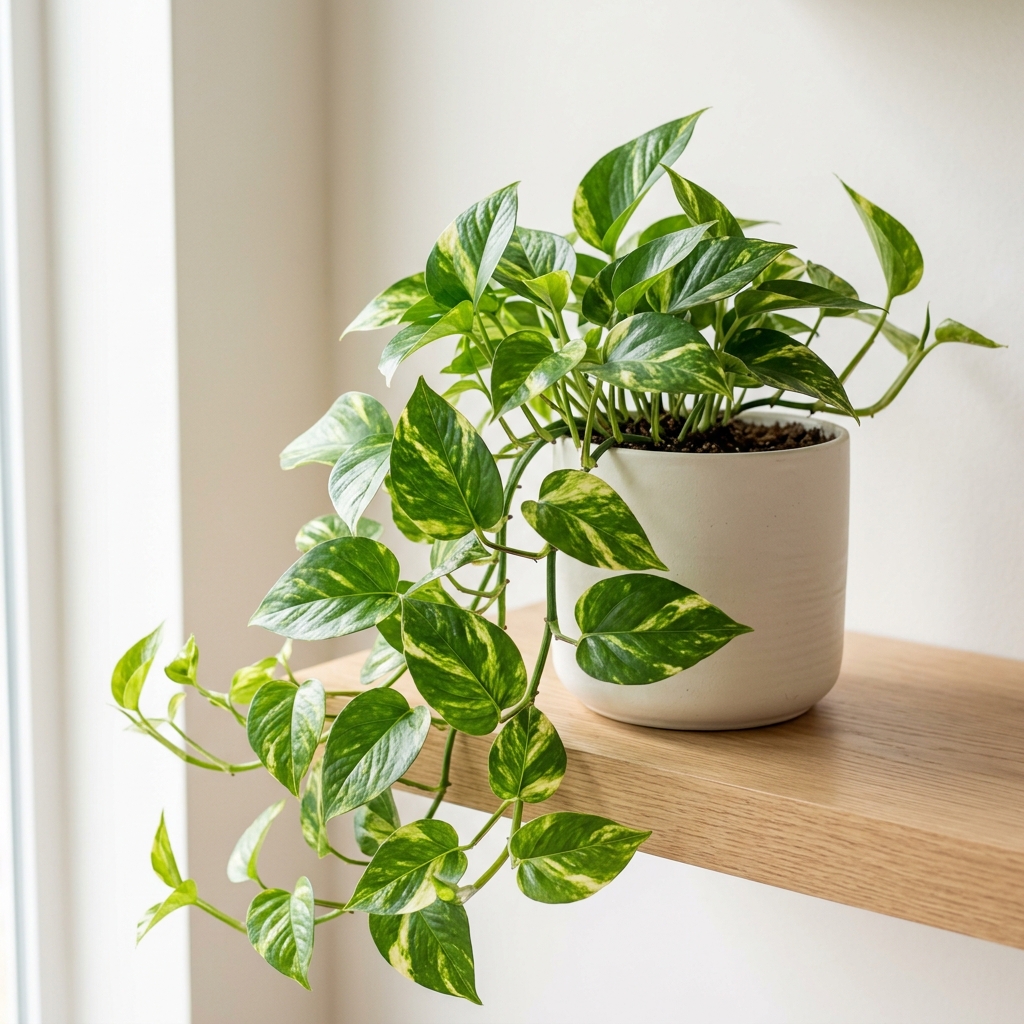
Alpine Pothos
Epipremnum aureum
Epipremnum aureum is a species in the arum family Araceae, native to Mo'orea in the Society Islands of French Polynesia. The species is a popular houseplant in temperate regions, but has also become naturalised in tropical and sub-tropical forests worldwide, including northern South Africa, Australia, Southeast Asia, Indian subcontinent, the Pacific Islands and the West Indies, where it has caused severe ecological damage in some cases. Alpine is used here as a catalog label only. The care guide below describes the real species Pothos (Epipremnum aureum) and does not claim a verified botanical variety unless one is separately documented.
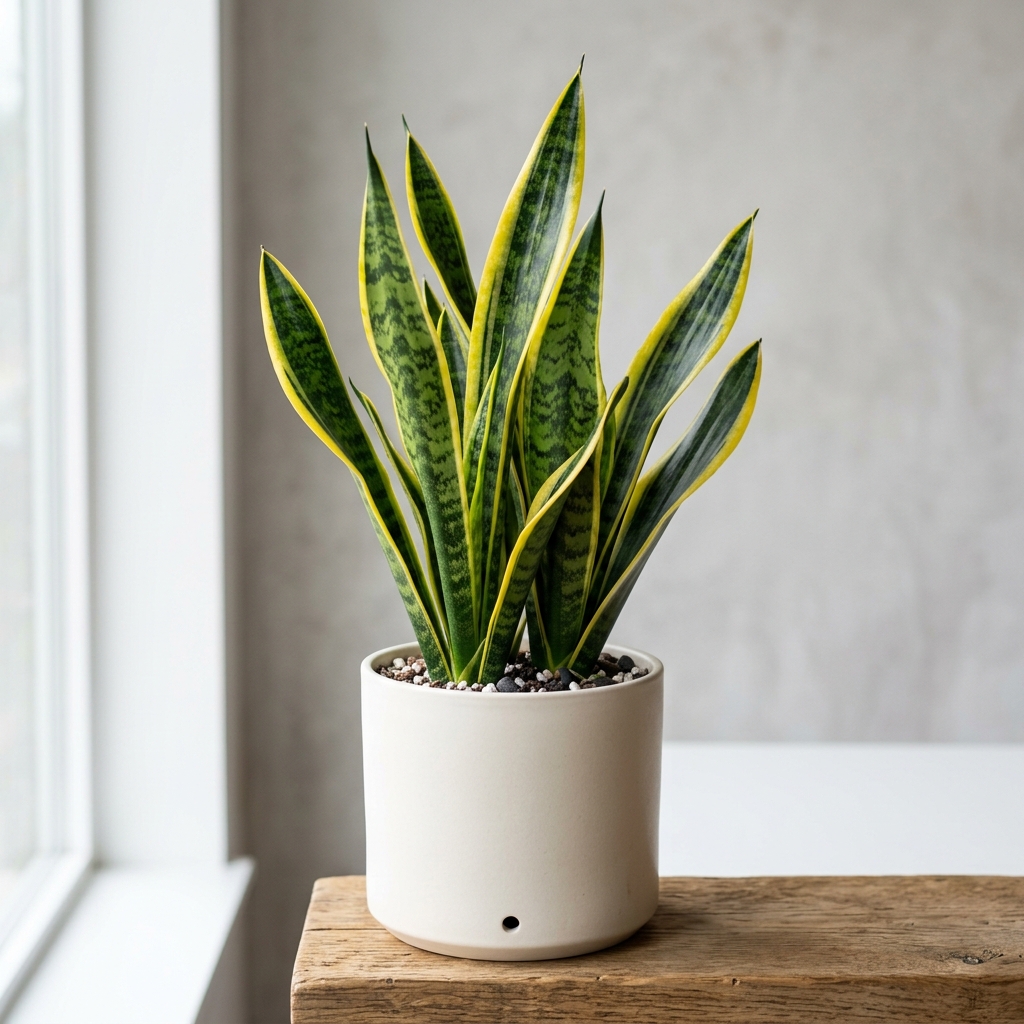
Alpine Snake Plant
Sansevieria trifasciata
Dracaena trifasciata is a species of flowering plant in the family Asparagaceae, native to tropical West Africa from Nigeria east to the Congo. It is most commonly known as the snake plant, Saint George's sword, mother-in-law's tongue, and viper's bowstring hemp, among other names. Until 2017, it was known under the synonym Sansevieria trifasciata. This plant is often kept as a houseplant due to its non-demanding maintenance; they can survive with very little water and sun. Alpine is used here as a catalog label only. The care guide below describes the real species Snake Plant (Sansevieria trifasciata) and does not claim a verified botanical variety unless one is separately documented.

Alpine ZZ Plant
Zamioculcas zamiifolia
Zamioculcas is a genus of flowering plants in the family Araceae, containing the single species Zamioculcas zamiifolia. It is a tropical herbaceous perennial plant, and is native to eastern Africa, including Kenya, KwaZulu-Natal, Malawi, Mozambique, Tanzania, and Zimbabwe. Its common names include Zanzibar gem, Zuzu plant, emerald palm, ZZ plant, aroid palm and eternity plant. It is commonly grown as a houseplant, mainly because it has attractive glossy foliage and is easy to care for. Zamioculcas zamiifolia is winter-hardy in USDA Zones 9 and 10. Alpine is used here as a catalog label only. The care guide below describes the real species ZZ Plant (Zamioculcas zamiifolia) and does not claim a verified botanical variety unless one is separately documented.
Dwarf Cast Iron Plant
Aspidistra elatior
Aspidistra elatior, the cast-iron-plant or bar-room plant, also known in Japanese as haran or baran (葉蘭) is a species of flowering plant in the family Asparagaceae, native to Japan and Taiwan. Tolerant of neglect, it is widely cultivated as a houseplant, but can also be grown outside in shade where temperatures remain above −15 °C (5 °F). It is used as training material for the seika form of ikebana. Dwarf is used here as a catalog label only. The care guide below describes the real species Cast Iron Plant (Aspidistra elatior) and does not claim a verified botanical variety unless one is separately documented.
Dwarf Chinese Evergreen
Aglaonema commutatum
Aglaonema commutatum, the poison dart plant, is a species of flowering plant in the Chinese evergreen genus Aglaonema, family Araceae. It is native to the Philippines and northeastern Sulawesi, and has been introduced to other tropical locales, including Cuba, Puerto Rico, Trinidad and Tobago, Comoros, the Chagos Archipelago, India, Bangladesh, and the Cook Islands. Its hybrid cultivar 'Silver Queen' has gained the Royal Horticultural Society's Award of Garden Merit as a houseplant. Dwarf is used here as a catalog label only. The care guide below describes the real species Chinese Evergreen (Aglaonema commutatum) and does not claim a verified botanical variety unless one is separately documented.
Dwarf English Ivy
Hedera helix
Hedera helix, simply ivy, or common ivy, English ivy, European ivy, King's choice ivy, is a species of flowering plant in the family Araliaceae. It is native to most of Europe and parts of western Asia. Ivy is a clinging evergreen vine that grows on tree trunks, walls, and fences in gardens, waste spaces, and wild habitats. Ivy is popular as an ornamental plant, but escaped plants have become naturalised outside its native range. Ivy has considerable cultural significance and symbolism. Dwarf is used here as a catalog label only. The care guide below describes the real species English Ivy (Hedera helix) and does not claim a verified botanical variety unless one is separately documented.
Dwarf Pothos
Epipremnum aureum
Epipremnum aureum is a species in the arum family Araceae, native to Mo'orea in the Society Islands of French Polynesia. The species is a popular houseplant in temperate regions, but has also become naturalised in tropical and sub-tropical forests worldwide, including northern South Africa, Australia, Southeast Asia, Indian subcontinent, the Pacific Islands and the West Indies, where it has caused severe ecological damage in some cases. Dwarf is used here as a catalog label only. The care guide below describes the real species Pothos (Epipremnum aureum) and does not claim a verified botanical variety unless one is separately documented.
Dwarf Snake Plant
Sansevieria trifasciata
Dracaena trifasciata is a species of flowering plant in the family Asparagaceae, native to tropical West Africa from Nigeria east to the Congo. It is most commonly known as the snake plant, Saint George's sword, mother-in-law's tongue, and viper's bowstring hemp, among other names. Until 2017, it was known under the synonym Sansevieria trifasciata. This plant is often kept as a houseplant due to its non-demanding maintenance; they can survive with very little water and sun. Dwarf is used here as a catalog label only. The care guide below describes the real species Snake Plant (Sansevieria trifasciata) and does not claim a verified botanical variety unless one is separately documented.
Dwarf ZZ Plant
Zamioculcas zamiifolia
Zamioculcas is a genus of flowering plants in the family Araceae, containing the single species Zamioculcas zamiifolia. It is a tropical herbaceous perennial plant, and is native to eastern Africa, including Kenya, KwaZulu-Natal, Malawi, Mozambique, Tanzania, and Zimbabwe. Its common names include Zanzibar gem, Zuzu plant, emerald palm, ZZ plant, aroid palm and eternity plant. It is commonly grown as a houseplant, mainly because it has attractive glossy foliage and is easy to care for. Zamioculcas zamiifolia is winter-hardy in USDA Zones 9 and 10. Dwarf is used here as a catalog label only. The care guide below describes the real species ZZ Plant (Zamioculcas zamiifolia) and does not claim a verified botanical variety unless one is separately documented.
Emerald Cast Iron Plant
Aspidistra elatior
Aspidistra elatior, the cast-iron-plant or bar-room plant, also known in Japanese as haran or baran (葉蘭) is a species of flowering plant in the family Asparagaceae, native to Japan and Taiwan. Tolerant of neglect, it is widely cultivated as a houseplant, but can also be grown outside in shade where temperatures remain above −15 °C (5 °F). It is used as training material for the seika form of ikebana. Emerald is used here as a catalog label only. The care guide below describes the real species Cast Iron Plant (Aspidistra elatior) and does not claim a verified botanical variety unless one is separately documented.
Emerald Chinese Evergreen
Aglaonema commutatum
Aglaonema commutatum, the poison dart plant, is a species of flowering plant in the Chinese evergreen genus Aglaonema, family Araceae. It is native to the Philippines and northeastern Sulawesi, and has been introduced to other tropical locales, including Cuba, Puerto Rico, Trinidad and Tobago, Comoros, the Chagos Archipelago, India, Bangladesh, and the Cook Islands. Its hybrid cultivar 'Silver Queen' has gained the Royal Horticultural Society's Award of Garden Merit as a houseplant. Emerald is used here as a catalog label only. The care guide below describes the real species Chinese Evergreen (Aglaonema commutatum) and does not claim a verified botanical variety unless one is separately documented.
Emerald English Ivy
Hedera helix
Hedera helix, simply ivy, or common ivy, English ivy, European ivy, King's choice ivy, is a species of flowering plant in the family Araliaceae. It is native to most of Europe and parts of western Asia. Ivy is a clinging evergreen vine that grows on tree trunks, walls, and fences in gardens, waste spaces, and wild habitats. Ivy is popular as an ornamental plant, but escaped plants have become naturalised outside its native range. Ivy has considerable cultural significance and symbolism. Emerald is used here as a catalog label only. The care guide below describes the real species English Ivy (Hedera helix) and does not claim a verified botanical variety unless one is separately documented.
Emerald Pothos
Epipremnum aureum
Epipremnum aureum is a species in the arum family Araceae, native to Mo'orea in the Society Islands of French Polynesia. The species is a popular houseplant in temperate regions, but has also become naturalised in tropical and sub-tropical forests worldwide, including northern South Africa, Australia, Southeast Asia, Indian subcontinent, the Pacific Islands and the West Indies, where it has caused severe ecological damage in some cases. Emerald is used here as a catalog label only. The care guide below describes the real species Pothos (Epipremnum aureum) and does not claim a verified botanical variety unless one is separately documented.
Emerald Snake Plant
Sansevieria trifasciata
Dracaena trifasciata is a species of flowering plant in the family Asparagaceae, native to tropical West Africa from Nigeria east to the Congo. It is most commonly known as the snake plant, Saint George's sword, mother-in-law's tongue, and viper's bowstring hemp, among other names. Until 2017, it was known under the synonym Sansevieria trifasciata. This plant is often kept as a houseplant due to its non-demanding maintenance; they can survive with very little water and sun. Emerald is used here as a catalog label only. The care guide below describes the real species Snake Plant (Sansevieria trifasciata) and does not claim a verified botanical variety unless one is separately documented.
Emerald ZZ Plant
Zamioculcas zamiifolia
Zamioculcas is a genus of flowering plants in the family Araceae, containing the single species Zamioculcas zamiifolia. It is a tropical herbaceous perennial plant, and is native to eastern Africa, including Kenya, KwaZulu-Natal, Malawi, Mozambique, Tanzania, and Zimbabwe. Its common names include Zanzibar gem, Zuzu plant, emerald palm, ZZ plant, aroid palm and eternity plant. It is commonly grown as a houseplant, mainly because it has attractive glossy foliage and is easy to care for. Zamioculcas zamiifolia is winter-hardy in USDA Zones 9 and 10. Emerald is used here as a catalog label only. The care guide below describes the real species ZZ Plant (Zamioculcas zamiifolia) and does not claim a verified botanical variety unless one is separately documented.
Giant Cast Iron Plant
Aspidistra elatior
Aspidistra elatior, the cast-iron-plant or bar-room plant, also known in Japanese as haran or baran (葉蘭) is a species of flowering plant in the family Asparagaceae, native to Japan and Taiwan. Tolerant of neglect, it is widely cultivated as a houseplant, but can also be grown outside in shade where temperatures remain above −15 °C (5 °F). It is used as training material for the seika form of ikebana. Giant is used here as a catalog label only. The care guide below describes the real species Cast Iron Plant (Aspidistra elatior) and does not claim a verified botanical variety unless one is separately documented.
Giant Chinese Evergreen
Aglaonema commutatum
Aglaonema commutatum, the poison dart plant, is a species of flowering plant in the Chinese evergreen genus Aglaonema, family Araceae. It is native to the Philippines and northeastern Sulawesi, and has been introduced to other tropical locales, including Cuba, Puerto Rico, Trinidad and Tobago, Comoros, the Chagos Archipelago, India, Bangladesh, and the Cook Islands. Its hybrid cultivar 'Silver Queen' has gained the Royal Horticultural Society's Award of Garden Merit as a houseplant. Giant is used here as a catalog label only. The care guide below describes the real species Chinese Evergreen (Aglaonema commutatum) and does not claim a verified botanical variety unless one is separately documented.
Giant English Ivy
Hedera helix
Hedera helix, simply ivy, or common ivy, English ivy, European ivy, King's choice ivy, is a species of flowering plant in the family Araliaceae. It is native to most of Europe and parts of western Asia. Ivy is a clinging evergreen vine that grows on tree trunks, walls, and fences in gardens, waste spaces, and wild habitats. Ivy is popular as an ornamental plant, but escaped plants have become naturalised outside its native range. Ivy has considerable cultural significance and symbolism. Giant is used here as a catalog label only. The care guide below describes the real species English Ivy (Hedera helix) and does not claim a verified botanical variety unless one is separately documented.
Giant Pothos
Epipremnum aureum
Epipremnum aureum is a species in the arum family Araceae, native to Mo'orea in the Society Islands of French Polynesia. The species is a popular houseplant in temperate regions, but has also become naturalised in tropical and sub-tropical forests worldwide, including northern South Africa, Australia, Southeast Asia, Indian subcontinent, the Pacific Islands and the West Indies, where it has caused severe ecological damage in some cases. Giant is used here as a catalog label only. The care guide below describes the real species Pothos (Epipremnum aureum) and does not claim a verified botanical variety unless one is separately documented.
Giant Snake Plant
Sansevieria trifasciata
Dracaena trifasciata is a species of flowering plant in the family Asparagaceae, native to tropical West Africa from Nigeria east to the Congo. It is most commonly known as the snake plant, Saint George's sword, mother-in-law's tongue, and viper's bowstring hemp, among other names. Until 2017, it was known under the synonym Sansevieria trifasciata. This plant is often kept as a houseplant due to its non-demanding maintenance; they can survive with very little water and sun. Giant is used here as a catalog label only. The care guide below describes the real species Snake Plant (Sansevieria trifasciata) and does not claim a verified botanical variety unless one is separately documented.
Giant ZZ Plant
Zamioculcas zamiifolia
Zamioculcas is a genus of flowering plants in the family Araceae, containing the single species Zamioculcas zamiifolia. It is a tropical herbaceous perennial plant, and is native to eastern Africa, including Kenya, KwaZulu-Natal, Malawi, Mozambique, Tanzania, and Zimbabwe. Its common names include Zanzibar gem, Zuzu plant, emerald palm, ZZ plant, aroid palm and eternity plant. It is commonly grown as a houseplant, mainly because it has attractive glossy foliage and is easy to care for. Zamioculcas zamiifolia is winter-hardy in USDA Zones 9 and 10. Giant is used here as a catalog label only. The care guide below describes the real species ZZ Plant (Zamioculcas zamiifolia) and does not claim a verified botanical variety unless one is separately documented.
Golden Cast Iron Plant
Aspidistra elatior
Aspidistra elatior, the cast-iron-plant or bar-room plant, also known in Japanese as haran or baran (葉蘭) is a species of flowering plant in the family Asparagaceae, native to Japan and Taiwan. Tolerant of neglect, it is widely cultivated as a houseplant, but can also be grown outside in shade where temperatures remain above −15 °C (5 °F). It is used as training material for the seika form of ikebana. Golden is used here as a catalog label only. The care guide below describes the real species Cast Iron Plant (Aspidistra elatior) and does not claim a verified botanical variety unless one is separately documented.
Golden Chinese Evergreen
Aglaonema commutatum
Aglaonema commutatum, the poison dart plant, is a species of flowering plant in the Chinese evergreen genus Aglaonema, family Araceae. It is native to the Philippines and northeastern Sulawesi, and has been introduced to other tropical locales, including Cuba, Puerto Rico, Trinidad and Tobago, Comoros, the Chagos Archipelago, India, Bangladesh, and the Cook Islands. Its hybrid cultivar 'Silver Queen' has gained the Royal Horticultural Society's Award of Garden Merit as a houseplant. Golden is used here as a catalog label only. The care guide below describes the real species Chinese Evergreen (Aglaonema commutatum) and does not claim a verified botanical variety unless one is separately documented.
Golden English Ivy
Hedera helix
Hedera helix, simply ivy, or common ivy, English ivy, European ivy, King's choice ivy, is a species of flowering plant in the family Araliaceae. It is native to most of Europe and parts of western Asia. Ivy is a clinging evergreen vine that grows on tree trunks, walls, and fences in gardens, waste spaces, and wild habitats. Ivy is popular as an ornamental plant, but escaped plants have become naturalised outside its native range. Ivy has considerable cultural significance and symbolism. Golden is used here as a catalog label only. The care guide below describes the real species English Ivy (Hedera helix) and does not claim a verified botanical variety unless one is separately documented.
Golden Pothos
Epipremnum aureum
Epipremnum aureum is a species in the arum family Araceae, native to Mo'orea in the Society Islands of French Polynesia. The species is a popular houseplant in temperate regions, but has also become naturalised in tropical and sub-tropical forests worldwide, including northern South Africa, Australia, Southeast Asia, Indian subcontinent, the Pacific Islands and the West Indies, where it has caused severe ecological damage in some cases. Golden is used here as a catalog label only. The care guide below describes the real species Pothos (Epipremnum aureum) and does not claim a verified botanical variety unless one is separately documented.
Golden Snake Plant
Sansevieria trifasciata
Dracaena trifasciata is a species of flowering plant in the family Asparagaceae, native to tropical West Africa from Nigeria east to the Congo. It is most commonly known as the snake plant, Saint George's sword, mother-in-law's tongue, and viper's bowstring hemp, among other names. Until 2017, it was known under the synonym Sansevieria trifasciata. This plant is often kept as a houseplant due to its non-demanding maintenance; they can survive with very little water and sun. Golden is used here as a catalog label only. The care guide below describes the real species Snake Plant (Sansevieria trifasciata) and does not claim a verified botanical variety unless one is separately documented.
Golden ZZ Plant
Zamioculcas zamiifolia
Zamioculcas is a genus of flowering plants in the family Araceae, containing the single species Zamioculcas zamiifolia. It is a tropical herbaceous perennial plant, and is native to eastern Africa, including Kenya, KwaZulu-Natal, Malawi, Mozambique, Tanzania, and Zimbabwe. Its common names include Zanzibar gem, Zuzu plant, emerald palm, ZZ plant, aroid palm and eternity plant. It is commonly grown as a houseplant, mainly because it has attractive glossy foliage and is easy to care for. Zamioculcas zamiifolia is winter-hardy in USDA Zones 9 and 10. Golden is used here as a catalog label only. The care guide below describes the real species ZZ Plant (Zamioculcas zamiifolia) and does not claim a verified botanical variety unless one is separately documented.
Neon Cast Iron Plant
Aspidistra elatior
Aspidistra elatior, the cast-iron-plant or bar-room plant, also known in Japanese as haran or baran (葉蘭) is a species of flowering plant in the family Asparagaceae, native to Japan and Taiwan. Tolerant of neglect, it is widely cultivated as a houseplant, but can also be grown outside in shade where temperatures remain above −15 °C (5 °F). It is used as training material for the seika form of ikebana. Neon is used here as a catalog label only. The care guide below describes the real species Cast Iron Plant (Aspidistra elatior) and does not claim a verified botanical variety unless one is separately documented.
Neon Chinese Evergreen
Aglaonema commutatum
Aglaonema commutatum, the poison dart plant, is a species of flowering plant in the Chinese evergreen genus Aglaonema, family Araceae. It is native to the Philippines and northeastern Sulawesi, and has been introduced to other tropical locales, including Cuba, Puerto Rico, Trinidad and Tobago, Comoros, the Chagos Archipelago, India, Bangladesh, and the Cook Islands. Its hybrid cultivar 'Silver Queen' has gained the Royal Horticultural Society's Award of Garden Merit as a houseplant. Neon is used here as a catalog label only. The care guide below describes the real species Chinese Evergreen (Aglaonema commutatum) and does not claim a verified botanical variety unless one is separately documented.
Neon English Ivy
Hedera helix
Hedera helix, simply ivy, or common ivy, English ivy, European ivy, King's choice ivy, is a species of flowering plant in the family Araliaceae. It is native to most of Europe and parts of western Asia. Ivy is a clinging evergreen vine that grows on tree trunks, walls, and fences in gardens, waste spaces, and wild habitats. Ivy is popular as an ornamental plant, but escaped plants have become naturalised outside its native range. Ivy has considerable cultural significance and symbolism. Neon is used here as a catalog label only. The care guide below describes the real species English Ivy (Hedera helix) and does not claim a verified botanical variety unless one is separately documented.
Neon Pothos
Epipremnum aureum
Epipremnum aureum is a species in the arum family Araceae, native to Mo'orea in the Society Islands of French Polynesia. The species is a popular houseplant in temperate regions, but has also become naturalised in tropical and sub-tropical forests worldwide, including northern South Africa, Australia, Southeast Asia, Indian subcontinent, the Pacific Islands and the West Indies, where it has caused severe ecological damage in some cases. Neon is used here as a catalog label only. The care guide below describes the real species Pothos (Epipremnum aureum) and does not claim a verified botanical variety unless one is separately documented.
Neon Snake Plant
Sansevieria trifasciata
Dracaena trifasciata is a species of flowering plant in the family Asparagaceae, native to tropical West Africa from Nigeria east to the Congo. It is most commonly known as the snake plant, Saint George's sword, mother-in-law's tongue, and viper's bowstring hemp, among other names. Until 2017, it was known under the synonym Sansevieria trifasciata. This plant is often kept as a houseplant due to its non-demanding maintenance; they can survive with very little water and sun. Neon is used here as a catalog label only. The care guide below describes the real species Snake Plant (Sansevieria trifasciata) and does not claim a verified botanical variety unless one is separately documented.
Neon ZZ Plant
Zamioculcas zamiifolia
Zamioculcas is a genus of flowering plants in the family Araceae, containing the single species Zamioculcas zamiifolia. It is a tropical herbaceous perennial plant, and is native to eastern Africa, including Kenya, KwaZulu-Natal, Malawi, Mozambique, Tanzania, and Zimbabwe. Its common names include Zanzibar gem, Zuzu plant, emerald palm, ZZ plant, aroid palm and eternity plant. It is commonly grown as a houseplant, mainly because it has attractive glossy foliage and is easy to care for. Zamioculcas zamiifolia is winter-hardy in USDA Zones 9 and 10. Neon is used here as a catalog label only. The care guide below describes the real species ZZ Plant (Zamioculcas zamiifolia) and does not claim a verified botanical variety unless one is separately documented.
Silver Cast Iron Plant
Aspidistra elatior
Aspidistra elatior, the cast-iron-plant or bar-room plant, also known in Japanese as haran or baran (葉蘭) is a species of flowering plant in the family Asparagaceae, native to Japan and Taiwan. Tolerant of neglect, it is widely cultivated as a houseplant, but can also be grown outside in shade where temperatures remain above −15 °C (5 °F). It is used as training material for the seika form of ikebana. Silver is used here as a catalog label only. The care guide below describes the real species Cast Iron Plant (Aspidistra elatior) and does not claim a verified botanical variety unless one is separately documented.
Silver Chinese Evergreen
Aglaonema commutatum
Aglaonema commutatum, the poison dart plant, is a species of flowering plant in the Chinese evergreen genus Aglaonema, family Araceae. It is native to the Philippines and northeastern Sulawesi, and has been introduced to other tropical locales, including Cuba, Puerto Rico, Trinidad and Tobago, Comoros, the Chagos Archipelago, India, Bangladesh, and the Cook Islands. Its hybrid cultivar 'Silver Queen' has gained the Royal Horticultural Society's Award of Garden Merit as a houseplant. Silver is used here as a catalog label only. The care guide below describes the real species Chinese Evergreen (Aglaonema commutatum) and does not claim a verified botanical variety unless one is separately documented.
Silver English Ivy
Hedera helix
Hedera helix, simply ivy, or common ivy, English ivy, European ivy, King's choice ivy, is a species of flowering plant in the family Araliaceae. It is native to most of Europe and parts of western Asia. Ivy is a clinging evergreen vine that grows on tree trunks, walls, and fences in gardens, waste spaces, and wild habitats. Ivy is popular as an ornamental plant, but escaped plants have become naturalised outside its native range. Ivy has considerable cultural significance and symbolism. Silver is used here as a catalog label only. The care guide below describes the real species English Ivy (Hedera helix) and does not claim a verified botanical variety unless one is separately documented.
Silver Pothos
Epipremnum aureum
Epipremnum aureum is a species in the arum family Araceae, native to Mo'orea in the Society Islands of French Polynesia. The species is a popular houseplant in temperate regions, but has also become naturalised in tropical and sub-tropical forests worldwide, including northern South Africa, Australia, Southeast Asia, Indian subcontinent, the Pacific Islands and the West Indies, where it has caused severe ecological damage in some cases. Silver is used here as a catalog label only. The care guide below describes the real species Pothos (Epipremnum aureum) and does not claim a verified botanical variety unless one is separately documented.
Silver Snake Plant
Sansevieria trifasciata
Dracaena trifasciata is a species of flowering plant in the family Asparagaceae, native to tropical West Africa from Nigeria east to the Congo. It is most commonly known as the snake plant, Saint George's sword, mother-in-law's tongue, and viper's bowstring hemp, among other names. Until 2017, it was known under the synonym Sansevieria trifasciata. This plant is often kept as a houseplant due to its non-demanding maintenance; they can survive with very little water and sun. Silver is used here as a catalog label only. The care guide below describes the real species Snake Plant (Sansevieria trifasciata) and does not claim a verified botanical variety unless one is separately documented.
Silver ZZ Plant
Zamioculcas zamiifolia
Zamioculcas is a genus of flowering plants in the family Araceae, containing the single species Zamioculcas zamiifolia. It is a tropical herbaceous perennial plant, and is native to eastern Africa, including Kenya, KwaZulu-Natal, Malawi, Mozambique, Tanzania, and Zimbabwe. Its common names include Zanzibar gem, Zuzu plant, emerald palm, ZZ plant, aroid palm and eternity plant. It is commonly grown as a houseplant, mainly because it has attractive glossy foliage and is easy to care for. Zamioculcas zamiifolia is winter-hardy in USDA Zones 9 and 10. Silver is used here as a catalog label only. The care guide below describes the real species ZZ Plant (Zamioculcas zamiifolia) and does not claim a verified botanical variety unless one is separately documented.
Standard Cast Iron Plant
Aspidistra elatior
Aspidistra elatior, the cast-iron-plant or bar-room plant, also known in Japanese as haran or baran (葉蘭) is a species of flowering plant in the family Asparagaceae, native to Japan and Taiwan. Tolerant of neglect, it is widely cultivated as a houseplant, but can also be grown outside in shade where temperatures remain above −15 °C (5 °F). It is used as training material for the seika form of ikebana. Standard is used here as a catalog label only. The care guide below describes the real species Cast Iron Plant (Aspidistra elatior) and does not claim a verified botanical variety unless one is separately documented.
Standard Chinese Evergreen
Aglaonema commutatum
Aglaonema commutatum, the poison dart plant, is a species of flowering plant in the Chinese evergreen genus Aglaonema, family Araceae. It is native to the Philippines and northeastern Sulawesi, and has been introduced to other tropical locales, including Cuba, Puerto Rico, Trinidad and Tobago, Comoros, the Chagos Archipelago, India, Bangladesh, and the Cook Islands. Its hybrid cultivar 'Silver Queen' has gained the Royal Horticultural Society's Award of Garden Merit as a houseplant. Standard is used here as a catalog label only. The care guide below describes the real species Chinese Evergreen (Aglaonema commutatum) and does not claim a verified botanical variety unless one is separately documented.
Standard English Ivy
Hedera helix
Hedera helix, simply ivy, or common ivy, English ivy, European ivy, King's choice ivy, is a species of flowering plant in the family Araliaceae. It is native to most of Europe and parts of western Asia. Ivy is a clinging evergreen vine that grows on tree trunks, walls, and fences in gardens, waste spaces, and wild habitats. Ivy is popular as an ornamental plant, but escaped plants have become naturalised outside its native range. Ivy has considerable cultural significance and symbolism. Standard is used here as a catalog label only. The care guide below describes the real species English Ivy (Hedera helix) and does not claim a verified botanical variety unless one is separately documented.
Standard Pothos
Epipremnum aureum
Epipremnum aureum is a species in the arum family Araceae, native to Mo'orea in the Society Islands of French Polynesia. The species is a popular houseplant in temperate regions, but has also become naturalised in tropical and sub-tropical forests worldwide, including northern South Africa, Australia, Southeast Asia, Indian subcontinent, the Pacific Islands and the West Indies, where it has caused severe ecological damage in some cases. Standard is used here as a catalog label only. The care guide below describes the real species Pothos (Epipremnum aureum) and does not claim a verified botanical variety unless one is separately documented.
Standard Snake Plant
Sansevieria trifasciata
Dracaena trifasciata is a species of flowering plant in the family Asparagaceae, native to tropical West Africa from Nigeria east to the Congo. It is most commonly known as the snake plant, Saint George's sword, mother-in-law's tongue, and viper's bowstring hemp, among other names. Until 2017, it was known under the synonym Sansevieria trifasciata. This plant is often kept as a houseplant due to its non-demanding maintenance; they can survive with very little water and sun. Standard is used here as a catalog label only. The care guide below describes the real species Snake Plant (Sansevieria trifasciata) and does not claim a verified botanical variety unless one is separately documented.
Standard ZZ Plant
Zamioculcas zamiifolia
Zamioculcas is a genus of flowering plants in the family Araceae, containing the single species Zamioculcas zamiifolia. It is a tropical herbaceous perennial plant, and is native to eastern Africa, including Kenya, KwaZulu-Natal, Malawi, Mozambique, Tanzania, and Zimbabwe. Its common names include Zanzibar gem, Zuzu plant, emerald palm, ZZ plant, aroid palm and eternity plant. It is commonly grown as a houseplant, mainly because it has attractive glossy foliage and is easy to care for. Zamioculcas zamiifolia is winter-hardy in USDA Zones 9 and 10. Standard is used here as a catalog label only. The care guide below describes the real species ZZ Plant (Zamioculcas zamiifolia) and does not claim a verified botanical variety unless one is separately documented.
Sweet Cast Iron Plant
Aspidistra elatior
Aspidistra elatior, the cast-iron-plant or bar-room plant, also known in Japanese as haran or baran (葉蘭) is a species of flowering plant in the family Asparagaceae, native to Japan and Taiwan. Tolerant of neglect, it is widely cultivated as a houseplant, but can also be grown outside in shade where temperatures remain above −15 °C (5 °F). It is used as training material for the seika form of ikebana. Sweet is used here as a catalog label only. The care guide below describes the real species Cast Iron Plant (Aspidistra elatior) and does not claim a verified botanical variety unless one is separately documented.
Sweet Chinese Evergreen
Aglaonema commutatum
Aglaonema commutatum, the poison dart plant, is a species of flowering plant in the Chinese evergreen genus Aglaonema, family Araceae. It is native to the Philippines and northeastern Sulawesi, and has been introduced to other tropical locales, including Cuba, Puerto Rico, Trinidad and Tobago, Comoros, the Chagos Archipelago, India, Bangladesh, and the Cook Islands. Its hybrid cultivar 'Silver Queen' has gained the Royal Horticultural Society's Award of Garden Merit as a houseplant. Sweet is used here as a catalog label only. The care guide below describes the real species Chinese Evergreen (Aglaonema commutatum) and does not claim a verified botanical variety unless one is separately documented.
Sweet English Ivy
Hedera helix
Hedera helix, simply ivy, or common ivy, English ivy, European ivy, King's choice ivy, is a species of flowering plant in the family Araliaceae. It is native to most of Europe and parts of western Asia. Ivy is a clinging evergreen vine that grows on tree trunks, walls, and fences in gardens, waste spaces, and wild habitats. Ivy is popular as an ornamental plant, but escaped plants have become naturalised outside its native range. Ivy has considerable cultural significance and symbolism. Sweet is used here as a catalog label only. The care guide below describes the real species English Ivy (Hedera helix) and does not claim a verified botanical variety unless one is separately documented.
Sweet Pothos
Epipremnum aureum
Epipremnum aureum is a species in the arum family Araceae, native to Mo'orea in the Society Islands of French Polynesia. The species is a popular houseplant in temperate regions, but has also become naturalised in tropical and sub-tropical forests worldwide, including northern South Africa, Australia, Southeast Asia, Indian subcontinent, the Pacific Islands and the West Indies, where it has caused severe ecological damage in some cases. Sweet is used here as a catalog label only. The care guide below describes the real species Pothos (Epipremnum aureum) and does not claim a verified botanical variety unless one is separately documented.
Sweet Snake Plant
Sansevieria trifasciata
Dracaena trifasciata is a species of flowering plant in the family Asparagaceae, native to tropical West Africa from Nigeria east to the Congo. It is most commonly known as the snake plant, Saint George's sword, mother-in-law's tongue, and viper's bowstring hemp, among other names. Until 2017, it was known under the synonym Sansevieria trifasciata. This plant is often kept as a houseplant due to its non-demanding maintenance; they can survive with very little water and sun. Sweet is used here as a catalog label only. The care guide below describes the real species Snake Plant (Sansevieria trifasciata) and does not claim a verified botanical variety unless one is separately documented.
Sweet ZZ Plant
Zamioculcas zamiifolia
Zamioculcas is a genus of flowering plants in the family Araceae, containing the single species Zamioculcas zamiifolia. It is a tropical herbaceous perennial plant, and is native to eastern Africa, including Kenya, KwaZulu-Natal, Malawi, Mozambique, Tanzania, and Zimbabwe. Its common names include Zanzibar gem, Zuzu plant, emerald palm, ZZ plant, aroid palm and eternity plant. It is commonly grown as a houseplant, mainly because it has attractive glossy foliage and is easy to care for. Zamioculcas zamiifolia is winter-hardy in USDA Zones 9 and 10. Sweet is used here as a catalog label only. The care guide below describes the real species ZZ Plant (Zamioculcas zamiifolia) and does not claim a verified botanical variety unless one is separately documented.
Variegated Cast Iron Plant
Aspidistra elatior
Aspidistra elatior, the cast-iron-plant or bar-room plant, also known in Japanese as haran or baran (葉蘭) is a species of flowering plant in the family Asparagaceae, native to Japan and Taiwan. Tolerant of neglect, it is widely cultivated as a houseplant, but can also be grown outside in shade where temperatures remain above −15 °C (5 °F). It is used as training material for the seika form of ikebana. Variegated is used here as a catalog label only. The care guide below describes the real species Cast Iron Plant (Aspidistra elatior) and does not claim a verified botanical variety unless one is separately documented.
Variegated Chinese Evergreen
Aglaonema commutatum
Aglaonema commutatum, the poison dart plant, is a species of flowering plant in the Chinese evergreen genus Aglaonema, family Araceae. It is native to the Philippines and northeastern Sulawesi, and has been introduced to other tropical locales, including Cuba, Puerto Rico, Trinidad and Tobago, Comoros, the Chagos Archipelago, India, Bangladesh, and the Cook Islands. Its hybrid cultivar 'Silver Queen' has gained the Royal Horticultural Society's Award of Garden Merit as a houseplant. Variegated is used here as a catalog label only. The care guide below describes the real species Chinese Evergreen (Aglaonema commutatum) and does not claim a verified botanical variety unless one is separately documented.
Variegated English Ivy
Hedera helix
Hedera helix, simply ivy, or common ivy, English ivy, European ivy, King's choice ivy, is a species of flowering plant in the family Araliaceae. It is native to most of Europe and parts of western Asia. Ivy is a clinging evergreen vine that grows on tree trunks, walls, and fences in gardens, waste spaces, and wild habitats. Ivy is popular as an ornamental plant, but escaped plants have become naturalised outside its native range. Ivy has considerable cultural significance and symbolism. Variegated is used here as a catalog label only. The care guide below describes the real species English Ivy (Hedera helix) and does not claim a verified botanical variety unless one is separately documented.
Variegated Pothos
Epipremnum aureum
Epipremnum aureum is a species in the arum family Araceae, native to Mo'orea in the Society Islands of French Polynesia. The species is a popular houseplant in temperate regions, but has also become naturalised in tropical and sub-tropical forests worldwide, including northern South Africa, Australia, Southeast Asia, Indian subcontinent, the Pacific Islands and the West Indies, where it has caused severe ecological damage in some cases. Variegated is used here as a catalog label only. The care guide below describes the real species Pothos (Epipremnum aureum) and does not claim a verified botanical variety unless one is separately documented.
Variegated Snake Plant
Sansevieria trifasciata
Dracaena trifasciata is a species of flowering plant in the family Asparagaceae, native to tropical West Africa from Nigeria east to the Congo. It is most commonly known as the snake plant, Saint George's sword, mother-in-law's tongue, and viper's bowstring hemp, among other names. Until 2017, it was known under the synonym Sansevieria trifasciata. This plant is often kept as a houseplant due to its non-demanding maintenance; they can survive with very little water and sun. Variegated is used here as a catalog label only. The care guide below describes the real species Snake Plant (Sansevieria trifasciata) and does not claim a verified botanical variety unless one is separately documented.
Variegated ZZ Plant
Zamioculcas zamiifolia
Zamioculcas is a genus of flowering plants in the family Araceae, containing the single species Zamioculcas zamiifolia. It is a tropical herbaceous perennial plant, and is native to eastern Africa, including Kenya, KwaZulu-Natal, Malawi, Mozambique, Tanzania, and Zimbabwe. Its common names include Zanzibar gem, Zuzu plant, emerald palm, ZZ plant, aroid palm and eternity plant. It is commonly grown as a houseplant, mainly because it has attractive glossy foliage and is easy to care for. Zamioculcas zamiifolia is winter-hardy in USDA Zones 9 and 10. Variegated is used here as a catalog label only. The care guide below describes the real species ZZ Plant (Zamioculcas zamiifolia) and does not claim a verified botanical variety unless one is separately documented.
Wild Cast Iron Plant
Aspidistra elatior
Aspidistra elatior, the cast-iron-plant or bar-room plant, also known in Japanese as haran or baran (葉蘭) is a species of flowering plant in the family Asparagaceae, native to Japan and Taiwan. Tolerant of neglect, it is widely cultivated as a houseplant, but can also be grown outside in shade where temperatures remain above −15 °C (5 °F). It is used as training material for the seika form of ikebana. Wild is used here as a catalog label only. The care guide below describes the real species Cast Iron Plant (Aspidistra elatior) and does not claim a verified botanical variety unless one is separately documented.
Wild Chinese Evergreen
Aglaonema commutatum
Aglaonema commutatum, the poison dart plant, is a species of flowering plant in the Chinese evergreen genus Aglaonema, family Araceae. It is native to the Philippines and northeastern Sulawesi, and has been introduced to other tropical locales, including Cuba, Puerto Rico, Trinidad and Tobago, Comoros, the Chagos Archipelago, India, Bangladesh, and the Cook Islands. Its hybrid cultivar 'Silver Queen' has gained the Royal Horticultural Society's Award of Garden Merit as a houseplant. Wild is used here as a catalog label only. The care guide below describes the real species Chinese Evergreen (Aglaonema commutatum) and does not claim a verified botanical variety unless one is separately documented.
Wild English Ivy
Hedera helix
Hedera helix, simply ivy, or common ivy, English ivy, European ivy, King's choice ivy, is a species of flowering plant in the family Araliaceae. It is native to most of Europe and parts of western Asia. Ivy is a clinging evergreen vine that grows on tree trunks, walls, and fences in gardens, waste spaces, and wild habitats. Ivy is popular as an ornamental plant, but escaped plants have become naturalised outside its native range. Ivy has considerable cultural significance and symbolism. Wild is used here as a catalog label only. The care guide below describes the real species English Ivy (Hedera helix) and does not claim a verified botanical variety unless one is separately documented.
Wild Pothos
Epipremnum aureum
Epipremnum aureum is a species in the arum family Araceae, native to Mo'orea in the Society Islands of French Polynesia. The species is a popular houseplant in temperate regions, but has also become naturalised in tropical and sub-tropical forests worldwide, including northern South Africa, Australia, Southeast Asia, Indian subcontinent, the Pacific Islands and the West Indies, where it has caused severe ecological damage in some cases. Wild is used here as a catalog label only. The care guide below describes the real species Pothos (Epipremnum aureum) and does not claim a verified botanical variety unless one is separately documented.
Wild Snake Plant
Sansevieria trifasciata
Dracaena trifasciata is a species of flowering plant in the family Asparagaceae, native to tropical West Africa from Nigeria east to the Congo. It is most commonly known as the snake plant, Saint George's sword, mother-in-law's tongue, and viper's bowstring hemp, among other names. Until 2017, it was known under the synonym Sansevieria trifasciata. This plant is often kept as a houseplant due to its non-demanding maintenance; they can survive with very little water and sun. Wild is used here as a catalog label only. The care guide below describes the real species Snake Plant (Sansevieria trifasciata) and does not claim a verified botanical variety unless one is separately documented.
Wild ZZ Plant
Zamioculcas zamiifolia
Zamioculcas is a genus of flowering plants in the family Araceae, containing the single species Zamioculcas zamiifolia. It is a tropical herbaceous perennial plant, and is native to eastern Africa, including Kenya, KwaZulu-Natal, Malawi, Mozambique, Tanzania, and Zimbabwe. Its common names include Zanzibar gem, Zuzu plant, emerald palm, ZZ plant, aroid palm and eternity plant. It is commonly grown as a houseplant, mainly because it has attractive glossy foliage and is easy to care for. Zamioculcas zamiifolia is winter-hardy in USDA Zones 9 and 10. Wild is used here as a catalog label only. The care guide below describes the real species ZZ Plant (Zamioculcas zamiifolia) and does not claim a verified botanical variety unless one is separately documented.