

Herbs
Plants belonging to the herbs botanical category.
Expert Care Tip
For Herbs:
Maintain consistent soil checking and provide adequate light for species growth.
Tip: Maintain consistent soil checking and provide adequate light for species growth.
No plants found
Try adjusting your search terms or view another category.
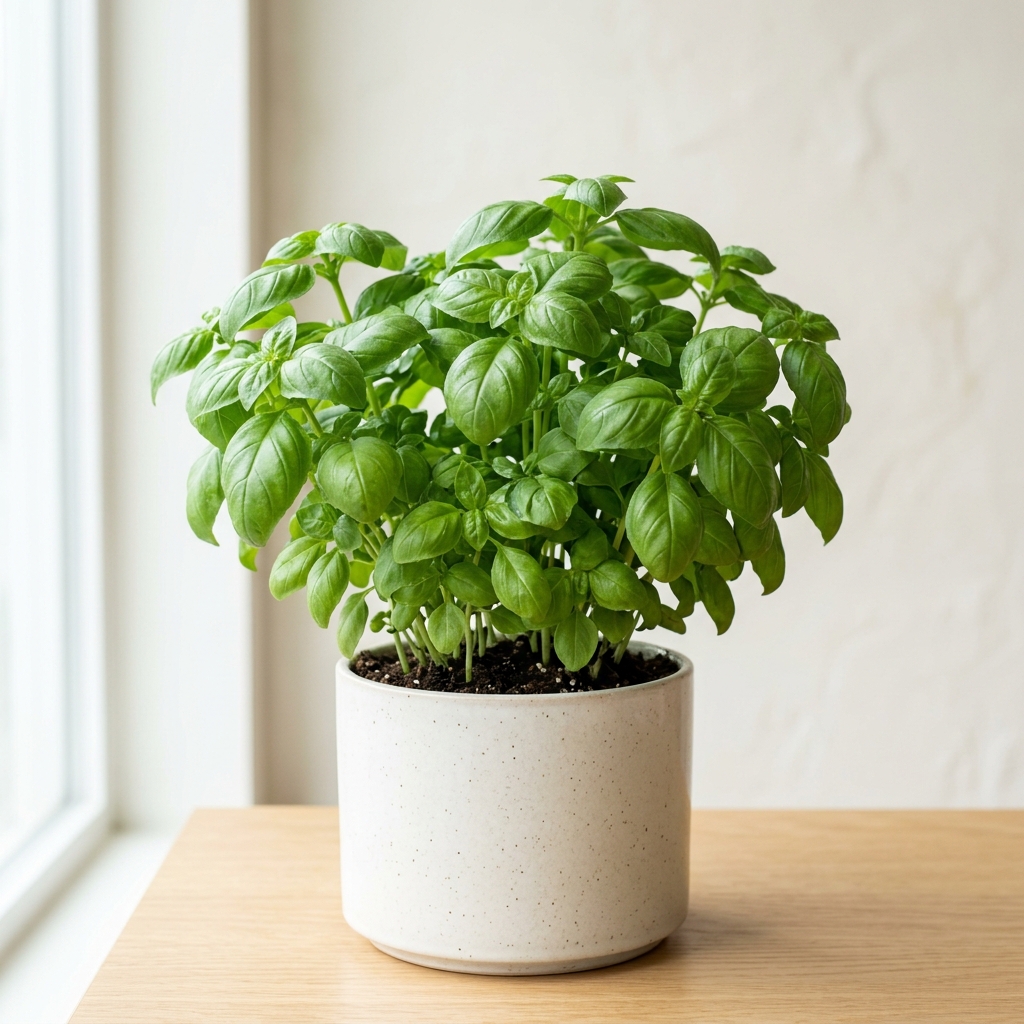
Alpine Basil
Ocimum basilicum
Basil, also called great basil, is a culinary herb of the family Lamiaceae (mints). It is a tender plant and is used in cuisines worldwide. In Western cuisine, the generic term "basil" refers to the variety also known as Genovese basil or sweet basil. Basil is native to tropical regions from Central Africa to Southeast Asia. In temperate climates basil is treated as an annual plant, but it can be grown as a short-lived perennial or biennial in warmer horticultural zones with tropical or Mediterranean climates. Alpine is used here as a catalog label only. The care guide below describes the real species Basil (Ocimum basilicum) and does not claim a verified botanical variety unless one is separately documented.
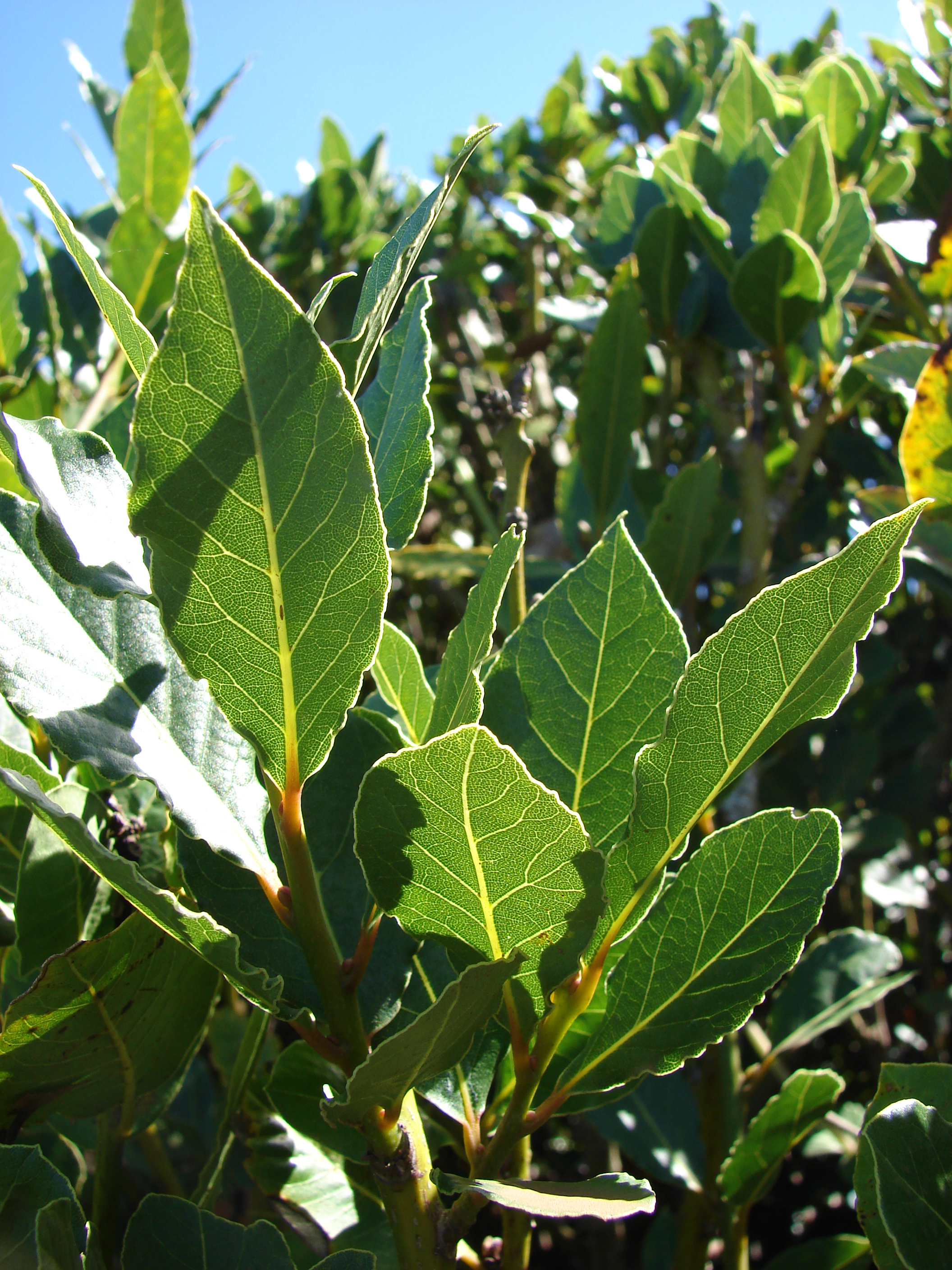
Alpine Bay Leaf
Laurus nobilis
Laurus nobilis is an aromatic evergreen tree or large shrub with green, glabrous (smooth) leaves. It is in the flowering plant family Lauraceae. According to Muer, Jahn, & Sauerbier, the stem can be 1 metre in diameter and the tree can be as high as 20 metres. It is native to the Mediterranean region and is used as bay leaf for seasoning in cooking. Its common names include bay tree, bay laurel, sweet bay, true laurel, Grecian laurel, or simply laurel. Laurus nobilis figures prominently in classical Greco-Roman culture. Alpine is used here as a catalog label only. The care guide below describes the real species Bay Leaf (Laurus nobilis) and does not claim a verified botanical variety unless one is separately documented.
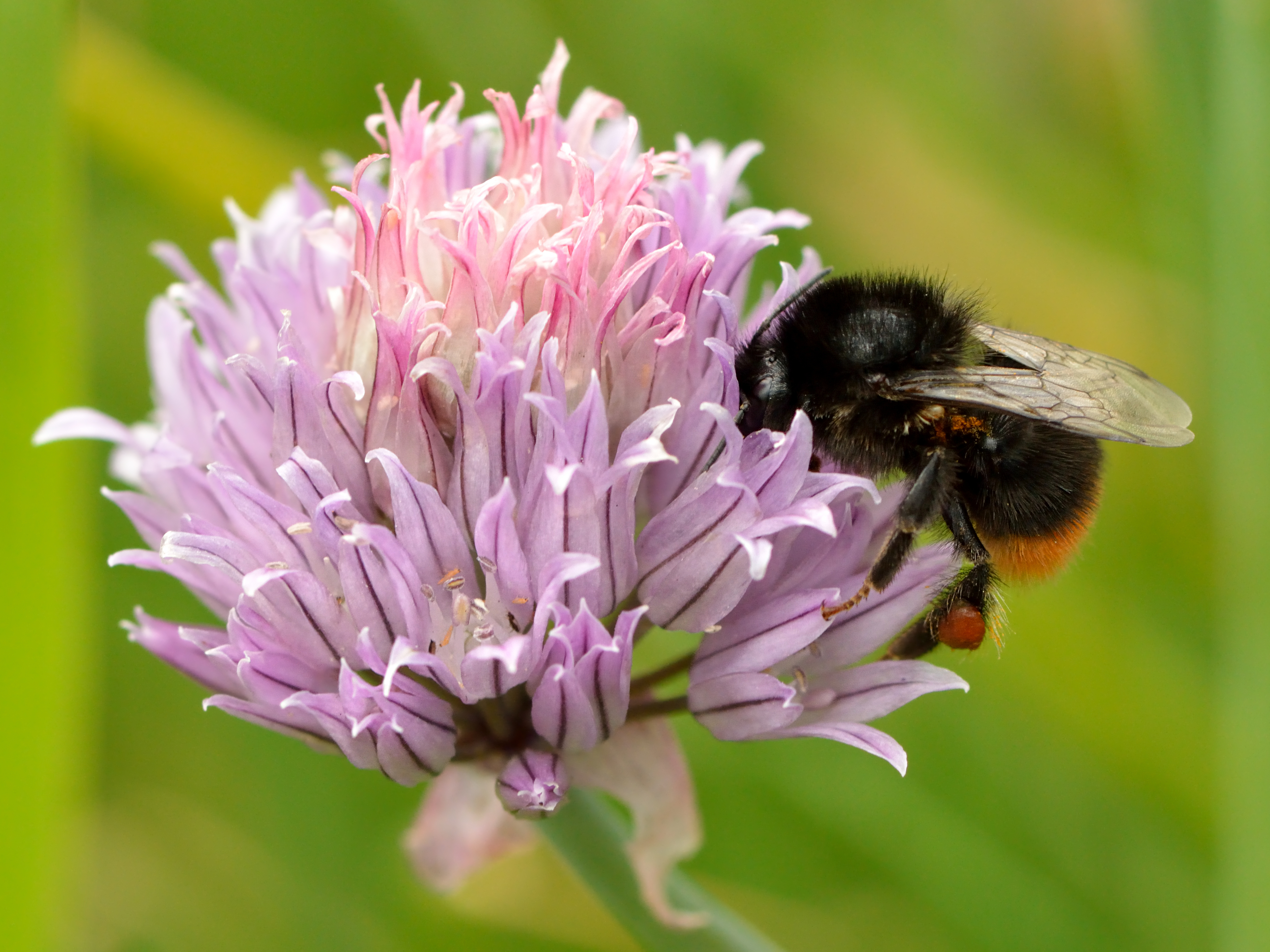
Alpine Chives
Allium schoenoprasum
Chives, scientific name Allium schoenoprasum, is a species of flowering plant in the family Amaryllidaceae. Alpine is used here as a catalog label only. The care guide below describes the real species Chives (Allium schoenoprasum) and does not claim a verified botanical variety unless one is separately documented.

Alpine Coriander
Coriandrum sativum
Coriander, or Coriandrum sativum, is an annual herb in the family Apiaceae. The leaves are known as cilantro in the US. Most people perceive the leaves as having a fresh, slightly citrus taste. Due to variations in the gene OR6A2, some people perceive its flavor to be more soaplike or rotten. Alpine is used here as a catalog label only. The care guide below describes the real species Coriander (Coriandrum sativum) and does not claim a verified botanical variety unless one is separately documented.
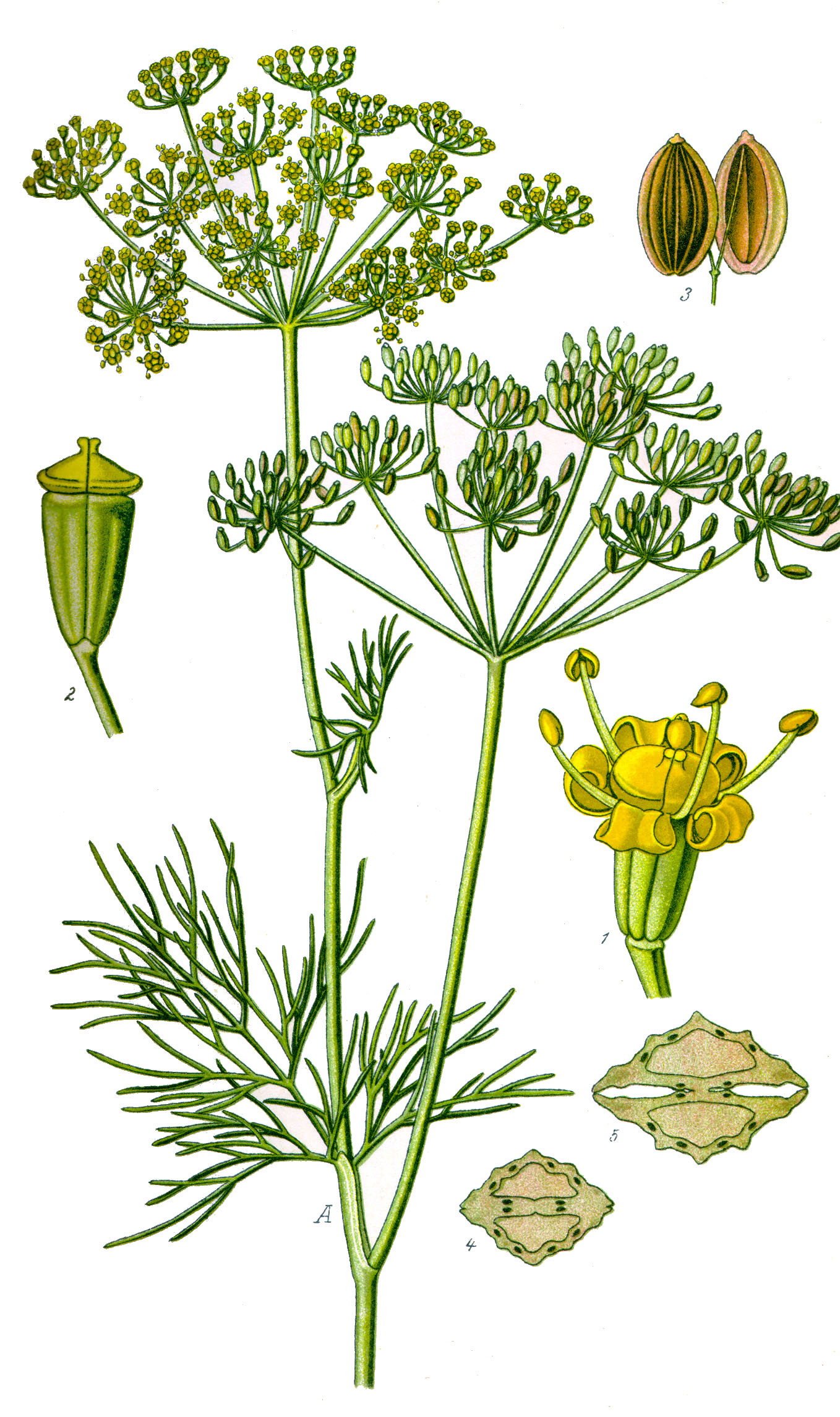
Alpine Dill
Anethum graveolens
Dill is an annual herb in the celery family Apiaceae. Native to North Africa and West Asia, dill is grown widely in Eurasia, where its leaves and seeds are used as a herb or spice for flavouring food. Alpine is used here as a catalog label only. The care guide below describes the real species Dill (Anethum graveolens) and does not claim a verified botanical variety unless one is separately documented.

Alpine Fennel
Foeniculum vulgare
Fennel is a flowering plant species in the carrot family. It is a hardy, perennial herb with yellow flowers and feathery leaves. It is indigenous to the shores of the Mediterranean but has become widely naturalized in many parts of the world, especially on dry soils near the sea coast and on riverbanks. Alpine is used here as a catalog label only. The care guide below describes the real species Fennel (Foeniculum vulgare) and does not claim a verified botanical variety unless one is separately documented.
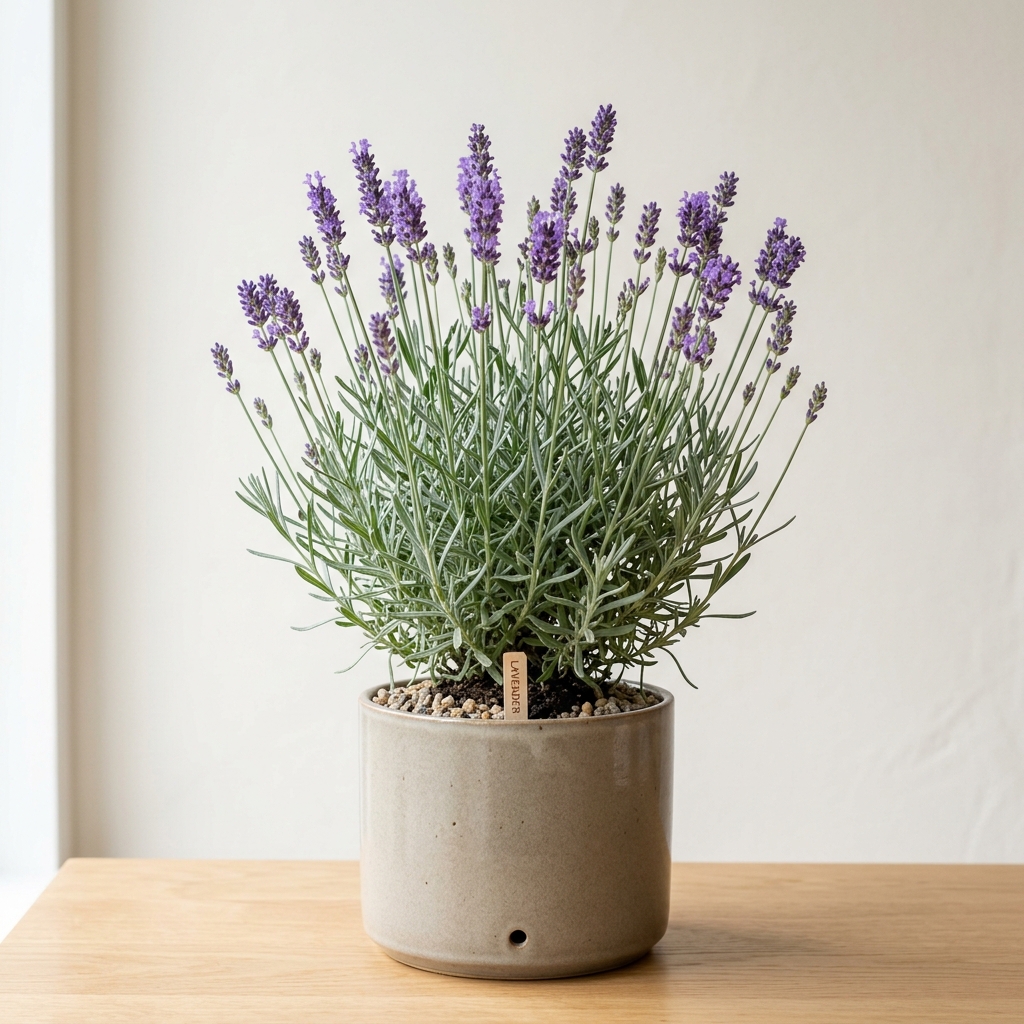
Alpine Lavender
Lavandula angustifolia
Lavandula angustifolia, formerly L. officinalis, is a flowering plant in the family Lamiaceae, native to the Mediterranean basin. Its common names include lavender, true lavender and English lavender ; also garden lavender, common lavender and narrow-leaved lavender. Alpine is used here as a catalog label only. The care guide below describes the real species Lavender (Lavandula angustifolia) and does not claim a verified botanical variety unless one is separately documented.

Alpine Lemongrass
Cymbopogon citratus
Cymbopogon citratus, commonly known as West Indian lemon grass or simply lemon grass, is a tropical plant native to South Asia and Maritime Southeast Asia and introduced to many tropical regions. Alpine is used here as a catalog label only. The care guide below describes the real species Lemongrass (Cymbopogon citratus) and does not claim a verified botanical variety unless one is separately documented.
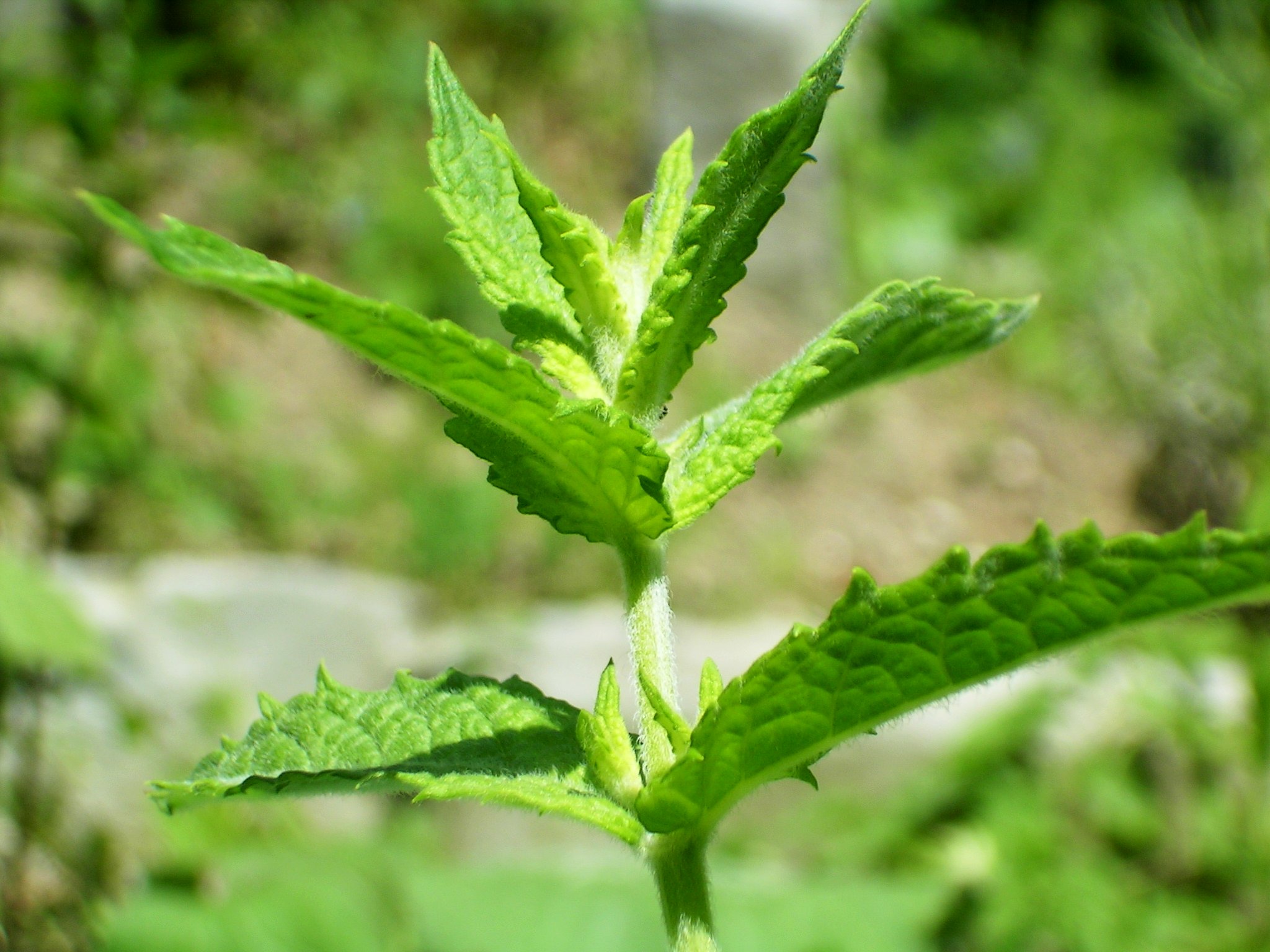
Alpine Mint
Mentha spicata
Spearmint, also known as garden mint, common mint, lamb mint and mackerel mint, is native to Europe and southern temperate Asia, extending from Ireland in the west to southern China in the east. It is naturalized in many other temperate parts of the world, including northern and southern Africa, North America, and South America. It is used as a flavouring in food and herbal teas. The aromatic oil, called oil of spearmint, is also used as a flavoring and sometimes as a scent. Alpine is used here as a catalog label only. The care guide below describes the real species Mint (Mentha spicata) and does not claim a verified botanical variety unless one is separately documented.

Alpine Oregano
Origanum vulgare
Oregano is a species of flowering plant in the mint family, Lamiaceae. It was native to the Mediterranean region, but widely naturalised elsewhere in the temperate Northern Hemisphere. Alpine is used here as a catalog label only. The care guide below describes the real species Oregano (Origanum vulgare) and does not claim a verified botanical variety unless one is separately documented.

Alpine Parsley
Petroselinum crispum
Parsley, or garden parsley, is a species of flowering plant in the family Apiaceae that is native to Greece, the Balkans, Algeria and Morocco. It has been introduced and naturalized in Europe and elsewhere in the world with suitable climates, and is widely cultivated as a herb and a vegetable. Alpine is used here as a catalog label only. The care guide below describes the real species Parsley (Petroselinum crispum) and does not claim a verified botanical variety unless one is separately documented.

Alpine Rosemary
Salvia rosmarinus
Salvia rosmarinus, synonym Rosmarinus officinalis, commonly known as rosemary, is a shrub with fragrant, evergreen, needle-like leaves and purple or sometimes white, pink, or blue flowers. It is a member of the mint family, Lamiaceae. The species is native to the Mediterranean region. It has numerous cultivars, and its leaves are commonly used as a flavoring. Alpine is used here as a catalog label only. The care guide below describes the real species Rosemary (Salvia rosmarinus) and does not claim a verified botanical variety unless one is separately documented.
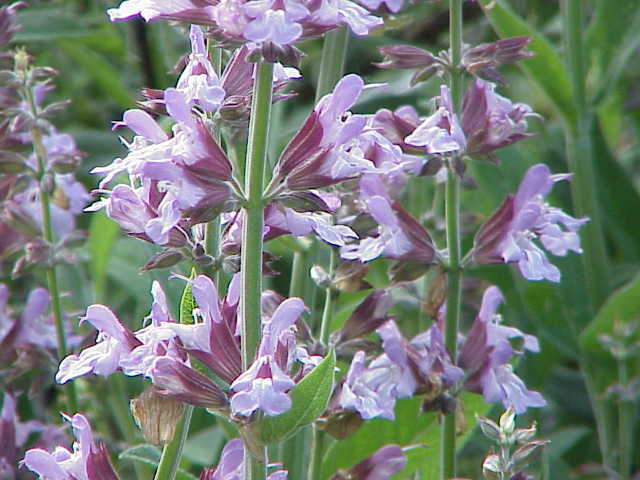
Alpine Sage
Salvia officinalis
Salvia officinalis, common sage or sage, is a perennial, evergreen subshrub, with woody stems, grayish leaves, and blue to purplish flowers. It is a member of the mint family (Lamiaceae) and native to the Mediterranean region, though it has been naturalized in many places throughout the world. It has a long history of culinary use, and in modern times it has been used as an ornamental garden plant. The common name "sage" is also used for closely related species and cultivars. Alpine is used here as a catalog label only. The care guide below describes the real species Sage (Salvia officinalis) and does not claim a verified botanical variety unless one is separately documented.
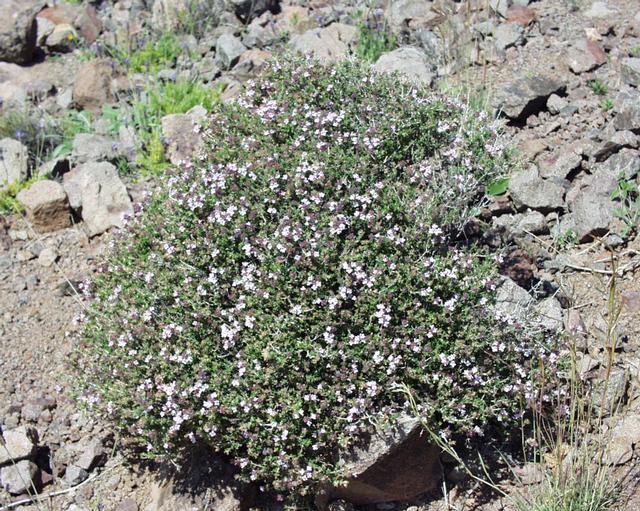
Alpine Thyme
Thymus vulgaris
Thymus vulgaris is a species of flowering plant in the mint family, Lamiaceae. Alpine is used here as a catalog label only. The care guide below describes the real species Thyme (Thymus vulgaris) and does not claim a verified botanical variety unless one is separately documented.

Alpine Tulsi
Ocimum tenuiflorum
Ocimum tenuiflorum, commonly known as tulasi, tulsi, or holy basil, is an aromatic perennial plant in the family Lamiaceae. It is widely cultivated throughout the Southeast Asian tropics. It is native to tropical and subtropical regions of Asia, Australia and the western Pacific. This plant has escaped from cultivation and has naturalized in many tropical regions of the Americas. It is an agricultural and environmental weed. Alpine is used here as a catalog label only. The care guide below describes the real species Tulsi (Ocimum tenuiflorum) and does not claim a verified botanical variety unless one is separately documented.
Dwarf Basil
Ocimum basilicum
Basil, also called great basil, is a culinary herb of the family Lamiaceae (mints). It is a tender plant and is used in cuisines worldwide. In Western cuisine, the generic term "basil" refers to the variety also known as Genovese basil or sweet basil. Basil is native to tropical regions from Central Africa to Southeast Asia. In temperate climates basil is treated as an annual plant, but it can be grown as a short-lived perennial or biennial in warmer horticultural zones with tropical or Mediterranean climates. Dwarf is used here as a catalog label only. The care guide below describes the real species Basil (Ocimum basilicum) and does not claim a verified botanical variety unless one is separately documented.
Dwarf Bay Leaf
Laurus nobilis
Laurus nobilis is an aromatic evergreen tree or large shrub with green, glabrous (smooth) leaves. It is in the flowering plant family Lauraceae. According to Muer, Jahn, & Sauerbier, the stem can be 1 metre in diameter and the tree can be as high as 20 metres. It is native to the Mediterranean region and is used as bay leaf for seasoning in cooking. Its common names include bay tree, bay laurel, sweet bay, true laurel, Grecian laurel, or simply laurel. Laurus nobilis figures prominently in classical Greco-Roman culture. Dwarf is used here as a catalog label only. The care guide below describes the real species Bay Leaf (Laurus nobilis) and does not claim a verified botanical variety unless one is separately documented.
Dwarf Chives
Allium schoenoprasum
Chives, scientific name Allium schoenoprasum, is a species of flowering plant in the family Amaryllidaceae. Dwarf is used here as a catalog label only. The care guide below describes the real species Chives (Allium schoenoprasum) and does not claim a verified botanical variety unless one is separately documented.
Dwarf Coriander
Coriandrum sativum
Coriander, or Coriandrum sativum, is an annual herb in the family Apiaceae. The leaves are known as cilantro in the US. Most people perceive the leaves as having a fresh, slightly citrus taste. Due to variations in the gene OR6A2, some people perceive its flavor to be more soaplike or rotten. Dwarf is used here as a catalog label only. The care guide below describes the real species Coriander (Coriandrum sativum) and does not claim a verified botanical variety unless one is separately documented.
Dwarf Dill
Anethum graveolens
Dill is an annual herb in the celery family Apiaceae. Native to North Africa and West Asia, dill is grown widely in Eurasia, where its leaves and seeds are used as a herb or spice for flavouring food. Dwarf is used here as a catalog label only. The care guide below describes the real species Dill (Anethum graveolens) and does not claim a verified botanical variety unless one is separately documented.
Dwarf Fennel
Foeniculum vulgare
Fennel is a flowering plant species in the carrot family. It is a hardy, perennial herb with yellow flowers and feathery leaves. It is indigenous to the shores of the Mediterranean but has become widely naturalized in many parts of the world, especially on dry soils near the sea coast and on riverbanks. Dwarf is used here as a catalog label only. The care guide below describes the real species Fennel (Foeniculum vulgare) and does not claim a verified botanical variety unless one is separately documented.
Dwarf Lavender
Lavandula angustifolia
Lavandula angustifolia, formerly L. officinalis, is a flowering plant in the family Lamiaceae, native to the Mediterranean basin. Its common names include lavender, true lavender and English lavender ; also garden lavender, common lavender and narrow-leaved lavender. Dwarf is used here as a catalog label only. The care guide below describes the real species Lavender (Lavandula angustifolia) and does not claim a verified botanical variety unless one is separately documented.
Dwarf Lemongrass
Cymbopogon citratus
Cymbopogon citratus, commonly known as West Indian lemon grass or simply lemon grass, is a tropical plant native to South Asia and Maritime Southeast Asia and introduced to many tropical regions. Dwarf is used here as a catalog label only. The care guide below describes the real species Lemongrass (Cymbopogon citratus) and does not claim a verified botanical variety unless one is separately documented.
Dwarf Mint
Mentha spicata
Spearmint, also known as garden mint, common mint, lamb mint and mackerel mint, is native to Europe and southern temperate Asia, extending from Ireland in the west to southern China in the east. It is naturalized in many other temperate parts of the world, including northern and southern Africa, North America, and South America. It is used as a flavouring in food and herbal teas. The aromatic oil, called oil of spearmint, is also used as a flavoring and sometimes as a scent. Dwarf is used here as a catalog label only. The care guide below describes the real species Mint (Mentha spicata) and does not claim a verified botanical variety unless one is separately documented.
Dwarf Oregano
Origanum vulgare
Oregano is a species of flowering plant in the mint family, Lamiaceae. It was native to the Mediterranean region, but widely naturalised elsewhere in the temperate Northern Hemisphere. Dwarf is used here as a catalog label only. The care guide below describes the real species Oregano (Origanum vulgare) and does not claim a verified botanical variety unless one is separately documented.
Dwarf Parsley
Petroselinum crispum
Parsley, or garden parsley, is a species of flowering plant in the family Apiaceae that is native to Greece, the Balkans, Algeria and Morocco. It has been introduced and naturalized in Europe and elsewhere in the world with suitable climates, and is widely cultivated as a herb and a vegetable. Dwarf is used here as a catalog label only. The care guide below describes the real species Parsley (Petroselinum crispum) and does not claim a verified botanical variety unless one is separately documented.
Dwarf Rosemary
Salvia rosmarinus
Salvia rosmarinus, synonym Rosmarinus officinalis, commonly known as rosemary, is a shrub with fragrant, evergreen, needle-like leaves and purple or sometimes white, pink, or blue flowers. It is a member of the mint family, Lamiaceae. The species is native to the Mediterranean region. It has numerous cultivars, and its leaves are commonly used as a flavoring. Dwarf is used here as a catalog label only. The care guide below describes the real species Rosemary (Salvia rosmarinus) and does not claim a verified botanical variety unless one is separately documented.
Dwarf Sage
Salvia officinalis
Salvia officinalis, common sage or sage, is a perennial, evergreen subshrub, with woody stems, grayish leaves, and blue to purplish flowers. It is a member of the mint family (Lamiaceae) and native to the Mediterranean region, though it has been naturalized in many places throughout the world. It has a long history of culinary use, and in modern times it has been used as an ornamental garden plant. The common name "sage" is also used for closely related species and cultivars. Dwarf is used here as a catalog label only. The care guide below describes the real species Sage (Salvia officinalis) and does not claim a verified botanical variety unless one is separately documented.
Dwarf Thyme
Thymus vulgaris
Thymus vulgaris is a species of flowering plant in the mint family, Lamiaceae. Dwarf is used here as a catalog label only. The care guide below describes the real species Thyme (Thymus vulgaris) and does not claim a verified botanical variety unless one is separately documented.
Dwarf Tulsi
Ocimum tenuiflorum
Ocimum tenuiflorum, commonly known as tulasi, tulsi, or holy basil, is an aromatic perennial plant in the family Lamiaceae. It is widely cultivated throughout the Southeast Asian tropics. It is native to tropical and subtropical regions of Asia, Australia and the western Pacific. This plant has escaped from cultivation and has naturalized in many tropical regions of the Americas. It is an agricultural and environmental weed. Dwarf is used here as a catalog label only. The care guide below describes the real species Tulsi (Ocimum tenuiflorum) and does not claim a verified botanical variety unless one is separately documented.
Emerald Basil
Ocimum basilicum
Basil, also called great basil, is a culinary herb of the family Lamiaceae (mints). It is a tender plant and is used in cuisines worldwide. In Western cuisine, the generic term "basil" refers to the variety also known as Genovese basil or sweet basil. Basil is native to tropical regions from Central Africa to Southeast Asia. In temperate climates basil is treated as an annual plant, but it can be grown as a short-lived perennial or biennial in warmer horticultural zones with tropical or Mediterranean climates. Emerald is used here as a catalog label only. The care guide below describes the real species Basil (Ocimum basilicum) and does not claim a verified botanical variety unless one is separately documented.
Emerald Bay Leaf
Laurus nobilis
Laurus nobilis is an aromatic evergreen tree or large shrub with green, glabrous (smooth) leaves. It is in the flowering plant family Lauraceae. According to Muer, Jahn, & Sauerbier, the stem can be 1 metre in diameter and the tree can be as high as 20 metres. It is native to the Mediterranean region and is used as bay leaf for seasoning in cooking. Its common names include bay tree, bay laurel, sweet bay, true laurel, Grecian laurel, or simply laurel. Laurus nobilis figures prominently in classical Greco-Roman culture. Emerald is used here as a catalog label only. The care guide below describes the real species Bay Leaf (Laurus nobilis) and does not claim a verified botanical variety unless one is separately documented.
Emerald Chives
Allium schoenoprasum
Chives, scientific name Allium schoenoprasum, is a species of flowering plant in the family Amaryllidaceae. Emerald is used here as a catalog label only. The care guide below describes the real species Chives (Allium schoenoprasum) and does not claim a verified botanical variety unless one is separately documented.
Emerald Coriander
Coriandrum sativum
Coriander, or Coriandrum sativum, is an annual herb in the family Apiaceae. The leaves are known as cilantro in the US. Most people perceive the leaves as having a fresh, slightly citrus taste. Due to variations in the gene OR6A2, some people perceive its flavor to be more soaplike or rotten. Emerald is used here as a catalog label only. The care guide below describes the real species Coriander (Coriandrum sativum) and does not claim a verified botanical variety unless one is separately documented.
Emerald Dill
Anethum graveolens
Dill is an annual herb in the celery family Apiaceae. Native to North Africa and West Asia, dill is grown widely in Eurasia, where its leaves and seeds are used as a herb or spice for flavouring food. Emerald is used here as a catalog label only. The care guide below describes the real species Dill (Anethum graveolens) and does not claim a verified botanical variety unless one is separately documented.
Emerald Fennel
Foeniculum vulgare
Fennel is a flowering plant species in the carrot family. It is a hardy, perennial herb with yellow flowers and feathery leaves. It is indigenous to the shores of the Mediterranean but has become widely naturalized in many parts of the world, especially on dry soils near the sea coast and on riverbanks. Emerald is used here as a catalog label only. The care guide below describes the real species Fennel (Foeniculum vulgare) and does not claim a verified botanical variety unless one is separately documented.
Emerald Lavender
Lavandula angustifolia
Lavandula angustifolia, formerly L. officinalis, is a flowering plant in the family Lamiaceae, native to the Mediterranean basin. Its common names include lavender, true lavender and English lavender ; also garden lavender, common lavender and narrow-leaved lavender. Emerald is used here as a catalog label only. The care guide below describes the real species Lavender (Lavandula angustifolia) and does not claim a verified botanical variety unless one is separately documented.
Emerald Lemongrass
Cymbopogon citratus
Cymbopogon citratus, commonly known as West Indian lemon grass or simply lemon grass, is a tropical plant native to South Asia and Maritime Southeast Asia and introduced to many tropical regions. Emerald is used here as a catalog label only. The care guide below describes the real species Lemongrass (Cymbopogon citratus) and does not claim a verified botanical variety unless one is separately documented.
Emerald Mint
Mentha spicata
Spearmint, also known as garden mint, common mint, lamb mint and mackerel mint, is native to Europe and southern temperate Asia, extending from Ireland in the west to southern China in the east. It is naturalized in many other temperate parts of the world, including northern and southern Africa, North America, and South America. It is used as a flavouring in food and herbal teas. The aromatic oil, called oil of spearmint, is also used as a flavoring and sometimes as a scent. Emerald is used here as a catalog label only. The care guide below describes the real species Mint (Mentha spicata) and does not claim a verified botanical variety unless one is separately documented.
Emerald Oregano
Origanum vulgare
Oregano is a species of flowering plant in the mint family, Lamiaceae. It was native to the Mediterranean region, but widely naturalised elsewhere in the temperate Northern Hemisphere. Emerald is used here as a catalog label only. The care guide below describes the real species Oregano (Origanum vulgare) and does not claim a verified botanical variety unless one is separately documented.
Emerald Parsley
Petroselinum crispum
Parsley, or garden parsley, is a species of flowering plant in the family Apiaceae that is native to Greece, the Balkans, Algeria and Morocco. It has been introduced and naturalized in Europe and elsewhere in the world with suitable climates, and is widely cultivated as a herb and a vegetable. Emerald is used here as a catalog label only. The care guide below describes the real species Parsley (Petroselinum crispum) and does not claim a verified botanical variety unless one is separately documented.
Emerald Rosemary
Salvia rosmarinus
Salvia rosmarinus, synonym Rosmarinus officinalis, commonly known as rosemary, is a shrub with fragrant, evergreen, needle-like leaves and purple or sometimes white, pink, or blue flowers. It is a member of the mint family, Lamiaceae. The species is native to the Mediterranean region. It has numerous cultivars, and its leaves are commonly used as a flavoring. Emerald is used here as a catalog label only. The care guide below describes the real species Rosemary (Salvia rosmarinus) and does not claim a verified botanical variety unless one is separately documented.
Emerald Sage
Salvia officinalis
Salvia officinalis, common sage or sage, is a perennial, evergreen subshrub, with woody stems, grayish leaves, and blue to purplish flowers. It is a member of the mint family (Lamiaceae) and native to the Mediterranean region, though it has been naturalized in many places throughout the world. It has a long history of culinary use, and in modern times it has been used as an ornamental garden plant. The common name "sage" is also used for closely related species and cultivars. Emerald is used here as a catalog label only. The care guide below describes the real species Sage (Salvia officinalis) and does not claim a verified botanical variety unless one is separately documented.
Emerald Thyme
Thymus vulgaris
Thymus vulgaris is a species of flowering plant in the mint family, Lamiaceae. Emerald is used here as a catalog label only. The care guide below describes the real species Thyme (Thymus vulgaris) and does not claim a verified botanical variety unless one is separately documented.
Emerald Tulsi
Ocimum tenuiflorum
Ocimum tenuiflorum, commonly known as tulasi, tulsi, or holy basil, is an aromatic perennial plant in the family Lamiaceae. It is widely cultivated throughout the Southeast Asian tropics. It is native to tropical and subtropical regions of Asia, Australia and the western Pacific. This plant has escaped from cultivation and has naturalized in many tropical regions of the Americas. It is an agricultural and environmental weed. Emerald is used here as a catalog label only. The care guide below describes the real species Tulsi (Ocimum tenuiflorum) and does not claim a verified botanical variety unless one is separately documented.
Giant Basil
Ocimum basilicum
Basil, also called great basil, is a culinary herb of the family Lamiaceae (mints). It is a tender plant and is used in cuisines worldwide. In Western cuisine, the generic term "basil" refers to the variety also known as Genovese basil or sweet basil. Basil is native to tropical regions from Central Africa to Southeast Asia. In temperate climates basil is treated as an annual plant, but it can be grown as a short-lived perennial or biennial in warmer horticultural zones with tropical or Mediterranean climates. Giant is used here as a catalog label only. The care guide below describes the real species Basil (Ocimum basilicum) and does not claim a verified botanical variety unless one is separately documented.
Giant Bay Leaf
Laurus nobilis
Laurus nobilis is an aromatic evergreen tree or large shrub with green, glabrous (smooth) leaves. It is in the flowering plant family Lauraceae. According to Muer, Jahn, & Sauerbier, the stem can be 1 metre in diameter and the tree can be as high as 20 metres. It is native to the Mediterranean region and is used as bay leaf for seasoning in cooking. Its common names include bay tree, bay laurel, sweet bay, true laurel, Grecian laurel, or simply laurel. Laurus nobilis figures prominently in classical Greco-Roman culture. Giant is used here as a catalog label only. The care guide below describes the real species Bay Leaf (Laurus nobilis) and does not claim a verified botanical variety unless one is separately documented.
Giant Chives
Allium schoenoprasum
Chives, scientific name Allium schoenoprasum, is a species of flowering plant in the family Amaryllidaceae. Giant is used here as a catalog label only. The care guide below describes the real species Chives (Allium schoenoprasum) and does not claim a verified botanical variety unless one is separately documented.
Giant Coriander
Coriandrum sativum
Coriander, or Coriandrum sativum, is an annual herb in the family Apiaceae. The leaves are known as cilantro in the US. Most people perceive the leaves as having a fresh, slightly citrus taste. Due to variations in the gene OR6A2, some people perceive its flavor to be more soaplike or rotten. Giant is used here as a catalog label only. The care guide below describes the real species Coriander (Coriandrum sativum) and does not claim a verified botanical variety unless one is separately documented.
Giant Dill
Anethum graveolens
Dill is an annual herb in the celery family Apiaceae. Native to North Africa and West Asia, dill is grown widely in Eurasia, where its leaves and seeds are used as a herb or spice for flavouring food. Giant is used here as a catalog label only. The care guide below describes the real species Dill (Anethum graveolens) and does not claim a verified botanical variety unless one is separately documented.
Giant Fennel
Foeniculum vulgare
Fennel is a flowering plant species in the carrot family. It is a hardy, perennial herb with yellow flowers and feathery leaves. It is indigenous to the shores of the Mediterranean but has become widely naturalized in many parts of the world, especially on dry soils near the sea coast and on riverbanks. Giant is used here as a catalog label only. The care guide below describes the real species Fennel (Foeniculum vulgare) and does not claim a verified botanical variety unless one is separately documented.
Giant Lavender
Lavandula angustifolia
Lavandula angustifolia, formerly L. officinalis, is a flowering plant in the family Lamiaceae, native to the Mediterranean basin. Its common names include lavender, true lavender and English lavender ; also garden lavender, common lavender and narrow-leaved lavender. Giant is used here as a catalog label only. The care guide below describes the real species Lavender (Lavandula angustifolia) and does not claim a verified botanical variety unless one is separately documented.
Giant Lemongrass
Cymbopogon citratus
Cymbopogon citratus, commonly known as West Indian lemon grass or simply lemon grass, is a tropical plant native to South Asia and Maritime Southeast Asia and introduced to many tropical regions. Giant is used here as a catalog label only. The care guide below describes the real species Lemongrass (Cymbopogon citratus) and does not claim a verified botanical variety unless one is separately documented.
Giant Mint
Mentha spicata
Spearmint, also known as garden mint, common mint, lamb mint and mackerel mint, is native to Europe and southern temperate Asia, extending from Ireland in the west to southern China in the east. It is naturalized in many other temperate parts of the world, including northern and southern Africa, North America, and South America. It is used as a flavouring in food and herbal teas. The aromatic oil, called oil of spearmint, is also used as a flavoring and sometimes as a scent. Giant is used here as a catalog label only. The care guide below describes the real species Mint (Mentha spicata) and does not claim a verified botanical variety unless one is separately documented.
Giant Oregano
Origanum vulgare
Oregano is a species of flowering plant in the mint family, Lamiaceae. It was native to the Mediterranean region, but widely naturalised elsewhere in the temperate Northern Hemisphere. Giant is used here as a catalog label only. The care guide below describes the real species Oregano (Origanum vulgare) and does not claim a verified botanical variety unless one is separately documented.
Giant Parsley
Petroselinum crispum
Parsley, or garden parsley, is a species of flowering plant in the family Apiaceae that is native to Greece, the Balkans, Algeria and Morocco. It has been introduced and naturalized in Europe and elsewhere in the world with suitable climates, and is widely cultivated as a herb and a vegetable. Giant is used here as a catalog label only. The care guide below describes the real species Parsley (Petroselinum crispum) and does not claim a verified botanical variety unless one is separately documented.
Giant Rosemary
Salvia rosmarinus
Salvia rosmarinus, synonym Rosmarinus officinalis, commonly known as rosemary, is a shrub with fragrant, evergreen, needle-like leaves and purple or sometimes white, pink, or blue flowers. It is a member of the mint family, Lamiaceae. The species is native to the Mediterranean region. It has numerous cultivars, and its leaves are commonly used as a flavoring. Giant is used here as a catalog label only. The care guide below describes the real species Rosemary (Salvia rosmarinus) and does not claim a verified botanical variety unless one is separately documented.
Giant Sage
Salvia officinalis
Salvia officinalis, common sage or sage, is a perennial, evergreen subshrub, with woody stems, grayish leaves, and blue to purplish flowers. It is a member of the mint family (Lamiaceae) and native to the Mediterranean region, though it has been naturalized in many places throughout the world. It has a long history of culinary use, and in modern times it has been used as an ornamental garden plant. The common name "sage" is also used for closely related species and cultivars. Giant is used here as a catalog label only. The care guide below describes the real species Sage (Salvia officinalis) and does not claim a verified botanical variety unless one is separately documented.
Giant Thyme
Thymus vulgaris
Thymus vulgaris is a species of flowering plant in the mint family, Lamiaceae. Giant is used here as a catalog label only. The care guide below describes the real species Thyme (Thymus vulgaris) and does not claim a verified botanical variety unless one is separately documented.
Giant Tulsi
Ocimum tenuiflorum
Ocimum tenuiflorum, commonly known as tulasi, tulsi, or holy basil, is an aromatic perennial plant in the family Lamiaceae. It is widely cultivated throughout the Southeast Asian tropics. It is native to tropical and subtropical regions of Asia, Australia and the western Pacific. This plant has escaped from cultivation and has naturalized in many tropical regions of the Americas. It is an agricultural and environmental weed. Giant is used here as a catalog label only. The care guide below describes the real species Tulsi (Ocimum tenuiflorum) and does not claim a verified botanical variety unless one is separately documented.
Golden Basil
Ocimum basilicum
Basil, also called great basil, is a culinary herb of the family Lamiaceae (mints). It is a tender plant and is used in cuisines worldwide. In Western cuisine, the generic term "basil" refers to the variety also known as Genovese basil or sweet basil. Basil is native to tropical regions from Central Africa to Southeast Asia. In temperate climates basil is treated as an annual plant, but it can be grown as a short-lived perennial or biennial in warmer horticultural zones with tropical or Mediterranean climates. Golden is used here as a catalog label only. The care guide below describes the real species Basil (Ocimum basilicum) and does not claim a verified botanical variety unless one is separately documented.
Golden Bay Leaf
Laurus nobilis
Laurus nobilis is an aromatic evergreen tree or large shrub with green, glabrous (smooth) leaves. It is in the flowering plant family Lauraceae. According to Muer, Jahn, & Sauerbier, the stem can be 1 metre in diameter and the tree can be as high as 20 metres. It is native to the Mediterranean region and is used as bay leaf for seasoning in cooking. Its common names include bay tree, bay laurel, sweet bay, true laurel, Grecian laurel, or simply laurel. Laurus nobilis figures prominently in classical Greco-Roman culture. Golden is used here as a catalog label only. The care guide below describes the real species Bay Leaf (Laurus nobilis) and does not claim a verified botanical variety unless one is separately documented.
Golden Chives
Allium schoenoprasum
Chives, scientific name Allium schoenoprasum, is a species of flowering plant in the family Amaryllidaceae. Golden is used here as a catalog label only. The care guide below describes the real species Chives (Allium schoenoprasum) and does not claim a verified botanical variety unless one is separately documented.
Golden Coriander
Coriandrum sativum
Coriander, or Coriandrum sativum, is an annual herb in the family Apiaceae. The leaves are known as cilantro in the US. Most people perceive the leaves as having a fresh, slightly citrus taste. Due to variations in the gene OR6A2, some people perceive its flavor to be more soaplike or rotten. Golden is used here as a catalog label only. The care guide below describes the real species Coriander (Coriandrum sativum) and does not claim a verified botanical variety unless one is separately documented.
Golden Dill
Anethum graveolens
Dill is an annual herb in the celery family Apiaceae. Native to North Africa and West Asia, dill is grown widely in Eurasia, where its leaves and seeds are used as a herb or spice for flavouring food. Golden is used here as a catalog label only. The care guide below describes the real species Dill (Anethum graveolens) and does not claim a verified botanical variety unless one is separately documented.
Golden Fennel
Foeniculum vulgare
Fennel is a flowering plant species in the carrot family. It is a hardy, perennial herb with yellow flowers and feathery leaves. It is indigenous to the shores of the Mediterranean but has become widely naturalized in many parts of the world, especially on dry soils near the sea coast and on riverbanks. Golden is used here as a catalog label only. The care guide below describes the real species Fennel (Foeniculum vulgare) and does not claim a verified botanical variety unless one is separately documented.
Golden Lavender
Lavandula angustifolia
Lavandula angustifolia, formerly L. officinalis, is a flowering plant in the family Lamiaceae, native to the Mediterranean basin. Its common names include lavender, true lavender and English lavender ; also garden lavender, common lavender and narrow-leaved lavender. Golden is used here as a catalog label only. The care guide below describes the real species Lavender (Lavandula angustifolia) and does not claim a verified botanical variety unless one is separately documented.
Golden Lemongrass
Cymbopogon citratus
Cymbopogon citratus, commonly known as West Indian lemon grass or simply lemon grass, is a tropical plant native to South Asia and Maritime Southeast Asia and introduced to many tropical regions. Golden is used here as a catalog label only. The care guide below describes the real species Lemongrass (Cymbopogon citratus) and does not claim a verified botanical variety unless one is separately documented.
Golden Mint
Mentha spicata
Spearmint, also known as garden mint, common mint, lamb mint and mackerel mint, is native to Europe and southern temperate Asia, extending from Ireland in the west to southern China in the east. It is naturalized in many other temperate parts of the world, including northern and southern Africa, North America, and South America. It is used as a flavouring in food and herbal teas. The aromatic oil, called oil of spearmint, is also used as a flavoring and sometimes as a scent. Golden is used here as a catalog label only. The care guide below describes the real species Mint (Mentha spicata) and does not claim a verified botanical variety unless one is separately documented.
Golden Oregano
Origanum vulgare
Oregano is a species of flowering plant in the mint family, Lamiaceae. It was native to the Mediterranean region, but widely naturalised elsewhere in the temperate Northern Hemisphere. Golden is used here as a catalog label only. The care guide below describes the real species Oregano (Origanum vulgare) and does not claim a verified botanical variety unless one is separately documented.
Golden Parsley
Petroselinum crispum
Parsley, or garden parsley, is a species of flowering plant in the family Apiaceae that is native to Greece, the Balkans, Algeria and Morocco. It has been introduced and naturalized in Europe and elsewhere in the world with suitable climates, and is widely cultivated as a herb and a vegetable. Golden is used here as a catalog label only. The care guide below describes the real species Parsley (Petroselinum crispum) and does not claim a verified botanical variety unless one is separately documented.
Golden Rosemary
Salvia rosmarinus
Salvia rosmarinus, synonym Rosmarinus officinalis, commonly known as rosemary, is a shrub with fragrant, evergreen, needle-like leaves and purple or sometimes white, pink, or blue flowers. It is a member of the mint family, Lamiaceae. The species is native to the Mediterranean region. It has numerous cultivars, and its leaves are commonly used as a flavoring. Golden is used here as a catalog label only. The care guide below describes the real species Rosemary (Salvia rosmarinus) and does not claim a verified botanical variety unless one is separately documented.
Golden Sage
Salvia officinalis
Salvia officinalis, common sage or sage, is a perennial, evergreen subshrub, with woody stems, grayish leaves, and blue to purplish flowers. It is a member of the mint family (Lamiaceae) and native to the Mediterranean region, though it has been naturalized in many places throughout the world. It has a long history of culinary use, and in modern times it has been used as an ornamental garden plant. The common name "sage" is also used for closely related species and cultivars. Golden is used here as a catalog label only. The care guide below describes the real species Sage (Salvia officinalis) and does not claim a verified botanical variety unless one is separately documented.
Golden Thyme
Thymus vulgaris
Thymus vulgaris is a species of flowering plant in the mint family, Lamiaceae. Golden is used here as a catalog label only. The care guide below describes the real species Thyme (Thymus vulgaris) and does not claim a verified botanical variety unless one is separately documented.
Golden Tulsi
Ocimum tenuiflorum
Ocimum tenuiflorum, commonly known as tulasi, tulsi, or holy basil, is an aromatic perennial plant in the family Lamiaceae. It is widely cultivated throughout the Southeast Asian tropics. It is native to tropical and subtropical regions of Asia, Australia and the western Pacific. This plant has escaped from cultivation and has naturalized in many tropical regions of the Americas. It is an agricultural and environmental weed. Golden is used here as a catalog label only. The care guide below describes the real species Tulsi (Ocimum tenuiflorum) and does not claim a verified botanical variety unless one is separately documented.
Neon Basil
Ocimum basilicum
Basil, also called great basil, is a culinary herb of the family Lamiaceae (mints). It is a tender plant and is used in cuisines worldwide. In Western cuisine, the generic term "basil" refers to the variety also known as Genovese basil or sweet basil. Basil is native to tropical regions from Central Africa to Southeast Asia. In temperate climates basil is treated as an annual plant, but it can be grown as a short-lived perennial or biennial in warmer horticultural zones with tropical or Mediterranean climates. Neon is used here as a catalog label only. The care guide below describes the real species Basil (Ocimum basilicum) and does not claim a verified botanical variety unless one is separately documented.
Neon Bay Leaf
Laurus nobilis
Laurus nobilis is an aromatic evergreen tree or large shrub with green, glabrous (smooth) leaves. It is in the flowering plant family Lauraceae. According to Muer, Jahn, & Sauerbier, the stem can be 1 metre in diameter and the tree can be as high as 20 metres. It is native to the Mediterranean region and is used as bay leaf for seasoning in cooking. Its common names include bay tree, bay laurel, sweet bay, true laurel, Grecian laurel, or simply laurel. Laurus nobilis figures prominently in classical Greco-Roman culture. Neon is used here as a catalog label only. The care guide below describes the real species Bay Leaf (Laurus nobilis) and does not claim a verified botanical variety unless one is separately documented.
Neon Chives
Allium schoenoprasum
Chives, scientific name Allium schoenoprasum, is a species of flowering plant in the family Amaryllidaceae. Neon is used here as a catalog label only. The care guide below describes the real species Chives (Allium schoenoprasum) and does not claim a verified botanical variety unless one is separately documented.
Neon Coriander
Coriandrum sativum
Coriander, or Coriandrum sativum, is an annual herb in the family Apiaceae. The leaves are known as cilantro in the US. Most people perceive the leaves as having a fresh, slightly citrus taste. Due to variations in the gene OR6A2, some people perceive its flavor to be more soaplike or rotten. Neon is used here as a catalog label only. The care guide below describes the real species Coriander (Coriandrum sativum) and does not claim a verified botanical variety unless one is separately documented.
Neon Dill
Anethum graveolens
Dill is an annual herb in the celery family Apiaceae. Native to North Africa and West Asia, dill is grown widely in Eurasia, where its leaves and seeds are used as a herb or spice for flavouring food. Neon is used here as a catalog label only. The care guide below describes the real species Dill (Anethum graveolens) and does not claim a verified botanical variety unless one is separately documented.
Neon Fennel
Foeniculum vulgare
Fennel is a flowering plant species in the carrot family. It is a hardy, perennial herb with yellow flowers and feathery leaves. It is indigenous to the shores of the Mediterranean but has become widely naturalized in many parts of the world, especially on dry soils near the sea coast and on riverbanks. Neon is used here as a catalog label only. The care guide below describes the real species Fennel (Foeniculum vulgare) and does not claim a verified botanical variety unless one is separately documented.
Neon Lavender
Lavandula angustifolia
Lavandula angustifolia, formerly L. officinalis, is a flowering plant in the family Lamiaceae, native to the Mediterranean basin. Its common names include lavender, true lavender and English lavender ; also garden lavender, common lavender and narrow-leaved lavender. Neon is used here as a catalog label only. The care guide below describes the real species Lavender (Lavandula angustifolia) and does not claim a verified botanical variety unless one is separately documented.
Neon Lemongrass
Cymbopogon citratus
Cymbopogon citratus, commonly known as West Indian lemon grass or simply lemon grass, is a tropical plant native to South Asia and Maritime Southeast Asia and introduced to many tropical regions. Neon is used here as a catalog label only. The care guide below describes the real species Lemongrass (Cymbopogon citratus) and does not claim a verified botanical variety unless one is separately documented.
Neon Mint
Mentha spicata
Spearmint, also known as garden mint, common mint, lamb mint and mackerel mint, is native to Europe and southern temperate Asia, extending from Ireland in the west to southern China in the east. It is naturalized in many other temperate parts of the world, including northern and southern Africa, North America, and South America. It is used as a flavouring in food and herbal teas. The aromatic oil, called oil of spearmint, is also used as a flavoring and sometimes as a scent. Neon is used here as a catalog label only. The care guide below describes the real species Mint (Mentha spicata) and does not claim a verified botanical variety unless one is separately documented.
Neon Oregano
Origanum vulgare
Oregano is a species of flowering plant in the mint family, Lamiaceae. It was native to the Mediterranean region, but widely naturalised elsewhere in the temperate Northern Hemisphere. Neon is used here as a catalog label only. The care guide below describes the real species Oregano (Origanum vulgare) and does not claim a verified botanical variety unless one is separately documented.
Neon Parsley
Petroselinum crispum
Parsley, or garden parsley, is a species of flowering plant in the family Apiaceae that is native to Greece, the Balkans, Algeria and Morocco. It has been introduced and naturalized in Europe and elsewhere in the world with suitable climates, and is widely cultivated as a herb and a vegetable. Neon is used here as a catalog label only. The care guide below describes the real species Parsley (Petroselinum crispum) and does not claim a verified botanical variety unless one is separately documented.
Neon Rosemary
Salvia rosmarinus
Salvia rosmarinus, synonym Rosmarinus officinalis, commonly known as rosemary, is a shrub with fragrant, evergreen, needle-like leaves and purple or sometimes white, pink, or blue flowers. It is a member of the mint family, Lamiaceae. The species is native to the Mediterranean region. It has numerous cultivars, and its leaves are commonly used as a flavoring. Neon is used here as a catalog label only. The care guide below describes the real species Rosemary (Salvia rosmarinus) and does not claim a verified botanical variety unless one is separately documented.
Neon Sage
Salvia officinalis
Salvia officinalis, common sage or sage, is a perennial, evergreen subshrub, with woody stems, grayish leaves, and blue to purplish flowers. It is a member of the mint family (Lamiaceae) and native to the Mediterranean region, though it has been naturalized in many places throughout the world. It has a long history of culinary use, and in modern times it has been used as an ornamental garden plant. The common name "sage" is also used for closely related species and cultivars. Neon is used here as a catalog label only. The care guide below describes the real species Sage (Salvia officinalis) and does not claim a verified botanical variety unless one is separately documented.
Neon Thyme
Thymus vulgaris
Thymus vulgaris is a species of flowering plant in the mint family, Lamiaceae. Neon is used here as a catalog label only. The care guide below describes the real species Thyme (Thymus vulgaris) and does not claim a verified botanical variety unless one is separately documented.
Neon Tulsi
Ocimum tenuiflorum
Ocimum tenuiflorum, commonly known as tulasi, tulsi, or holy basil, is an aromatic perennial plant in the family Lamiaceae. It is widely cultivated throughout the Southeast Asian tropics. It is native to tropical and subtropical regions of Asia, Australia and the western Pacific. This plant has escaped from cultivation and has naturalized in many tropical regions of the Americas. It is an agricultural and environmental weed. Neon is used here as a catalog label only. The care guide below describes the real species Tulsi (Ocimum tenuiflorum) and does not claim a verified botanical variety unless one is separately documented.
Silver Basil
Ocimum basilicum
Basil, also called great basil, is a culinary herb of the family Lamiaceae (mints). It is a tender plant and is used in cuisines worldwide. In Western cuisine, the generic term "basil" refers to the variety also known as Genovese basil or sweet basil. Basil is native to tropical regions from Central Africa to Southeast Asia. In temperate climates basil is treated as an annual plant, but it can be grown as a short-lived perennial or biennial in warmer horticultural zones with tropical or Mediterranean climates. Silver is used here as a catalog label only. The care guide below describes the real species Basil (Ocimum basilicum) and does not claim a verified botanical variety unless one is separately documented.
Silver Bay Leaf
Laurus nobilis
Laurus nobilis is an aromatic evergreen tree or large shrub with green, glabrous (smooth) leaves. It is in the flowering plant family Lauraceae. According to Muer, Jahn, & Sauerbier, the stem can be 1 metre in diameter and the tree can be as high as 20 metres. It is native to the Mediterranean region and is used as bay leaf for seasoning in cooking. Its common names include bay tree, bay laurel, sweet bay, true laurel, Grecian laurel, or simply laurel. Laurus nobilis figures prominently in classical Greco-Roman culture. Silver is used here as a catalog label only. The care guide below describes the real species Bay Leaf (Laurus nobilis) and does not claim a verified botanical variety unless one is separately documented.
Silver Chives
Allium schoenoprasum
Chives, scientific name Allium schoenoprasum, is a species of flowering plant in the family Amaryllidaceae. Silver is used here as a catalog label only. The care guide below describes the real species Chives (Allium schoenoprasum) and does not claim a verified botanical variety unless one is separately documented.
Silver Coriander
Coriandrum sativum
Coriander, or Coriandrum sativum, is an annual herb in the family Apiaceae. The leaves are known as cilantro in the US. Most people perceive the leaves as having a fresh, slightly citrus taste. Due to variations in the gene OR6A2, some people perceive its flavor to be more soaplike or rotten. Silver is used here as a catalog label only. The care guide below describes the real species Coriander (Coriandrum sativum) and does not claim a verified botanical variety unless one is separately documented.
Silver Dill
Anethum graveolens
Dill is an annual herb in the celery family Apiaceae. Native to North Africa and West Asia, dill is grown widely in Eurasia, where its leaves and seeds are used as a herb or spice for flavouring food. Silver is used here as a catalog label only. The care guide below describes the real species Dill (Anethum graveolens) and does not claim a verified botanical variety unless one is separately documented.
Silver Fennel
Foeniculum vulgare
Fennel is a flowering plant species in the carrot family. It is a hardy, perennial herb with yellow flowers and feathery leaves. It is indigenous to the shores of the Mediterranean but has become widely naturalized in many parts of the world, especially on dry soils near the sea coast and on riverbanks. Silver is used here as a catalog label only. The care guide below describes the real species Fennel (Foeniculum vulgare) and does not claim a verified botanical variety unless one is separately documented.
Silver Lavender
Lavandula angustifolia
Lavandula angustifolia, formerly L. officinalis, is a flowering plant in the family Lamiaceae, native to the Mediterranean basin. Its common names include lavender, true lavender and English lavender ; also garden lavender, common lavender and narrow-leaved lavender. Silver is used here as a catalog label only. The care guide below describes the real species Lavender (Lavandula angustifolia) and does not claim a verified botanical variety unless one is separately documented.
Silver Lemongrass
Cymbopogon citratus
Cymbopogon citratus, commonly known as West Indian lemon grass or simply lemon grass, is a tropical plant native to South Asia and Maritime Southeast Asia and introduced to many tropical regions. Silver is used here as a catalog label only. The care guide below describes the real species Lemongrass (Cymbopogon citratus) and does not claim a verified botanical variety unless one is separately documented.
Silver Mint
Mentha spicata
Spearmint, also known as garden mint, common mint, lamb mint and mackerel mint, is native to Europe and southern temperate Asia, extending from Ireland in the west to southern China in the east. It is naturalized in many other temperate parts of the world, including northern and southern Africa, North America, and South America. It is used as a flavouring in food and herbal teas. The aromatic oil, called oil of spearmint, is also used as a flavoring and sometimes as a scent. Silver is used here as a catalog label only. The care guide below describes the real species Mint (Mentha spicata) and does not claim a verified botanical variety unless one is separately documented.
Silver Oregano
Origanum vulgare
Oregano is a species of flowering plant in the mint family, Lamiaceae. It was native to the Mediterranean region, but widely naturalised elsewhere in the temperate Northern Hemisphere. Silver is used here as a catalog label only. The care guide below describes the real species Oregano (Origanum vulgare) and does not claim a verified botanical variety unless one is separately documented.
Silver Parsley
Petroselinum crispum
Parsley, or garden parsley, is a species of flowering plant in the family Apiaceae that is native to Greece, the Balkans, Algeria and Morocco. It has been introduced and naturalized in Europe and elsewhere in the world with suitable climates, and is widely cultivated as a herb and a vegetable. Silver is used here as a catalog label only. The care guide below describes the real species Parsley (Petroselinum crispum) and does not claim a verified botanical variety unless one is separately documented.
Silver Rosemary
Salvia rosmarinus
Salvia rosmarinus, synonym Rosmarinus officinalis, commonly known as rosemary, is a shrub with fragrant, evergreen, needle-like leaves and purple or sometimes white, pink, or blue flowers. It is a member of the mint family, Lamiaceae. The species is native to the Mediterranean region. It has numerous cultivars, and its leaves are commonly used as a flavoring. Silver is used here as a catalog label only. The care guide below describes the real species Rosemary (Salvia rosmarinus) and does not claim a verified botanical variety unless one is separately documented.
Silver Sage
Salvia officinalis
Salvia officinalis, common sage or sage, is a perennial, evergreen subshrub, with woody stems, grayish leaves, and blue to purplish flowers. It is a member of the mint family (Lamiaceae) and native to the Mediterranean region, though it has been naturalized in many places throughout the world. It has a long history of culinary use, and in modern times it has been used as an ornamental garden plant. The common name "sage" is also used for closely related species and cultivars. Silver is used here as a catalog label only. The care guide below describes the real species Sage (Salvia officinalis) and does not claim a verified botanical variety unless one is separately documented.
Silver Thyme
Thymus vulgaris
Thymus vulgaris is a species of flowering plant in the mint family, Lamiaceae. Silver is used here as a catalog label only. The care guide below describes the real species Thyme (Thymus vulgaris) and does not claim a verified botanical variety unless one is separately documented.
Silver Tulsi
Ocimum tenuiflorum
Ocimum tenuiflorum, commonly known as tulasi, tulsi, or holy basil, is an aromatic perennial plant in the family Lamiaceae. It is widely cultivated throughout the Southeast Asian tropics. It is native to tropical and subtropical regions of Asia, Australia and the western Pacific. This plant has escaped from cultivation and has naturalized in many tropical regions of the Americas. It is an agricultural and environmental weed. Silver is used here as a catalog label only. The care guide below describes the real species Tulsi (Ocimum tenuiflorum) and does not claim a verified botanical variety unless one is separately documented.
Standard Basil
Ocimum basilicum
Basil, also called great basil, is a culinary herb of the family Lamiaceae (mints). It is a tender plant and is used in cuisines worldwide. In Western cuisine, the generic term "basil" refers to the variety also known as Genovese basil or sweet basil. Basil is native to tropical regions from Central Africa to Southeast Asia. In temperate climates basil is treated as an annual plant, but it can be grown as a short-lived perennial or biennial in warmer horticultural zones with tropical or Mediterranean climates. Standard is used here as a catalog label only. The care guide below describes the real species Basil (Ocimum basilicum) and does not claim a verified botanical variety unless one is separately documented.
Standard Bay Leaf
Laurus nobilis
Laurus nobilis is an aromatic evergreen tree or large shrub with green, glabrous (smooth) leaves. It is in the flowering plant family Lauraceae. According to Muer, Jahn, & Sauerbier, the stem can be 1 metre in diameter and the tree can be as high as 20 metres. It is native to the Mediterranean region and is used as bay leaf for seasoning in cooking. Its common names include bay tree, bay laurel, sweet bay, true laurel, Grecian laurel, or simply laurel. Laurus nobilis figures prominently in classical Greco-Roman culture. Standard is used here as a catalog label only. The care guide below describes the real species Bay Leaf (Laurus nobilis) and does not claim a verified botanical variety unless one is separately documented.
Standard Chives
Allium schoenoprasum
Chives, scientific name Allium schoenoprasum, is a species of flowering plant in the family Amaryllidaceae. Standard is used here as a catalog label only. The care guide below describes the real species Chives (Allium schoenoprasum) and does not claim a verified botanical variety unless one is separately documented.
Standard Coriander
Coriandrum sativum
Coriander, or Coriandrum sativum, is an annual herb in the family Apiaceae. The leaves are known as cilantro in the US. Most people perceive the leaves as having a fresh, slightly citrus taste. Due to variations in the gene OR6A2, some people perceive its flavor to be more soaplike or rotten. Standard is used here as a catalog label only. The care guide below describes the real species Coriander (Coriandrum sativum) and does not claim a verified botanical variety unless one is separately documented.
Standard Dill
Anethum graveolens
Dill is an annual herb in the celery family Apiaceae. Native to North Africa and West Asia, dill is grown widely in Eurasia, where its leaves and seeds are used as a herb or spice for flavouring food. Standard is used here as a catalog label only. The care guide below describes the real species Dill (Anethum graveolens) and does not claim a verified botanical variety unless one is separately documented.
Standard Fennel
Foeniculum vulgare
Fennel is a flowering plant species in the carrot family. It is a hardy, perennial herb with yellow flowers and feathery leaves. It is indigenous to the shores of the Mediterranean but has become widely naturalized in many parts of the world, especially on dry soils near the sea coast and on riverbanks. Standard is used here as a catalog label only. The care guide below describes the real species Fennel (Foeniculum vulgare) and does not claim a verified botanical variety unless one is separately documented.
Standard Lavender
Lavandula angustifolia
Lavandula angustifolia, formerly L. officinalis, is a flowering plant in the family Lamiaceae, native to the Mediterranean basin. Its common names include lavender, true lavender and English lavender ; also garden lavender, common lavender and narrow-leaved lavender. Standard is used here as a catalog label only. The care guide below describes the real species Lavender (Lavandula angustifolia) and does not claim a verified botanical variety unless one is separately documented.
Standard Lemongrass
Cymbopogon citratus
Cymbopogon citratus, commonly known as West Indian lemon grass or simply lemon grass, is a tropical plant native to South Asia and Maritime Southeast Asia and introduced to many tropical regions. Standard is used here as a catalog label only. The care guide below describes the real species Lemongrass (Cymbopogon citratus) and does not claim a verified botanical variety unless one is separately documented.
Standard Mint
Mentha spicata
Spearmint, also known as garden mint, common mint, lamb mint and mackerel mint, is native to Europe and southern temperate Asia, extending from Ireland in the west to southern China in the east. It is naturalized in many other temperate parts of the world, including northern and southern Africa, North America, and South America. It is used as a flavouring in food and herbal teas. The aromatic oil, called oil of spearmint, is also used as a flavoring and sometimes as a scent. Standard is used here as a catalog label only. The care guide below describes the real species Mint (Mentha spicata) and does not claim a verified botanical variety unless one is separately documented.
Standard Oregano
Origanum vulgare
Oregano is a species of flowering plant in the mint family, Lamiaceae. It was native to the Mediterranean region, but widely naturalised elsewhere in the temperate Northern Hemisphere. Standard is used here as a catalog label only. The care guide below describes the real species Oregano (Origanum vulgare) and does not claim a verified botanical variety unless one is separately documented.
Standard Parsley
Petroselinum crispum
Parsley, or garden parsley, is a species of flowering plant in the family Apiaceae that is native to Greece, the Balkans, Algeria and Morocco. It has been introduced and naturalized in Europe and elsewhere in the world with suitable climates, and is widely cultivated as a herb and a vegetable. Standard is used here as a catalog label only. The care guide below describes the real species Parsley (Petroselinum crispum) and does not claim a verified botanical variety unless one is separately documented.
Standard Rosemary
Salvia rosmarinus
Salvia rosmarinus, synonym Rosmarinus officinalis, commonly known as rosemary, is a shrub with fragrant, evergreen, needle-like leaves and purple or sometimes white, pink, or blue flowers. It is a member of the mint family, Lamiaceae. The species is native to the Mediterranean region. It has numerous cultivars, and its leaves are commonly used as a flavoring. Standard is used here as a catalog label only. The care guide below describes the real species Rosemary (Salvia rosmarinus) and does not claim a verified botanical variety unless one is separately documented.
Standard Sage
Salvia officinalis
Salvia officinalis, common sage or sage, is a perennial, evergreen subshrub, with woody stems, grayish leaves, and blue to purplish flowers. It is a member of the mint family (Lamiaceae) and native to the Mediterranean region, though it has been naturalized in many places throughout the world. It has a long history of culinary use, and in modern times it has been used as an ornamental garden plant. The common name "sage" is also used for closely related species and cultivars. Standard is used here as a catalog label only. The care guide below describes the real species Sage (Salvia officinalis) and does not claim a verified botanical variety unless one is separately documented.
Standard Thyme
Thymus vulgaris
Thymus vulgaris is a species of flowering plant in the mint family, Lamiaceae. Standard is used here as a catalog label only. The care guide below describes the real species Thyme (Thymus vulgaris) and does not claim a verified botanical variety unless one is separately documented.
Standard Tulsi
Ocimum tenuiflorum
Ocimum tenuiflorum, commonly known as tulasi, tulsi, or holy basil, is an aromatic perennial plant in the family Lamiaceae. It is widely cultivated throughout the Southeast Asian tropics. It is native to tropical and subtropical regions of Asia, Australia and the western Pacific. This plant has escaped from cultivation and has naturalized in many tropical regions of the Americas. It is an agricultural and environmental weed. Standard is used here as a catalog label only. The care guide below describes the real species Tulsi (Ocimum tenuiflorum) and does not claim a verified botanical variety unless one is separately documented.
Sweet Basil
Ocimum basilicum
Basil, also called great basil, is a culinary herb of the family Lamiaceae (mints). It is a tender plant and is used in cuisines worldwide. In Western cuisine, the generic term "basil" refers to the variety also known as Genovese basil or sweet basil. Basil is native to tropical regions from Central Africa to Southeast Asia. In temperate climates basil is treated as an annual plant, but it can be grown as a short-lived perennial or biennial in warmer horticultural zones with tropical or Mediterranean climates. Sweet is used here as a catalog label only. The care guide below describes the real species Basil (Ocimum basilicum) and does not claim a verified botanical variety unless one is separately documented.
Sweet Bay Leaf
Laurus nobilis
Laurus nobilis is an aromatic evergreen tree or large shrub with green, glabrous (smooth) leaves. It is in the flowering plant family Lauraceae. According to Muer, Jahn, & Sauerbier, the stem can be 1 metre in diameter and the tree can be as high as 20 metres. It is native to the Mediterranean region and is used as bay leaf for seasoning in cooking. Its common names include bay tree, bay laurel, sweet bay, true laurel, Grecian laurel, or simply laurel. Laurus nobilis figures prominently in classical Greco-Roman culture. Sweet is used here as a catalog label only. The care guide below describes the real species Bay Leaf (Laurus nobilis) and does not claim a verified botanical variety unless one is separately documented.
Sweet Chives
Allium schoenoprasum
Chives, scientific name Allium schoenoprasum, is a species of flowering plant in the family Amaryllidaceae. Sweet is used here as a catalog label only. The care guide below describes the real species Chives (Allium schoenoprasum) and does not claim a verified botanical variety unless one is separately documented.
Sweet Coriander
Coriandrum sativum
Coriander, or Coriandrum sativum, is an annual herb in the family Apiaceae. The leaves are known as cilantro in the US. Most people perceive the leaves as having a fresh, slightly citrus taste. Due to variations in the gene OR6A2, some people perceive its flavor to be more soaplike or rotten. Sweet is used here as a catalog label only. The care guide below describes the real species Coriander (Coriandrum sativum) and does not claim a verified botanical variety unless one is separately documented.
Sweet Dill
Anethum graveolens
Dill is an annual herb in the celery family Apiaceae. Native to North Africa and West Asia, dill is grown widely in Eurasia, where its leaves and seeds are used as a herb or spice for flavouring food. Sweet is used here as a catalog label only. The care guide below describes the real species Dill (Anethum graveolens) and does not claim a verified botanical variety unless one is separately documented.
Sweet Fennel
Foeniculum vulgare
Fennel is a flowering plant species in the carrot family. It is a hardy, perennial herb with yellow flowers and feathery leaves. It is indigenous to the shores of the Mediterranean but has become widely naturalized in many parts of the world, especially on dry soils near the sea coast and on riverbanks. Sweet is used here as a catalog label only. The care guide below describes the real species Fennel (Foeniculum vulgare) and does not claim a verified botanical variety unless one is separately documented.
Sweet Lavender
Lavandula angustifolia
Lavandula angustifolia, formerly L. officinalis, is a flowering plant in the family Lamiaceae, native to the Mediterranean basin. Its common names include lavender, true lavender and English lavender ; also garden lavender, common lavender and narrow-leaved lavender. Sweet is used here as a catalog label only. The care guide below describes the real species Lavender (Lavandula angustifolia) and does not claim a verified botanical variety unless one is separately documented.
Sweet Lemongrass
Cymbopogon citratus
Cymbopogon citratus, commonly known as West Indian lemon grass or simply lemon grass, is a tropical plant native to South Asia and Maritime Southeast Asia and introduced to many tropical regions. Sweet is used here as a catalog label only. The care guide below describes the real species Lemongrass (Cymbopogon citratus) and does not claim a verified botanical variety unless one is separately documented.
Sweet Mint
Mentha spicata
Spearmint, also known as garden mint, common mint, lamb mint and mackerel mint, is native to Europe and southern temperate Asia, extending from Ireland in the west to southern China in the east. It is naturalized in many other temperate parts of the world, including northern and southern Africa, North America, and South America. It is used as a flavouring in food and herbal teas. The aromatic oil, called oil of spearmint, is also used as a flavoring and sometimes as a scent. Sweet is used here as a catalog label only. The care guide below describes the real species Mint (Mentha spicata) and does not claim a verified botanical variety unless one is separately documented.
Sweet Oregano
Origanum vulgare
Oregano is a species of flowering plant in the mint family, Lamiaceae. It was native to the Mediterranean region, but widely naturalised elsewhere in the temperate Northern Hemisphere. Sweet is used here as a catalog label only. The care guide below describes the real species Oregano (Origanum vulgare) and does not claim a verified botanical variety unless one is separately documented.
Sweet Parsley
Petroselinum crispum
Parsley, or garden parsley, is a species of flowering plant in the family Apiaceae that is native to Greece, the Balkans, Algeria and Morocco. It has been introduced and naturalized in Europe and elsewhere in the world with suitable climates, and is widely cultivated as a herb and a vegetable. Sweet is used here as a catalog label only. The care guide below describes the real species Parsley (Petroselinum crispum) and does not claim a verified botanical variety unless one is separately documented.
Sweet Rosemary
Salvia rosmarinus
Salvia rosmarinus, synonym Rosmarinus officinalis, commonly known as rosemary, is a shrub with fragrant, evergreen, needle-like leaves and purple or sometimes white, pink, or blue flowers. It is a member of the mint family, Lamiaceae. The species is native to the Mediterranean region. It has numerous cultivars, and its leaves are commonly used as a flavoring. Sweet is used here as a catalog label only. The care guide below describes the real species Rosemary (Salvia rosmarinus) and does not claim a verified botanical variety unless one is separately documented.
Sweet Sage
Salvia officinalis
Salvia officinalis, common sage or sage, is a perennial, evergreen subshrub, with woody stems, grayish leaves, and blue to purplish flowers. It is a member of the mint family (Lamiaceae) and native to the Mediterranean region, though it has been naturalized in many places throughout the world. It has a long history of culinary use, and in modern times it has been used as an ornamental garden plant. The common name "sage" is also used for closely related species and cultivars. Sweet is used here as a catalog label only. The care guide below describes the real species Sage (Salvia officinalis) and does not claim a verified botanical variety unless one is separately documented.
Sweet Thyme
Thymus vulgaris
Thymus vulgaris is a species of flowering plant in the mint family, Lamiaceae. Sweet is used here as a catalog label only. The care guide below describes the real species Thyme (Thymus vulgaris) and does not claim a verified botanical variety unless one is separately documented.
Sweet Tulsi
Ocimum tenuiflorum
Ocimum tenuiflorum, commonly known as tulasi, tulsi, or holy basil, is an aromatic perennial plant in the family Lamiaceae. It is widely cultivated throughout the Southeast Asian tropics. It is native to tropical and subtropical regions of Asia, Australia and the western Pacific. This plant has escaped from cultivation and has naturalized in many tropical regions of the Americas. It is an agricultural and environmental weed. Sweet is used here as a catalog label only. The care guide below describes the real species Tulsi (Ocimum tenuiflorum) and does not claim a verified botanical variety unless one is separately documented.
Variegated Basil
Ocimum basilicum
Basil, also called great basil, is a culinary herb of the family Lamiaceae (mints). It is a tender plant and is used in cuisines worldwide. In Western cuisine, the generic term "basil" refers to the variety also known as Genovese basil or sweet basil. Basil is native to tropical regions from Central Africa to Southeast Asia. In temperate climates basil is treated as an annual plant, but it can be grown as a short-lived perennial or biennial in warmer horticultural zones with tropical or Mediterranean climates. Variegated is used here as a catalog label only. The care guide below describes the real species Basil (Ocimum basilicum) and does not claim a verified botanical variety unless one is separately documented.
Variegated Bay Leaf
Laurus nobilis
Laurus nobilis is an aromatic evergreen tree or large shrub with green, glabrous (smooth) leaves. It is in the flowering plant family Lauraceae. According to Muer, Jahn, & Sauerbier, the stem can be 1 metre in diameter and the tree can be as high as 20 metres. It is native to the Mediterranean region and is used as bay leaf for seasoning in cooking. Its common names include bay tree, bay laurel, sweet bay, true laurel, Grecian laurel, or simply laurel. Laurus nobilis figures prominently in classical Greco-Roman culture. Variegated is used here as a catalog label only. The care guide below describes the real species Bay Leaf (Laurus nobilis) and does not claim a verified botanical variety unless one is separately documented.
Variegated Chives
Allium schoenoprasum
Chives, scientific name Allium schoenoprasum, is a species of flowering plant in the family Amaryllidaceae. Variegated is used here as a catalog label only. The care guide below describes the real species Chives (Allium schoenoprasum) and does not claim a verified botanical variety unless one is separately documented.
Variegated Coriander
Coriandrum sativum
Coriander, or Coriandrum sativum, is an annual herb in the family Apiaceae. The leaves are known as cilantro in the US. Most people perceive the leaves as having a fresh, slightly citrus taste. Due to variations in the gene OR6A2, some people perceive its flavor to be more soaplike or rotten. Variegated is used here as a catalog label only. The care guide below describes the real species Coriander (Coriandrum sativum) and does not claim a verified botanical variety unless one is separately documented.
Variegated Dill
Anethum graveolens
Dill is an annual herb in the celery family Apiaceae. Native to North Africa and West Asia, dill is grown widely in Eurasia, where its leaves and seeds are used as a herb or spice for flavouring food. Variegated is used here as a catalog label only. The care guide below describes the real species Dill (Anethum graveolens) and does not claim a verified botanical variety unless one is separately documented.
Variegated Fennel
Foeniculum vulgare
Fennel is a flowering plant species in the carrot family. It is a hardy, perennial herb with yellow flowers and feathery leaves. It is indigenous to the shores of the Mediterranean but has become widely naturalized in many parts of the world, especially on dry soils near the sea coast and on riverbanks. Variegated is used here as a catalog label only. The care guide below describes the real species Fennel (Foeniculum vulgare) and does not claim a verified botanical variety unless one is separately documented.
Variegated Lavender
Lavandula angustifolia
Lavandula angustifolia, formerly L. officinalis, is a flowering plant in the family Lamiaceae, native to the Mediterranean basin. Its common names include lavender, true lavender and English lavender ; also garden lavender, common lavender and narrow-leaved lavender. Variegated is used here as a catalog label only. The care guide below describes the real species Lavender (Lavandula angustifolia) and does not claim a verified botanical variety unless one is separately documented.
Variegated Lemongrass
Cymbopogon citratus
Cymbopogon citratus, commonly known as West Indian lemon grass or simply lemon grass, is a tropical plant native to South Asia and Maritime Southeast Asia and introduced to many tropical regions. Variegated is used here as a catalog label only. The care guide below describes the real species Lemongrass (Cymbopogon citratus) and does not claim a verified botanical variety unless one is separately documented.
Variegated Mint
Mentha spicata
Spearmint, also known as garden mint, common mint, lamb mint and mackerel mint, is native to Europe and southern temperate Asia, extending from Ireland in the west to southern China in the east. It is naturalized in many other temperate parts of the world, including northern and southern Africa, North America, and South America. It is used as a flavouring in food and herbal teas. The aromatic oil, called oil of spearmint, is also used as a flavoring and sometimes as a scent. Variegated is used here as a catalog label only. The care guide below describes the real species Mint (Mentha spicata) and does not claim a verified botanical variety unless one is separately documented.
Variegated Oregano
Origanum vulgare
Oregano is a species of flowering plant in the mint family, Lamiaceae. It was native to the Mediterranean region, but widely naturalised elsewhere in the temperate Northern Hemisphere. Variegated is used here as a catalog label only. The care guide below describes the real species Oregano (Origanum vulgare) and does not claim a verified botanical variety unless one is separately documented.
Variegated Parsley
Petroselinum crispum
Parsley, or garden parsley, is a species of flowering plant in the family Apiaceae that is native to Greece, the Balkans, Algeria and Morocco. It has been introduced and naturalized in Europe and elsewhere in the world with suitable climates, and is widely cultivated as a herb and a vegetable. Variegated is used here as a catalog label only. The care guide below describes the real species Parsley (Petroselinum crispum) and does not claim a verified botanical variety unless one is separately documented.
Variegated Rosemary
Salvia rosmarinus
Salvia rosmarinus, synonym Rosmarinus officinalis, commonly known as rosemary, is a shrub with fragrant, evergreen, needle-like leaves and purple or sometimes white, pink, or blue flowers. It is a member of the mint family, Lamiaceae. The species is native to the Mediterranean region. It has numerous cultivars, and its leaves are commonly used as a flavoring. Variegated is used here as a catalog label only. The care guide below describes the real species Rosemary (Salvia rosmarinus) and does not claim a verified botanical variety unless one is separately documented.
Variegated Sage
Salvia officinalis
Salvia officinalis, common sage or sage, is a perennial, evergreen subshrub, with woody stems, grayish leaves, and blue to purplish flowers. It is a member of the mint family (Lamiaceae) and native to the Mediterranean region, though it has been naturalized in many places throughout the world. It has a long history of culinary use, and in modern times it has been used as an ornamental garden plant. The common name "sage" is also used for closely related species and cultivars. Variegated is used here as a catalog label only. The care guide below describes the real species Sage (Salvia officinalis) and does not claim a verified botanical variety unless one is separately documented.
Variegated Thyme
Thymus vulgaris
Thymus vulgaris is a species of flowering plant in the mint family, Lamiaceae. Variegated is used here as a catalog label only. The care guide below describes the real species Thyme (Thymus vulgaris) and does not claim a verified botanical variety unless one is separately documented.
Variegated Tulsi
Ocimum tenuiflorum
Ocimum tenuiflorum, commonly known as tulasi, tulsi, or holy basil, is an aromatic perennial plant in the family Lamiaceae. It is widely cultivated throughout the Southeast Asian tropics. It is native to tropical and subtropical regions of Asia, Australia and the western Pacific. This plant has escaped from cultivation and has naturalized in many tropical regions of the Americas. It is an agricultural and environmental weed. Variegated is used here as a catalog label only. The care guide below describes the real species Tulsi (Ocimum tenuiflorum) and does not claim a verified botanical variety unless one is separately documented.
Wild Basil
Ocimum basilicum
Basil, also called great basil, is a culinary herb of the family Lamiaceae (mints). It is a tender plant and is used in cuisines worldwide. In Western cuisine, the generic term "basil" refers to the variety also known as Genovese basil or sweet basil. Basil is native to tropical regions from Central Africa to Southeast Asia. In temperate climates basil is treated as an annual plant, but it can be grown as a short-lived perennial or biennial in warmer horticultural zones with tropical or Mediterranean climates. Wild is used here as a catalog label only. The care guide below describes the real species Basil (Ocimum basilicum) and does not claim a verified botanical variety unless one is separately documented.
Wild Bay Leaf
Laurus nobilis
Laurus nobilis is an aromatic evergreen tree or large shrub with green, glabrous (smooth) leaves. It is in the flowering plant family Lauraceae. According to Muer, Jahn, & Sauerbier, the stem can be 1 metre in diameter and the tree can be as high as 20 metres. It is native to the Mediterranean region and is used as bay leaf for seasoning in cooking. Its common names include bay tree, bay laurel, sweet bay, true laurel, Grecian laurel, or simply laurel. Laurus nobilis figures prominently in classical Greco-Roman culture. Wild is used here as a catalog label only. The care guide below describes the real species Bay Leaf (Laurus nobilis) and does not claim a verified botanical variety unless one is separately documented.
Wild Chives
Allium schoenoprasum
Chives, scientific name Allium schoenoprasum, is a species of flowering plant in the family Amaryllidaceae. Wild is used here as a catalog label only. The care guide below describes the real species Chives (Allium schoenoprasum) and does not claim a verified botanical variety unless one is separately documented.
Wild Coriander
Coriandrum sativum
Coriander, or Coriandrum sativum, is an annual herb in the family Apiaceae. The leaves are known as cilantro in the US. Most people perceive the leaves as having a fresh, slightly citrus taste. Due to variations in the gene OR6A2, some people perceive its flavor to be more soaplike or rotten. Wild is used here as a catalog label only. The care guide below describes the real species Coriander (Coriandrum sativum) and does not claim a verified botanical variety unless one is separately documented.
Wild Dill
Anethum graveolens
Dill is an annual herb in the celery family Apiaceae. Native to North Africa and West Asia, dill is grown widely in Eurasia, where its leaves and seeds are used as a herb or spice for flavouring food. Wild is used here as a catalog label only. The care guide below describes the real species Dill (Anethum graveolens) and does not claim a verified botanical variety unless one is separately documented.
Wild Fennel
Foeniculum vulgare
Fennel is a flowering plant species in the carrot family. It is a hardy, perennial herb with yellow flowers and feathery leaves. It is indigenous to the shores of the Mediterranean but has become widely naturalized in many parts of the world, especially on dry soils near the sea coast and on riverbanks. Wild is used here as a catalog label only. The care guide below describes the real species Fennel (Foeniculum vulgare) and does not claim a verified botanical variety unless one is separately documented.
Wild Lavender
Lavandula angustifolia
Lavandula angustifolia, formerly L. officinalis, is a flowering plant in the family Lamiaceae, native to the Mediterranean basin. Its common names include lavender, true lavender and English lavender ; also garden lavender, common lavender and narrow-leaved lavender. Wild is used here as a catalog label only. The care guide below describes the real species Lavender (Lavandula angustifolia) and does not claim a verified botanical variety unless one is separately documented.
Wild Lemongrass
Cymbopogon citratus
Cymbopogon citratus, commonly known as West Indian lemon grass or simply lemon grass, is a tropical plant native to South Asia and Maritime Southeast Asia and introduced to many tropical regions. Wild is used here as a catalog label only. The care guide below describes the real species Lemongrass (Cymbopogon citratus) and does not claim a verified botanical variety unless one is separately documented.
Wild Mint
Mentha spicata
Spearmint, also known as garden mint, common mint, lamb mint and mackerel mint, is native to Europe and southern temperate Asia, extending from Ireland in the west to southern China in the east. It is naturalized in many other temperate parts of the world, including northern and southern Africa, North America, and South America. It is used as a flavouring in food and herbal teas. The aromatic oil, called oil of spearmint, is also used as a flavoring and sometimes as a scent. Wild is used here as a catalog label only. The care guide below describes the real species Mint (Mentha spicata) and does not claim a verified botanical variety unless one is separately documented.
Wild Oregano
Origanum vulgare
Oregano is a species of flowering plant in the mint family, Lamiaceae. It was native to the Mediterranean region, but widely naturalised elsewhere in the temperate Northern Hemisphere. Wild is used here as a catalog label only. The care guide below describes the real species Oregano (Origanum vulgare) and does not claim a verified botanical variety unless one is separately documented.
Wild Parsley
Petroselinum crispum
Parsley, or garden parsley, is a species of flowering plant in the family Apiaceae that is native to Greece, the Balkans, Algeria and Morocco. It has been introduced and naturalized in Europe and elsewhere in the world with suitable climates, and is widely cultivated as a herb and a vegetable. Wild is used here as a catalog label only. The care guide below describes the real species Parsley (Petroselinum crispum) and does not claim a verified botanical variety unless one is separately documented.
Wild Rosemary
Salvia rosmarinus
Salvia rosmarinus, synonym Rosmarinus officinalis, commonly known as rosemary, is a shrub with fragrant, evergreen, needle-like leaves and purple or sometimes white, pink, or blue flowers. It is a member of the mint family, Lamiaceae. The species is native to the Mediterranean region. It has numerous cultivars, and its leaves are commonly used as a flavoring. Wild is used here as a catalog label only. The care guide below describes the real species Rosemary (Salvia rosmarinus) and does not claim a verified botanical variety unless one is separately documented.
Wild Sage
Salvia officinalis
Salvia officinalis, common sage or sage, is a perennial, evergreen subshrub, with woody stems, grayish leaves, and blue to purplish flowers. It is a member of the mint family (Lamiaceae) and native to the Mediterranean region, though it has been naturalized in many places throughout the world. It has a long history of culinary use, and in modern times it has been used as an ornamental garden plant. The common name "sage" is also used for closely related species and cultivars. Wild is used here as a catalog label only. The care guide below describes the real species Sage (Salvia officinalis) and does not claim a verified botanical variety unless one is separately documented.
Wild Thyme
Thymus vulgaris
Thymus vulgaris is a species of flowering plant in the mint family, Lamiaceae. Wild is used here as a catalog label only. The care guide below describes the real species Thyme (Thymus vulgaris) and does not claim a verified botanical variety unless one is separately documented.
Wild Tulsi
Ocimum tenuiflorum
Ocimum tenuiflorum, commonly known as tulasi, tulsi, or holy basil, is an aromatic perennial plant in the family Lamiaceae. It is widely cultivated throughout the Southeast Asian tropics. It is native to tropical and subtropical regions of Asia, Australia and the western Pacific. This plant has escaped from cultivation and has naturalized in many tropical regions of the Americas. It is an agricultural and environmental weed. Wild is used here as a catalog label only. The care guide below describes the real species Tulsi (Ocimum tenuiflorum) and does not claim a verified botanical variety unless one is separately documented.