

Air Purifying Plants
Plants belonging to the air-purifying-plants botanical category.
Expert Care Tip
For Air Purifying Plants:
Maintain consistent soil checking and provide adequate light for species growth.
Tip: Maintain consistent soil checking and provide adequate light for species growth.
No plants found
Try adjusting your search terms or view another category.

Alpine Peace Lily
Spathiphyllum wallisii
Spathiphyllum is a genus of about 60 species of monocotyledonous flowering plants in the family Araceae, native to tropical regions of the Americas and southeastern Asia. Certain species of Spathiphyllum are commonly known as spath or peace lilies. Alpine is used here as a catalog label only. The care guide below describes the real species Peace Lily (Spathiphyllum wallisii) and does not claim a verified botanical variety unless one is separately documented.
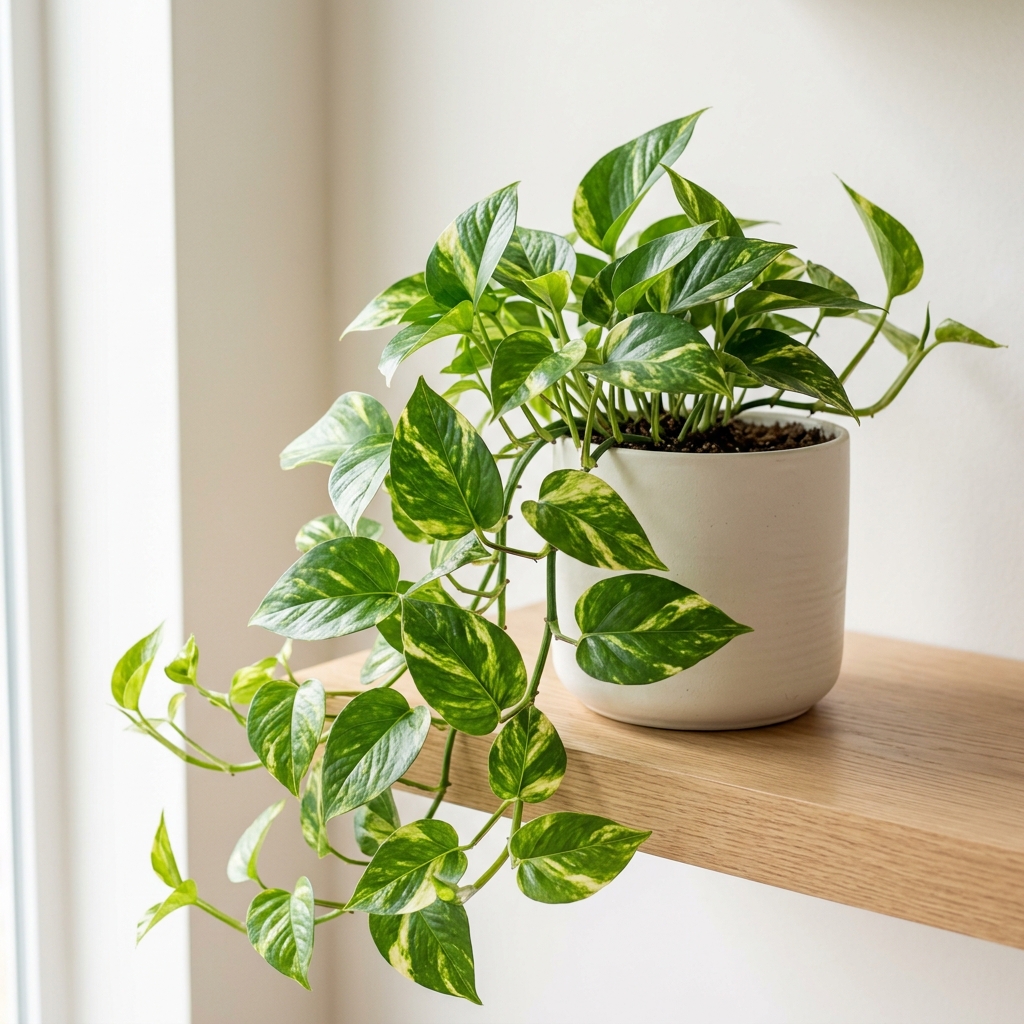
Alpine Pothos
Epipremnum aureum
Epipremnum aureum is a species in the arum family Araceae, native to Mo'orea in the Society Islands of French Polynesia. The species is a popular houseplant in temperate regions, but has also become naturalised in tropical and sub-tropical forests worldwide, including northern South Africa, Australia, Southeast Asia, Indian subcontinent, the Pacific Islands and the West Indies, where it has caused severe ecological damage in some cases. Alpine is used here as a catalog label only. The care guide below describes the real species Pothos (Epipremnum aureum) and does not claim a verified botanical variety unless one is separately documented.

Alpine Rubber Plant
Ficus elastica
Ficus elastica, the rubber fig, rubber bush, rubber tree, rubber plant, or Indian rubber bush, Indian rubber tree, or rambung is a species of flowering plant in the family Moraceae, native to eastern parts of South and Southeast Asia. Its common names reflect its historical use as a source of rubber within its native range, but it is not used in the modern commercial-scale production of natural rubber. Alpine is used here as a catalog label only. The care guide below describes the real species Rubber Plant (Ficus elastica) and does not claim a verified botanical variety unless one is separately documented.

Alpine Spider Plant
Chlorophytum comosum
Chlorophytum comosum, usually called spider plant or common spider plant due to its spider-like look, also known as spider ivy, airplane plant, ribbon plant, and hen and chicks, is a species of evergreen perennial flowering plant of the family Asparagaceae. It is native to tropical and Southern Africa but has become naturalized in other parts of the world, including Western Australia and Bangladesh. Chlorophytum comosum is easy to grow as a houseplant because of its resilience, but it can be sensitive to the fluoride in tap water, which commonly gives it "burnt tips". Variegated forms are the most popular. Alpine is used here as a catalog label only. The care guide below describes the real species Spider Plant (Chlorophytum comosum) and does not claim a verified botanical variety unless one is separately documented.
Dwarf Peace Lily
Spathiphyllum wallisii
Spathiphyllum is a genus of about 60 species of monocotyledonous flowering plants in the family Araceae, native to tropical regions of the Americas and southeastern Asia. Certain species of Spathiphyllum are commonly known as spath or peace lilies. Dwarf is used here as a catalog label only. The care guide below describes the real species Peace Lily (Spathiphyllum wallisii) and does not claim a verified botanical variety unless one is separately documented.
Dwarf Pothos
Epipremnum aureum
Epipremnum aureum is a species in the arum family Araceae, native to Mo'orea in the Society Islands of French Polynesia. The species is a popular houseplant in temperate regions, but has also become naturalised in tropical and sub-tropical forests worldwide, including northern South Africa, Australia, Southeast Asia, Indian subcontinent, the Pacific Islands and the West Indies, where it has caused severe ecological damage in some cases. Dwarf is used here as a catalog label only. The care guide below describes the real species Pothos (Epipremnum aureum) and does not claim a verified botanical variety unless one is separately documented.
Dwarf Rubber Plant
Ficus elastica
Ficus elastica, the rubber fig, rubber bush, rubber tree, rubber plant, or Indian rubber bush, Indian rubber tree, or rambung is a species of flowering plant in the family Moraceae, native to eastern parts of South and Southeast Asia. Its common names reflect its historical use as a source of rubber within its native range, but it is not used in the modern commercial-scale production of natural rubber. Dwarf is used here as a catalog label only. The care guide below describes the real species Rubber Plant (Ficus elastica) and does not claim a verified botanical variety unless one is separately documented.
Dwarf Spider Plant
Chlorophytum comosum
Chlorophytum comosum, usually called spider plant or common spider plant due to its spider-like look, also known as spider ivy, airplane plant, ribbon plant, and hen and chicks, is a species of evergreen perennial flowering plant of the family Asparagaceae. It is native to tropical and Southern Africa but has become naturalized in other parts of the world, including Western Australia and Bangladesh. Chlorophytum comosum is easy to grow as a houseplant because of its resilience, but it can be sensitive to the fluoride in tap water, which commonly gives it "burnt tips". Variegated forms are the most popular. Dwarf is used here as a catalog label only. The care guide below describes the real species Spider Plant (Chlorophytum comosum) and does not claim a verified botanical variety unless one is separately documented.
Emerald Peace Lily
Spathiphyllum wallisii
Spathiphyllum is a genus of about 60 species of monocotyledonous flowering plants in the family Araceae, native to tropical regions of the Americas and southeastern Asia. Certain species of Spathiphyllum are commonly known as spath or peace lilies. Emerald is used here as a catalog label only. The care guide below describes the real species Peace Lily (Spathiphyllum wallisii) and does not claim a verified botanical variety unless one is separately documented.
Emerald Pothos
Epipremnum aureum
Epipremnum aureum is a species in the arum family Araceae, native to Mo'orea in the Society Islands of French Polynesia. The species is a popular houseplant in temperate regions, but has also become naturalised in tropical and sub-tropical forests worldwide, including northern South Africa, Australia, Southeast Asia, Indian subcontinent, the Pacific Islands and the West Indies, where it has caused severe ecological damage in some cases. Emerald is used here as a catalog label only. The care guide below describes the real species Pothos (Epipremnum aureum) and does not claim a verified botanical variety unless one is separately documented.
Emerald Rubber Plant
Ficus elastica
Ficus elastica, the rubber fig, rubber bush, rubber tree, rubber plant, or Indian rubber bush, Indian rubber tree, or rambung is a species of flowering plant in the family Moraceae, native to eastern parts of South and Southeast Asia. Its common names reflect its historical use as a source of rubber within its native range, but it is not used in the modern commercial-scale production of natural rubber. Emerald is used here as a catalog label only. The care guide below describes the real species Rubber Plant (Ficus elastica) and does not claim a verified botanical variety unless one is separately documented.
Emerald Spider Plant
Chlorophytum comosum
Chlorophytum comosum, usually called spider plant or common spider plant due to its spider-like look, also known as spider ivy, airplane plant, ribbon plant, and hen and chicks, is a species of evergreen perennial flowering plant of the family Asparagaceae. It is native to tropical and Southern Africa but has become naturalized in other parts of the world, including Western Australia and Bangladesh. Chlorophytum comosum is easy to grow as a houseplant because of its resilience, but it can be sensitive to the fluoride in tap water, which commonly gives it "burnt tips". Variegated forms are the most popular. Emerald is used here as a catalog label only. The care guide below describes the real species Spider Plant (Chlorophytum comosum) and does not claim a verified botanical variety unless one is separately documented.
Giant Peace Lily
Spathiphyllum wallisii
Spathiphyllum is a genus of about 60 species of monocotyledonous flowering plants in the family Araceae, native to tropical regions of the Americas and southeastern Asia. Certain species of Spathiphyllum are commonly known as spath or peace lilies. Giant is used here as a catalog label only. The care guide below describes the real species Peace Lily (Spathiphyllum wallisii) and does not claim a verified botanical variety unless one is separately documented.
Giant Pothos
Epipremnum aureum
Epipremnum aureum is a species in the arum family Araceae, native to Mo'orea in the Society Islands of French Polynesia. The species is a popular houseplant in temperate regions, but has also become naturalised in tropical and sub-tropical forests worldwide, including northern South Africa, Australia, Southeast Asia, Indian subcontinent, the Pacific Islands and the West Indies, where it has caused severe ecological damage in some cases. Giant is used here as a catalog label only. The care guide below describes the real species Pothos (Epipremnum aureum) and does not claim a verified botanical variety unless one is separately documented.
Giant Rubber Plant
Ficus elastica
Ficus elastica, the rubber fig, rubber bush, rubber tree, rubber plant, or Indian rubber bush, Indian rubber tree, or rambung is a species of flowering plant in the family Moraceae, native to eastern parts of South and Southeast Asia. Its common names reflect its historical use as a source of rubber within its native range, but it is not used in the modern commercial-scale production of natural rubber. Giant is used here as a catalog label only. The care guide below describes the real species Rubber Plant (Ficus elastica) and does not claim a verified botanical variety unless one is separately documented.
Giant Spider Plant
Chlorophytum comosum
Chlorophytum comosum, usually called spider plant or common spider plant due to its spider-like look, also known as spider ivy, airplane plant, ribbon plant, and hen and chicks, is a species of evergreen perennial flowering plant of the family Asparagaceae. It is native to tropical and Southern Africa but has become naturalized in other parts of the world, including Western Australia and Bangladesh. Chlorophytum comosum is easy to grow as a houseplant because of its resilience, but it can be sensitive to the fluoride in tap water, which commonly gives it "burnt tips". Variegated forms are the most popular. Giant is used here as a catalog label only. The care guide below describes the real species Spider Plant (Chlorophytum comosum) and does not claim a verified botanical variety unless one is separately documented.
Golden Peace Lily
Spathiphyllum wallisii
Spathiphyllum is a genus of about 60 species of monocotyledonous flowering plants in the family Araceae, native to tropical regions of the Americas and southeastern Asia. Certain species of Spathiphyllum are commonly known as spath or peace lilies. Golden is used here as a catalog label only. The care guide below describes the real species Peace Lily (Spathiphyllum wallisii) and does not claim a verified botanical variety unless one is separately documented.
Golden Pothos
Epipremnum aureum
Epipremnum aureum is a species in the arum family Araceae, native to Mo'orea in the Society Islands of French Polynesia. The species is a popular houseplant in temperate regions, but has also become naturalised in tropical and sub-tropical forests worldwide, including northern South Africa, Australia, Southeast Asia, Indian subcontinent, the Pacific Islands and the West Indies, where it has caused severe ecological damage in some cases. Golden is used here as a catalog label only. The care guide below describes the real species Pothos (Epipremnum aureum) and does not claim a verified botanical variety unless one is separately documented.
Golden Rubber Plant
Ficus elastica
Ficus elastica, the rubber fig, rubber bush, rubber tree, rubber plant, or Indian rubber bush, Indian rubber tree, or rambung is a species of flowering plant in the family Moraceae, native to eastern parts of South and Southeast Asia. Its common names reflect its historical use as a source of rubber within its native range, but it is not used in the modern commercial-scale production of natural rubber. Golden is used here as a catalog label only. The care guide below describes the real species Rubber Plant (Ficus elastica) and does not claim a verified botanical variety unless one is separately documented.
Golden Spider Plant
Chlorophytum comosum
Chlorophytum comosum, usually called spider plant or common spider plant due to its spider-like look, also known as spider ivy, airplane plant, ribbon plant, and hen and chicks, is a species of evergreen perennial flowering plant of the family Asparagaceae. It is native to tropical and Southern Africa but has become naturalized in other parts of the world, including Western Australia and Bangladesh. Chlorophytum comosum is easy to grow as a houseplant because of its resilience, but it can be sensitive to the fluoride in tap water, which commonly gives it "burnt tips". Variegated forms are the most popular. Golden is used here as a catalog label only. The care guide below describes the real species Spider Plant (Chlorophytum comosum) and does not claim a verified botanical variety unless one is separately documented.
Neon Peace Lily
Spathiphyllum wallisii
Spathiphyllum is a genus of about 60 species of monocotyledonous flowering plants in the family Araceae, native to tropical regions of the Americas and southeastern Asia. Certain species of Spathiphyllum are commonly known as spath or peace lilies. Neon is used here as a catalog label only. The care guide below describes the real species Peace Lily (Spathiphyllum wallisii) and does not claim a verified botanical variety unless one is separately documented.
Neon Pothos
Epipremnum aureum
Epipremnum aureum is a species in the arum family Araceae, native to Mo'orea in the Society Islands of French Polynesia. The species is a popular houseplant in temperate regions, but has also become naturalised in tropical and sub-tropical forests worldwide, including northern South Africa, Australia, Southeast Asia, Indian subcontinent, the Pacific Islands and the West Indies, where it has caused severe ecological damage in some cases. Neon is used here as a catalog label only. The care guide below describes the real species Pothos (Epipremnum aureum) and does not claim a verified botanical variety unless one is separately documented.
Neon Rubber Plant
Ficus elastica
Ficus elastica, the rubber fig, rubber bush, rubber tree, rubber plant, or Indian rubber bush, Indian rubber tree, or rambung is a species of flowering plant in the family Moraceae, native to eastern parts of South and Southeast Asia. Its common names reflect its historical use as a source of rubber within its native range, but it is not used in the modern commercial-scale production of natural rubber. Neon is used here as a catalog label only. The care guide below describes the real species Rubber Plant (Ficus elastica) and does not claim a verified botanical variety unless one is separately documented.
Neon Spider Plant
Chlorophytum comosum
Chlorophytum comosum, usually called spider plant or common spider plant due to its spider-like look, also known as spider ivy, airplane plant, ribbon plant, and hen and chicks, is a species of evergreen perennial flowering plant of the family Asparagaceae. It is native to tropical and Southern Africa but has become naturalized in other parts of the world, including Western Australia and Bangladesh. Chlorophytum comosum is easy to grow as a houseplant because of its resilience, but it can be sensitive to the fluoride in tap water, which commonly gives it "burnt tips". Variegated forms are the most popular. Neon is used here as a catalog label only. The care guide below describes the real species Spider Plant (Chlorophytum comosum) and does not claim a verified botanical variety unless one is separately documented.
Silver Peace Lily
Spathiphyllum wallisii
Spathiphyllum is a genus of about 60 species of monocotyledonous flowering plants in the family Araceae, native to tropical regions of the Americas and southeastern Asia. Certain species of Spathiphyllum are commonly known as spath or peace lilies. Silver is used here as a catalog label only. The care guide below describes the real species Peace Lily (Spathiphyllum wallisii) and does not claim a verified botanical variety unless one is separately documented.
Silver Pothos
Epipremnum aureum
Epipremnum aureum is a species in the arum family Araceae, native to Mo'orea in the Society Islands of French Polynesia. The species is a popular houseplant in temperate regions, but has also become naturalised in tropical and sub-tropical forests worldwide, including northern South Africa, Australia, Southeast Asia, Indian subcontinent, the Pacific Islands and the West Indies, where it has caused severe ecological damage in some cases. Silver is used here as a catalog label only. The care guide below describes the real species Pothos (Epipremnum aureum) and does not claim a verified botanical variety unless one is separately documented.
Silver Rubber Plant
Ficus elastica
Ficus elastica, the rubber fig, rubber bush, rubber tree, rubber plant, or Indian rubber bush, Indian rubber tree, or rambung is a species of flowering plant in the family Moraceae, native to eastern parts of South and Southeast Asia. Its common names reflect its historical use as a source of rubber within its native range, but it is not used in the modern commercial-scale production of natural rubber. Silver is used here as a catalog label only. The care guide below describes the real species Rubber Plant (Ficus elastica) and does not claim a verified botanical variety unless one is separately documented.
Silver Spider Plant
Chlorophytum comosum
Chlorophytum comosum, usually called spider plant or common spider plant due to its spider-like look, also known as spider ivy, airplane plant, ribbon plant, and hen and chicks, is a species of evergreen perennial flowering plant of the family Asparagaceae. It is native to tropical and Southern Africa but has become naturalized in other parts of the world, including Western Australia and Bangladesh. Chlorophytum comosum is easy to grow as a houseplant because of its resilience, but it can be sensitive to the fluoride in tap water, which commonly gives it "burnt tips". Variegated forms are the most popular. Silver is used here as a catalog label only. The care guide below describes the real species Spider Plant (Chlorophytum comosum) and does not claim a verified botanical variety unless one is separately documented.
Standard Peace Lily
Spathiphyllum wallisii
Spathiphyllum is a genus of about 60 species of monocotyledonous flowering plants in the family Araceae, native to tropical regions of the Americas and southeastern Asia. Certain species of Spathiphyllum are commonly known as spath or peace lilies. Standard is used here as a catalog label only. The care guide below describes the real species Peace Lily (Spathiphyllum wallisii) and does not claim a verified botanical variety unless one is separately documented.
Standard Pothos
Epipremnum aureum
Epipremnum aureum is a species in the arum family Araceae, native to Mo'orea in the Society Islands of French Polynesia. The species is a popular houseplant in temperate regions, but has also become naturalised in tropical and sub-tropical forests worldwide, including northern South Africa, Australia, Southeast Asia, Indian subcontinent, the Pacific Islands and the West Indies, where it has caused severe ecological damage in some cases. Standard is used here as a catalog label only. The care guide below describes the real species Pothos (Epipremnum aureum) and does not claim a verified botanical variety unless one is separately documented.
Standard Rubber Plant
Ficus elastica
Ficus elastica, the rubber fig, rubber bush, rubber tree, rubber plant, or Indian rubber bush, Indian rubber tree, or rambung is a species of flowering plant in the family Moraceae, native to eastern parts of South and Southeast Asia. Its common names reflect its historical use as a source of rubber within its native range, but it is not used in the modern commercial-scale production of natural rubber. Standard is used here as a catalog label only. The care guide below describes the real species Rubber Plant (Ficus elastica) and does not claim a verified botanical variety unless one is separately documented.
Standard Spider Plant
Chlorophytum comosum
Chlorophytum comosum, usually called spider plant or common spider plant due to its spider-like look, also known as spider ivy, airplane plant, ribbon plant, and hen and chicks, is a species of evergreen perennial flowering plant of the family Asparagaceae. It is native to tropical and Southern Africa but has become naturalized in other parts of the world, including Western Australia and Bangladesh. Chlorophytum comosum is easy to grow as a houseplant because of its resilience, but it can be sensitive to the fluoride in tap water, which commonly gives it "burnt tips". Variegated forms are the most popular. Standard is used here as a catalog label only. The care guide below describes the real species Spider Plant (Chlorophytum comosum) and does not claim a verified botanical variety unless one is separately documented.
Sweet Peace Lily
Spathiphyllum wallisii
Spathiphyllum is a genus of about 60 species of monocotyledonous flowering plants in the family Araceae, native to tropical regions of the Americas and southeastern Asia. Certain species of Spathiphyllum are commonly known as spath or peace lilies. Sweet is used here as a catalog label only. The care guide below describes the real species Peace Lily (Spathiphyllum wallisii) and does not claim a verified botanical variety unless one is separately documented.
Sweet Pothos
Epipremnum aureum
Epipremnum aureum is a species in the arum family Araceae, native to Mo'orea in the Society Islands of French Polynesia. The species is a popular houseplant in temperate regions, but has also become naturalised in tropical and sub-tropical forests worldwide, including northern South Africa, Australia, Southeast Asia, Indian subcontinent, the Pacific Islands and the West Indies, where it has caused severe ecological damage in some cases. Sweet is used here as a catalog label only. The care guide below describes the real species Pothos (Epipremnum aureum) and does not claim a verified botanical variety unless one is separately documented.
Sweet Rubber Plant
Ficus elastica
Ficus elastica, the rubber fig, rubber bush, rubber tree, rubber plant, or Indian rubber bush, Indian rubber tree, or rambung is a species of flowering plant in the family Moraceae, native to eastern parts of South and Southeast Asia. Its common names reflect its historical use as a source of rubber within its native range, but it is not used in the modern commercial-scale production of natural rubber. Sweet is used here as a catalog label only. The care guide below describes the real species Rubber Plant (Ficus elastica) and does not claim a verified botanical variety unless one is separately documented.
Sweet Spider Plant
Chlorophytum comosum
Chlorophytum comosum, usually called spider plant or common spider plant due to its spider-like look, also known as spider ivy, airplane plant, ribbon plant, and hen and chicks, is a species of evergreen perennial flowering plant of the family Asparagaceae. It is native to tropical and Southern Africa but has become naturalized in other parts of the world, including Western Australia and Bangladesh. Chlorophytum comosum is easy to grow as a houseplant because of its resilience, but it can be sensitive to the fluoride in tap water, which commonly gives it "burnt tips". Variegated forms are the most popular. Sweet is used here as a catalog label only. The care guide below describes the real species Spider Plant (Chlorophytum comosum) and does not claim a verified botanical variety unless one is separately documented.
Variegated Peace Lily
Spathiphyllum wallisii
Spathiphyllum is a genus of about 60 species of monocotyledonous flowering plants in the family Araceae, native to tropical regions of the Americas and southeastern Asia. Certain species of Spathiphyllum are commonly known as spath or peace lilies. Variegated is used here as a catalog label only. The care guide below describes the real species Peace Lily (Spathiphyllum wallisii) and does not claim a verified botanical variety unless one is separately documented.
Variegated Pothos
Epipremnum aureum
Epipremnum aureum is a species in the arum family Araceae, native to Mo'orea in the Society Islands of French Polynesia. The species is a popular houseplant in temperate regions, but has also become naturalised in tropical and sub-tropical forests worldwide, including northern South Africa, Australia, Southeast Asia, Indian subcontinent, the Pacific Islands and the West Indies, where it has caused severe ecological damage in some cases. Variegated is used here as a catalog label only. The care guide below describes the real species Pothos (Epipremnum aureum) and does not claim a verified botanical variety unless one is separately documented.
Variegated Rubber Plant
Ficus elastica
Ficus elastica, the rubber fig, rubber bush, rubber tree, rubber plant, or Indian rubber bush, Indian rubber tree, or rambung is a species of flowering plant in the family Moraceae, native to eastern parts of South and Southeast Asia. Its common names reflect its historical use as a source of rubber within its native range, but it is not used in the modern commercial-scale production of natural rubber. Variegated is used here as a catalog label only. The care guide below describes the real species Rubber Plant (Ficus elastica) and does not claim a verified botanical variety unless one is separately documented.
Variegated Spider Plant
Chlorophytum comosum
Chlorophytum comosum, usually called spider plant or common spider plant due to its spider-like look, also known as spider ivy, airplane plant, ribbon plant, and hen and chicks, is a species of evergreen perennial flowering plant of the family Asparagaceae. It is native to tropical and Southern Africa but has become naturalized in other parts of the world, including Western Australia and Bangladesh. Chlorophytum comosum is easy to grow as a houseplant because of its resilience, but it can be sensitive to the fluoride in tap water, which commonly gives it "burnt tips". Variegated forms are the most popular. Variegated is used here as a catalog label only. The care guide below describes the real species Spider Plant (Chlorophytum comosum) and does not claim a verified botanical variety unless one is separately documented.
Wild Peace Lily
Spathiphyllum wallisii
Spathiphyllum is a genus of about 60 species of monocotyledonous flowering plants in the family Araceae, native to tropical regions of the Americas and southeastern Asia. Certain species of Spathiphyllum are commonly known as spath or peace lilies. Wild is used here as a catalog label only. The care guide below describes the real species Peace Lily (Spathiphyllum wallisii) and does not claim a verified botanical variety unless one is separately documented.
Wild Pothos
Epipremnum aureum
Epipremnum aureum is a species in the arum family Araceae, native to Mo'orea in the Society Islands of French Polynesia. The species is a popular houseplant in temperate regions, but has also become naturalised in tropical and sub-tropical forests worldwide, including northern South Africa, Australia, Southeast Asia, Indian subcontinent, the Pacific Islands and the West Indies, where it has caused severe ecological damage in some cases. Wild is used here as a catalog label only. The care guide below describes the real species Pothos (Epipremnum aureum) and does not claim a verified botanical variety unless one is separately documented.
Wild Rubber Plant
Ficus elastica
Ficus elastica, the rubber fig, rubber bush, rubber tree, rubber plant, or Indian rubber bush, Indian rubber tree, or rambung is a species of flowering plant in the family Moraceae, native to eastern parts of South and Southeast Asia. Its common names reflect its historical use as a source of rubber within its native range, but it is not used in the modern commercial-scale production of natural rubber. Wild is used here as a catalog label only. The care guide below describes the real species Rubber Plant (Ficus elastica) and does not claim a verified botanical variety unless one is separately documented.
Wild Spider Plant
Chlorophytum comosum
Chlorophytum comosum, usually called spider plant or common spider plant due to its spider-like look, also known as spider ivy, airplane plant, ribbon plant, and hen and chicks, is a species of evergreen perennial flowering plant of the family Asparagaceae. It is native to tropical and Southern Africa but has become naturalized in other parts of the world, including Western Australia and Bangladesh. Chlorophytum comosum is easy to grow as a houseplant because of its resilience, but it can be sensitive to the fluoride in tap water, which commonly gives it "burnt tips". Variegated forms are the most popular. Wild is used here as a catalog label only. The care guide below describes the real species Spider Plant (Chlorophytum comosum) and does not claim a verified botanical variety unless one is separately documented.