

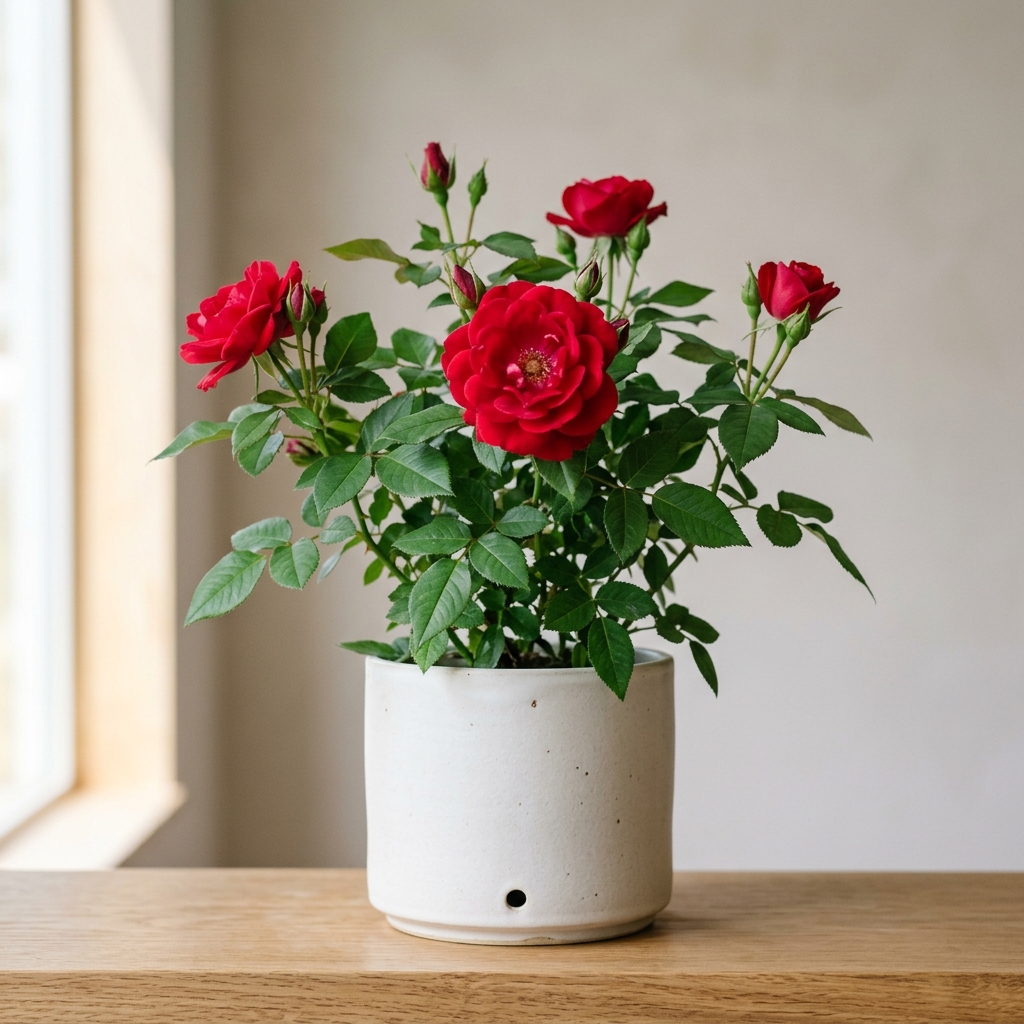
Roses are often considered the royalty of the garden, but their gorgeous looks come with a reputation for being high-maintenance.
The truth is, while roses do need more care than a hardy succulent, their needs are very predictable. Once you master the basic rules of rose husbandry, you can grow magnificent bushes that bloom continuously year after year.
1. The Sun Rule: Zero Exceptions
If your garden does not get at least 6 hours of direct sunlight daily, do not plant standard roses.
- Sunlight is the fuel that powers cane growth and bud development.
- A rose planted in partial shade will grow tall, thin, and spindly (leggy) as it stretches towards the light, and will produce very few, if any, blooms.
2. Proper Watering Technique (Base-Only)
Fungal diseases like Black Spot and Powdery Mildew are the absolute bane of rose growers. These fungi require water on the leaf surface to germinate and infect the plant.
Watering Rules:
- Never use overhead sprinklers. Water at the soil level directly, using a soaker hose or drip system.
- Water in the morning. This ensures that any accidental splashes on the lower leaves dry up in the daytime sun.
- Water deeply. Roses prefer deep, thorough soakings twice a week over shallow, daily sprinklings. Deep watering encourages roots to grow down, making them drought-resistant.
3. Pruning: Late Winter Revitalization
Many beginner gardeners are terrified of pruning their roses, fearing they will kill the plant. In reality, roses are extremely tough and thrive on heavy pruning.
Pruning Guidelines (Late Winter/Early Spring):
- Remove the 3 Ds: Cut away any wood that is Dead, Damaged, or Diseased.
- Clear the Center: Prune away crossing branches that rub against each other. The goal is to create an open vase-like structure so wind can blow freely through the bush, keeping foliage dry and pest-free.
- Cut at a Angle: Always cut at a 45-degree angle about 1/4 inch above an outward-facing bud eye. The angle allows water to run off the cut rather than collecting on it.
4. Heavy Feeders: Fertilizing for Success
Growing blooms takes a massive amount of energy. Feed your roses a specialized rose food in early spring, and continue fertilizing every 4 to 6 weeks. Look for a fertilizer with a slightly higher phosphorus and potassium ratio (the second and third numbers, e.g. 10-15-15) to maximize bud production. Stop fertilizing 6 weeks before your region’s first frost date to prevent soft new growth from getting damaged in winter.